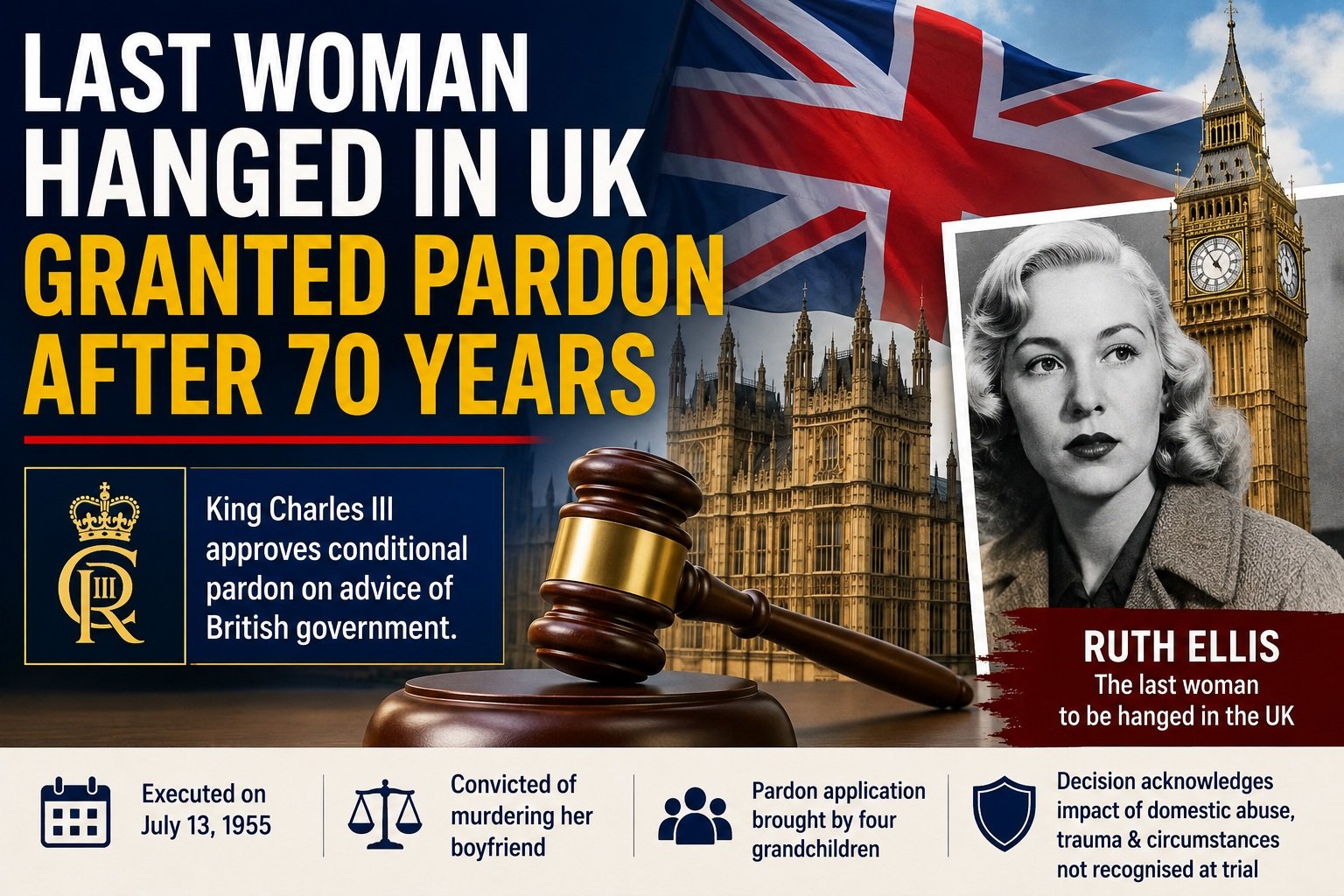

London ( Economy India ): More than seven decades after her execution, Ruth Ellis, the last woman to be hanged in the United Kingdom, has been granted a conditional pardon by King Charles III following advice from the British government. The decision marks a significant moment in the country’s ongoing reflection on historical miscarriages of justice and the impact of domestic abuse on criminal cases.
Ruth Ellis was executed on July 13, 1955, after being convicted of murdering her boyfriend, David Blakely. She shot Blakely outside a public house in London and was sentenced to death following a high-profile trial. At the time, the legal system did not fully consider the effects of prolonged domestic abuse and psychological trauma on her actions.
The application for a conditional pardon was submitted by four of Ellis’ grandchildren. They argued that her responsibility for the crime was profoundly influenced by years of domestic abuse, coercive control, and emotional trauma—factors that were not properly recognized during her trial.
Announcing the decision in Parliament, Justice Secretary David Lammy said the government could not undo what happened in 1955 but could acknowledge that Ellis’ case was exceptional.

“For 70 years, the family of Ruth Ellis have fought for her story to be heard. We cannot change what happened 70 years ago, but we can recognise that this was an exceptional case,” Lammy said.
A conditional pardon does not overturn Ellis’ conviction or declare her legally innocent. Instead, it is an official acknowledgment that significant mitigating circumstances were not adequately considered and that her case deserves historical recognition.
The case has long been viewed as one of the most controversial in British legal history. Ellis’ execution intensified public debate over capital punishment, contributing to growing calls for legal reform. The United Kingdom suspended the death penalty for murder in 1965 before abolishing it permanently in later years.
Legal experts and campaigners say the pardon reflects the modern justice system’s greater understanding of domestic abuse and its effects on victims. It also highlights how historical cases continue to shape discussions about fairness, sentencing, and human rights.
For Ellis’ family, the government’s decision represents the end of a decades-long campaign to restore her dignity and ensure that the circumstances surrounding her conviction are formally acknowledged.
As the UK continues to revisit historic criminal cases through a modern legal and social lens, Ruth Ellis’ story remains a powerful reminder of how justice evolves with changing societal values and greater awareness of domestic violence.
( Economy India )