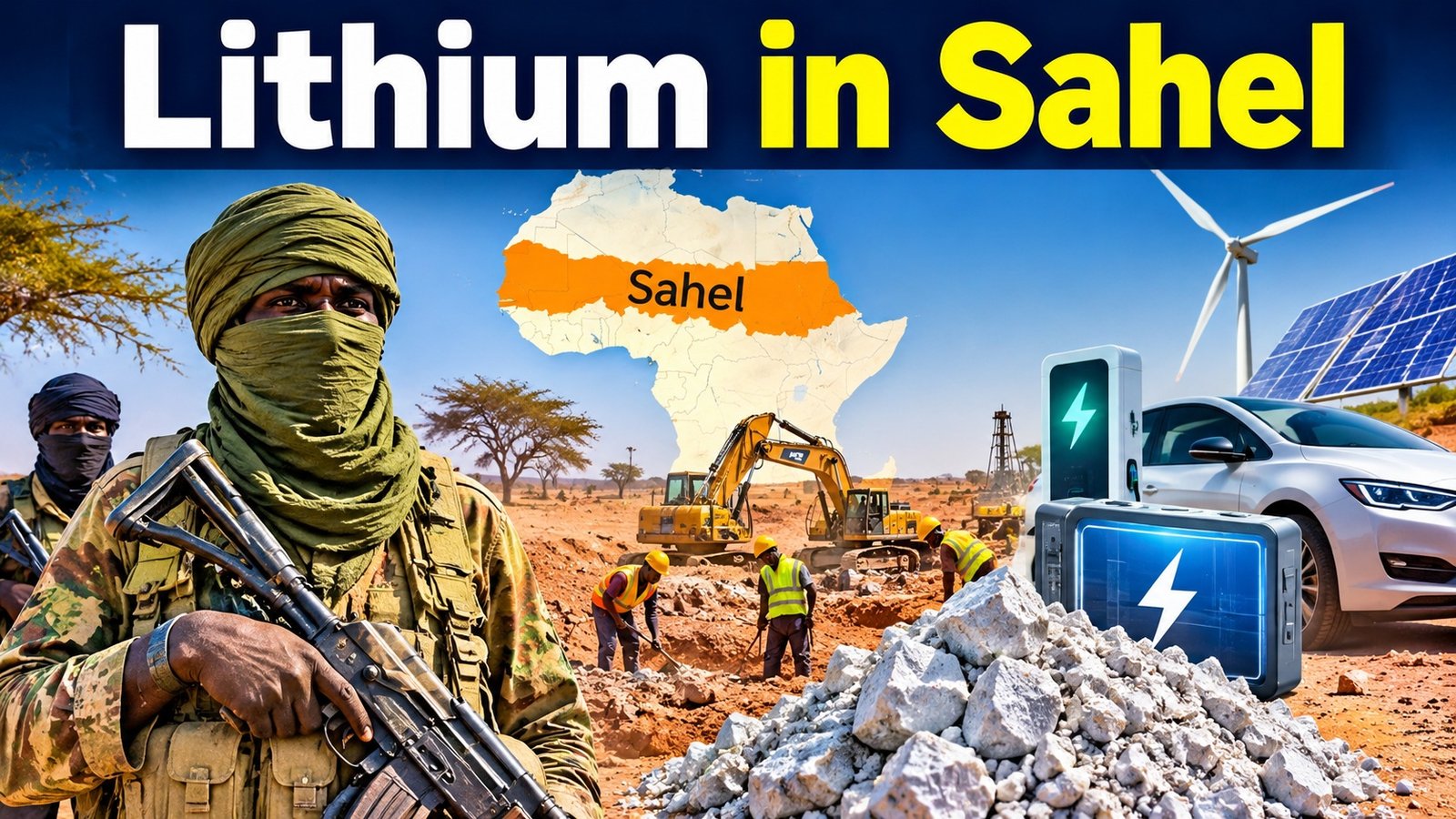
LONDON, (Economy india):Every electric vehicle, smartphone and laptop battery depends on one essential ingredient: lithium.
The critical mineral has become central to the global transition towards cleaner energy. Lithium is a key component of rechargeable batteries used in electric vehicles, mobile devices and large-scale energy storage systems. As demand for these technologies rises, countries and companies are racing to secure reliable supplies.
The International Energy Agency expects global lithium demand to increase significantly as electric vehicle production expands and renewable energy storage becomes more widespread. Africa, particularly countries across the Sahel, is emerging as an increasingly important region in the global search for critical minerals.
The world’s major lithium producers currently include Chile, Australia and China. However, growing exploration and mining activity in Africa could change the global supply picture in the coming years.

Why the Sahel matters
The Sahel stretches across a large part of Africa, south of the Sahara, and contains significant deposits of several minerals. Lithium exploration has increased in countries such as Mali, where mining has become an important part of the economy.
For governments facing economic difficulties, lithium offers the possibility of attracting foreign investment, generating export revenues and creating jobs. But the rapid expansion of mining also presents serious security and governance challenges.
Several parts of the Sahel have experienced prolonged instability, armed conflict and the growth of militant organisations. In areas where state control is weak, valuable mineral deposits can become attractive targets for armed groups seeking new sources of income.
Armed groups and illegal mining
The growing international demand for lithium can create opportunities for criminal networks and armed groups to become involved in mining and mineral trading.
Where mining operations are located in remote areas, monitoring and enforcement can be difficult. Armed groups may attempt to control access to mining areas, impose illegal taxes on miners or transporters, or profit from informal and unregulated extraction.
This creates a difficult situation for governments. They need to encourage investment in critical minerals while ensuring that revenues do not contribute to violence, corruption or organised crime.
The experience of other African minerals has shown how valuable natural resources can become linked to conflict when governance is weak. Lithium could face similar risks if supply chains are not properly monitored.
Global competition for lithium
The strategic importance of lithium has increased as countries compete to build domestic battery and electric vehicle industries.
China has established a strong position across the global battery supply chain, including mineral processing and battery manufacturing. Western governments are now seeking to diversify supplies and reduce dependence on a small number of countries.
This has increased interest in African mineral resources. For African countries, the competition presents an opportunity to negotiate better investment agreements and develop local processing industries rather than simply exporting raw minerals.
However, increased foreign interest can also intensify competition over mining rights and resources, particularly in politically unstable regions.
The challenge for governments
Governments in the Sahel face the difficult task of balancing economic development with security concerns.
If lithium projects are developed transparently and local communities benefit from mining revenues, the industry could provide much-needed employment, infrastructure and government income.
But if mining takes place without adequate regulation, communities may receive little benefit while illegal operators and armed groups capture a significant share of the value.
Improving security around mining areas, strengthening customs controls and tracking mineral shipments could help prevent lithium from entering international markets through illicit channels.
From mineral to strategic resource
Lithium is no longer simply a mining commodity. It has become a strategic resource linked to electric vehicles, renewable energy, industrial policy and national security.
The global race for lithium is therefore likely to intensify in the coming years. Africa has the potential to become an important supplier, but the benefits will depend heavily on how governments manage the sector.
For the Sahel, the challenge is particularly significant. The region’s mineral wealth could support economic development, but without strong institutions and effective security, the same resources could provide new sources of financing for armed groups.
As the world accelerates its shift towards electric vehicles and renewable energy, the demand for lithium will continue to grow. The question for the Sahel is whether this global demand will become an opportunity for sustainable development—or another source of conflict and instability.
(Economy india)