Automaker aims to more than double women’s representation in its executive workforce as it builds a diverse and future-ready talent pipeline
NEW DELHI (Economy India): Hyundai Motor India Ltd (HMIL) on Monday announced its target to increase women’s representation in its executive workforce to 20 per cent by 2030, marking a significant push towards greater gender diversity across the organisation.
Women currently account for more than 8 per cent of HMIL’s executive workforce, which comprises over 4,000 employees, according to the company.
The target represents an effort to more than double the current share of women in executive roles over the next four years and forms part of Hyundai Motor India’s broader focus on developing a diverse, inclusive and future-ready workforce.
Focus on Gender Diversity
Hyundai Motor India’s latest target comes as India’s automotive industry undergoes significant transformation driven by electrification, digitalisation, advanced manufacturing and changing consumer expectations.
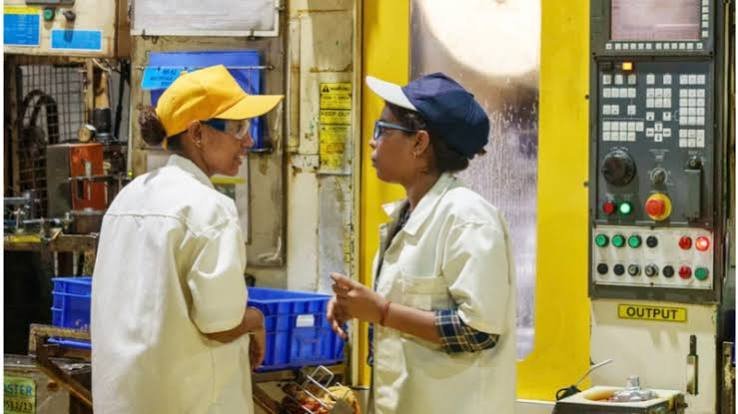
The company said greater representation of women is an important part of building a diverse talent pipeline capable of supporting its future business requirements.
Hyundai’s focus on workplace diversity also extends to leadership development. Its FY2024-25 annual report highlighted the launch of TrailBlazHer, a women’s leadership development programme aimed at strengthening inclusive leadership and advancing gender diversity.
Building a Future-Ready Workforce
The automotive sector is evolving beyond traditional manufacturing, with new opportunities emerging in areas such as electric vehicles, software, connected mobility, artificial intelligence, advanced engineering and digital customer experiences.
For automakers, developing a workforce with diverse skills, backgrounds and perspectives is increasingly becoming a strategic priority.
Hyundai Motor India has said its people are central to its efforts to respond to a rapidly changing business environment and develop innovative and sustainable mobility solutions.
The company’s latest gender-diversity target is therefore aimed not only at increasing representation but also at strengthening its long-term talent pipeline.
Hyundai’s Growing India Operations
The announcement comes as Hyundai Motor India continues to expand its operations in one of the world’s largest automobile markets.
According to the company’s FY2025-26 annual report, HMIL recorded revenue from operations of ₹7,07,633.34 million, while EBITDA stood at ₹95,475.21 million and profit after tax at ₹54,315.20 million. The company reported total production of 7,69,280 vehicles and total sales of 7,75,031 units during FY26.
The company had 4,068 employees as of FY26, according to its annual report.
Hyundai is also marking three decades of operations in India. The company began construction of its first manufacturing facility in Sriperumbudur, Tamil Nadu, in 1996 and has since established itself as one of India’s major automobile manufacturers.
Women’s Participation in the Auto Industry
Increasing women’s participation remains an important challenge for India’s manufacturing and automotive sectors.
Historically, automotive manufacturing has had lower female participation compared with several other industries, particularly in shop-floor and technical roles.
The growing adoption of automation, digital manufacturing, advanced engineering and new mobility technologies could create opportunities for broader participation across functions.
Hyundai’s 2030 target could therefore encourage greater participation of women across executive, technical, engineering, sales, corporate and leadership roles.
Beyond Representation
Increasing the number of women in executive positions is only one part of creating an inclusive workplace.
Companies also increasingly need to focus on leadership development, career progression, workplace flexibility, equal opportunities, mentorship and a safe working environment.
Hyundai’s annual report highlights its commitment to a harassment-free workplace and its gender-neutral Prevention of Sexual Harassment policy. The company also maintains an Internal Complaints Committee as part of its workplace safeguards.
These measures can complement recruitment and representation targets by helping employees build long-term careers.
Sustainability and People Strategy
Hyundai Motor India’s workforce strategy is also being pursued alongside its broader sustainability agenda.
The company’s FY2025-26 annual report states that 100 per cent of its electricity consumption came from renewable energy during FY26 through self-generated solar power, power purchase agreements, the Indian Energy Exchange and renewable energy certificates. The company also reported CSR expenditure of ₹1,324.47 million during the year.
This combination of environmental and social initiatives reflects the increasing importance of ESG considerations in corporate strategy.
A Milestone for Corporate India
The 20 per cent target by 2030 is significant because women currently account for just over 8 per cent of Hyundai Motor India’s executive workforce.
Achieving the target will require sustained hiring, retention and leadership-development efforts over the coming years.
It could also provide a benchmark for other companies in India’s manufacturing and automotive sectors that are looking to improve gender diversity.
Looking Ahead to 2030
Hyundai Motor India’s target comes at a time when the automobile industry is entering a new technology-driven phase.
As electric vehicles, connected cars, software-defined vehicles, artificial intelligence and advanced manufacturing reshape the sector, companies will need talent capable of adapting to new business models.
A more diverse workforce can bring different perspectives to product development, technology, customer engagement and organisational decision-making.
For Hyundai Motor India, increasing women’s representation to 20 per cent of its executive workforce by 2030 is therefore both a diversity goal and a long-term talent strategy.
The challenge now is to turn the target into sustained representation, stronger leadership pipelines and greater participation of women across India’s evolving automotive ecosystem.
— Economy India Business Desk