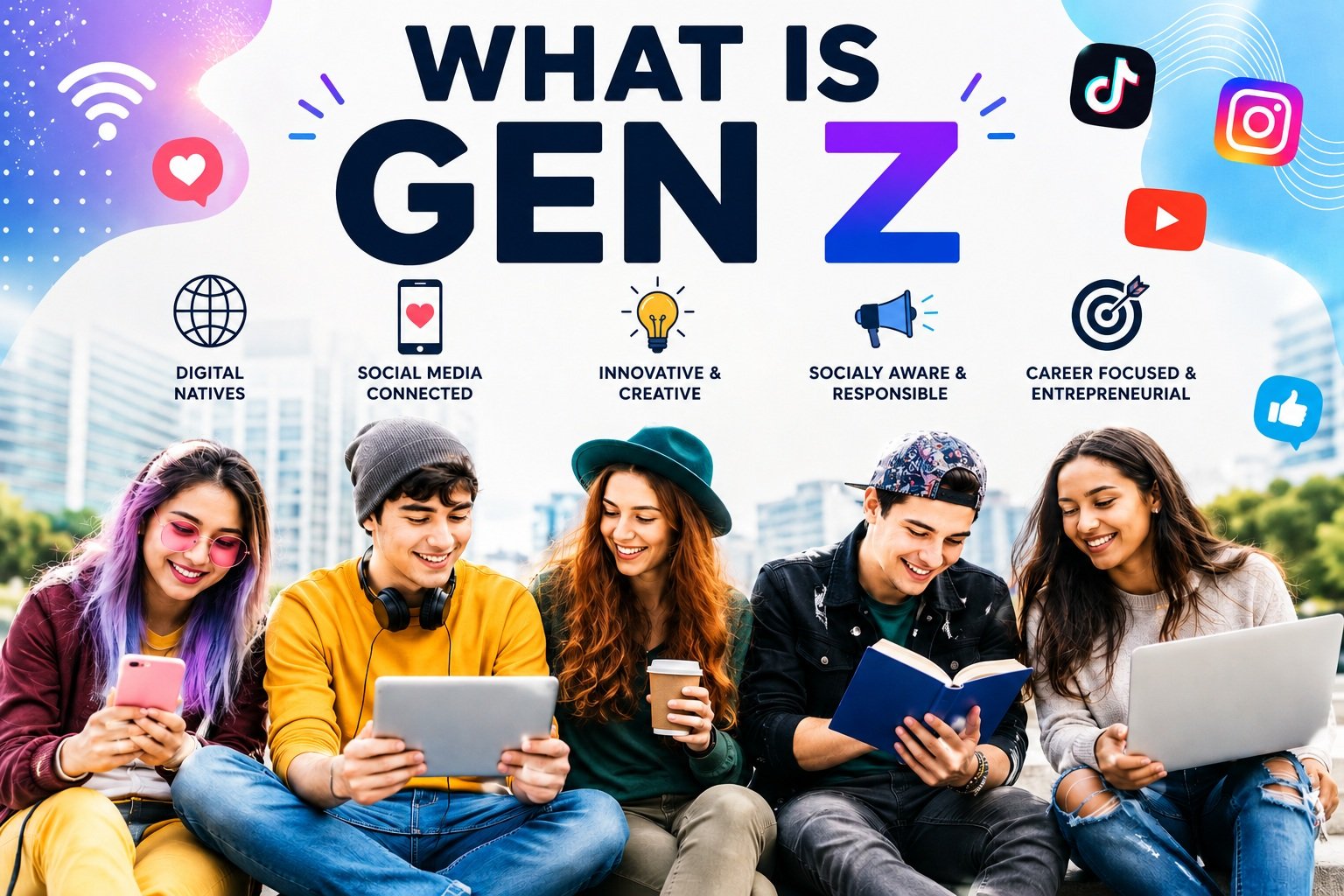

Gen Z, also known as Generation Z or Zoomers, refers to people born roughly between 1997 and 2012. They are the first generation to grow up in a world where the internet, smartphones, and social media have always existed. Unlike previous generations, Gen Z has never experienced life without digital technology, making them true digital natives.
Who Are Gen Z?
Generation Z comes after the Millennials (Generation Y) and before Generation Alpha. Most Gen Z members are currently teenagers or young adults who are studying, starting careers, building businesses, or entering the workforce.
They are known for adapting quickly to new technologies and staying connected through social media platforms like Instagram, YouTube, TikTok, and Snapchat.
Characteristics of Gen Z
1. Tech-Savvy
Gen Z grew up with smartphones, high-speed internet, and social media. They are comfortable using technology for learning, shopping, entertainment, and communication.
2. Independent Learners
Many Gen Z individuals prefer learning through online courses, YouTube tutorials, podcasts, and educational apps instead of relying only on traditional classrooms.
3. Entrepreneurial Mindset
A large number of Gen Z members dream of becoming entrepreneurs, freelancers, influencers, or content creators rather than working traditional 9-to-5 jobs.
4. Socially Aware
Gen Z is highly aware of issues such as climate change, mental health, equality, diversity, and sustainability. They often support brands that share their values.
5. Fast Decision Makers
Growing up with instant access to information has made Gen Z quick at researching products, comparing options, and making purchasing decisions.
How Gen Z Uses Technology
Technology is at the center of Gen Z’s daily life. They use smartphones for almost everything—from online classes and digital payments to shopping, gaming, entertainment, and communication.
Artificial Intelligence (AI) tools, cloud technology, and automation are also becoming an important part of their education and careers.
Gen Z and Careers
Unlike older generations, Gen Z values flexibility, work-life balance, and meaningful careers. Many prefer remote work, freelancing, startups, or jobs that allow creativity and continuous learning.
Skills such as coding, digital marketing, graphic design, video editing, AI, and data analytics are especially popular among this generation.
Gen Z as Consumers
Companies across the world are changing their marketing strategies to attract Gen Z consumers. This generation prefers:
- Online shopping
- Fast delivery
- Honest brand communication
- Personalized experiences
- Eco-friendly products
- Digital payment options
They also rely heavily on online reviews and influencer recommendations before making purchases.
Challenges Faced by Gen Z
Despite being highly connected, Gen Z also faces several challenges:
- Social media pressure
- Mental health concerns
- Information overload
- Job market competition
- Digital addiction
- Economic uncertainty
Balancing online and offline life has become one of the biggest challenges for this generation.
The Future of Gen Z
As more Gen Z members enter the workforce and become consumers, entrepreneurs, and leaders, they will have a significant impact on business, technology, education, politics, and the global economy. Their digital-first mindset is already changing how companies operate and how societies communicate.
Conclusion
Generation Z is more than just a young generation—it represents the future of innovation, technology, and social change. Their comfort with digital tools, entrepreneurial spirit, and focus on global issues make them one of the most influential generations in modern history. As they continue to grow, Gen Z will play a major role in shaping the future of businesses, workplaces, and everyday life around the world.