
Government Expected to Focus on Economic Reforms, Job Creation, Domestic Demand and Growth Acceleration
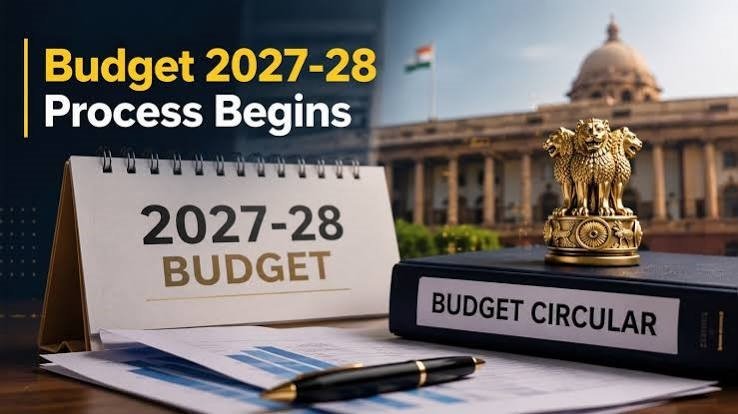
New Delhi (Economy India): The Finance Ministry is set to begin preparations for the Union Budget 2027-28 from October 12, with the government expected to focus on strengthening economic growth, creating jobs and boosting domestic demand amid continuing global uncertainties and elevated food and fuel prices.
The budget preparation exercise will assume significance as policymakers navigate an uncertain global economic environment, including fluctuations in commodity prices and external risks that could influence India’s growth and inflation outlook.
Budget 2027-28 Preparations to Begin in October
The Finance Ministry will formally begin the process of preparing the Union Budget for the financial year 2027-28 on October 12.
The annual budget exercise involves consultations with various ministries and departments, assessment of revenue and expenditure requirements, and discussions on policy priorities for the coming financial year.

The process culminates in the presentation of the Union Budget in Parliament.
Focus Likely to Remain on Economic Growth
One of the key priorities for the 2027-28 Budget is expected to be accelerating economic growth.
The government is likely to continue pursuing reforms aimed at improving productivity, strengthening infrastructure and creating an environment conducive to investment.
With global economic conditions remaining uncertain, maintaining domestic growth momentum is expected to remain an important policy objective.
Job Creation Could Get Greater Attention
Employment generation is also expected to feature prominently in the upcoming budget.
Measures aimed at expanding employment opportunities, particularly through investment, manufacturing, infrastructure and other labour-intensive sectors, could receive greater attention.
A stronger employment environment would also support household incomes and consumption, helping create a positive cycle of domestic economic activity.
Boosting Domestic Demand
The government is also expected to consider measures to strengthen domestic demand.
Domestic consumption remains an important pillar of India’s economy. Higher household spending can support businesses, production, investment and employment.
Budgetary measures aimed at improving purchasing power, supporting businesses and encouraging investment could therefore play an important role in sustaining demand.
Global Uncertainty Remains a Challenge
The preparations come at a time when the global economic environment remains uncertain.
Geopolitical developments, international trade conditions, commodity prices and financial market movements can have an impact on India’s economy.
The government will therefore need to balance its growth priorities with fiscal prudence and economic stability.
Food and Fuel Prices in Focus
Elevated food and fuel prices are another important consideration for policymakers.
Higher food prices can affect household budgets and inflation, while fluctuations in fuel prices can increase transportation and production costs across the economy.
The government may therefore need to assess measures that support economic activity while keeping inflationary pressures under control.
Continuing the Reform Agenda
The 2027-28 Budget is expected to build on the government’s ongoing reform agenda.
Structural reforms can help improve the efficiency and competitiveness of the Indian economy over the medium and long term.
Areas such as infrastructure, manufacturing, investment, digitalisation, ease of doing business and employment could remain important components of the broader economic strategy.
Balancing Growth and Fiscal Discipline
While supporting growth will remain a priority, the government will also have to maintain a balance between higher public spending and fiscal discipline.
Large-scale public investment can stimulate economic activity, but fiscal management remains important for maintaining investor confidence and macroeconomic stability.
The Budget is therefore expected to seek a balance between growth-enhancing expenditure and responsible management of government finances.
Domestic Economy as a Key Growth Driver
India’s relatively strong domestic market provides policymakers with an important source of economic resilience.
Strengthening domestic consumption, investment and employment can help reduce the impact of external shocks and support sustainable growth.
The government’s budget strategy could therefore place greater emphasis on policies that encourage private investment and strengthen household demand.
What to Expect From Budget 2027-28
As the budget preparation process begins, several areas are expected to remain closely watched:
- Economic growth and investment
- Employment generation
- Boosting domestic consumption
- Infrastructure development
- Manufacturing and industrial growth
- Managing food and fuel inflation
- Continuation of structural reforms
- Fiscal consolidation and responsible spending
- Strengthening India’s resilience to global uncertainties
Budget Preparation: A Multi-Stage Exercise
The Union Budget preparation process involves extensive consultations between the Finance Ministry and different government departments.
Ministries and departments submit their expenditure requirements, while the government assesses available resources and revenue projections.
Policy priorities are subsequently reviewed and incorporated into the broader budget framework.
The exercise also provides an opportunity for the government to assess economic conditions and formulate measures aimed at addressing emerging challenges.
The start of preparations for Budget 2027-28 on October 12 comes at an important juncture for the Indian economy.
With global uncertainty, commodity-price pressures and domestic inflation concerns continuing to influence policymaking, the government will have to carefully balance growth objectives with macroeconomic stability.
The focus on economic reforms, employment generation and stronger domestic demand could make the upcoming budget an important policy document for sustaining India’s growth momentum.
As consultations begin, businesses, investors and households are likely to closely watch the government’s priorities and the measures it may announce to support investment, employment and consumption.
(Economy India)