
Top Court to Examine Faster Judicial Processes for Access to Essential Medicines and the Right to Life
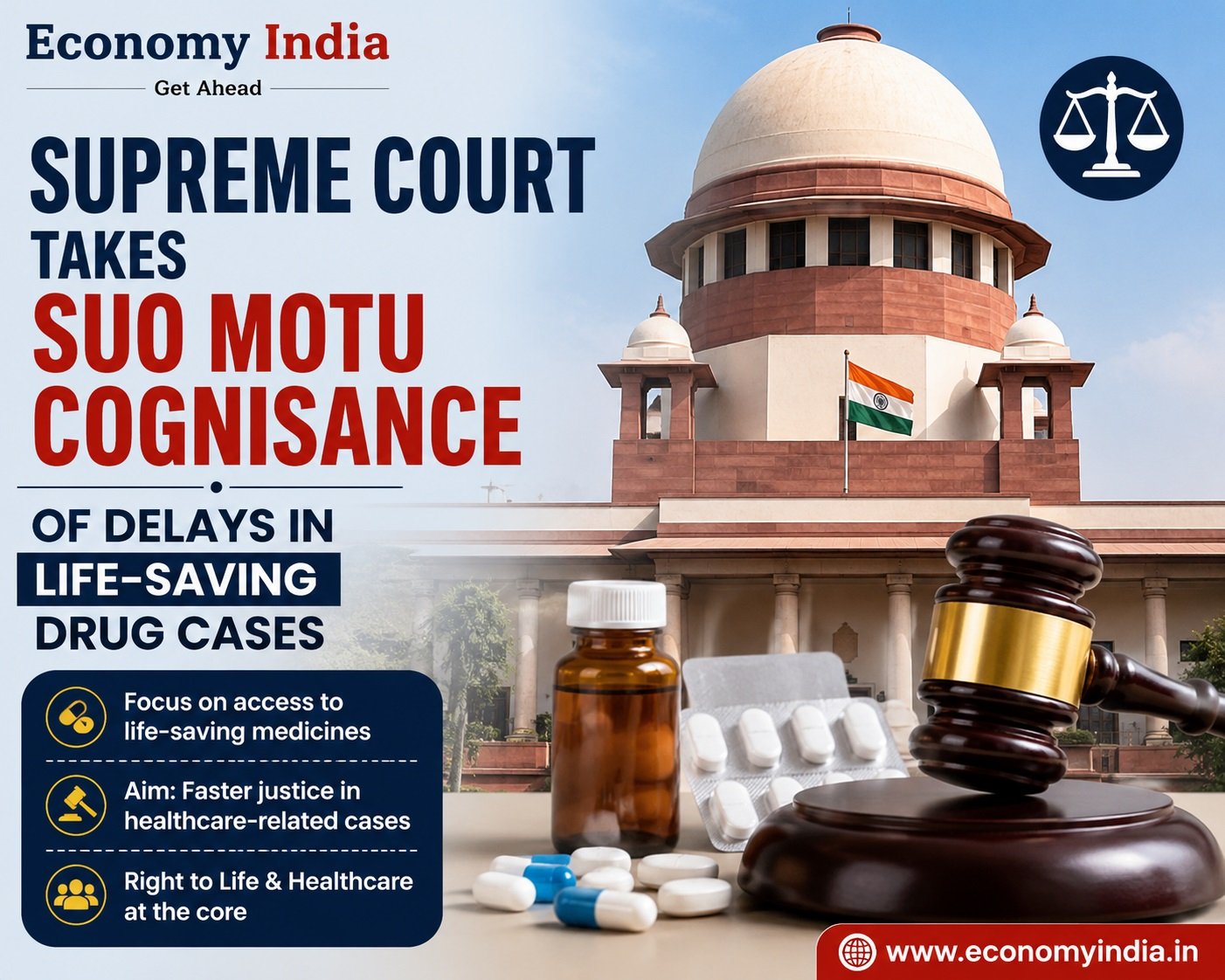
New Delhi (Economy India): The Supreme Court of India on Friday took suo motu cognisance of the issue of delayed judicial proceedings in cases involving access to life-saving medicines, emphasizing the need for timely justice in matters directly linked to the constitutional right to life.
The court’s decision stems from a case involving a woman from Kerala who was battling breast cancer and had challenged the high prices of medicines required for her treatment. However, her petition remained pending before the Kerala High Court, and she passed away before the matter could be adjudicated.
Case Raises Questions on Timely Access to Justice
The woman’s petition sought judicial intervention against the high cost of critical medicines used in cancer treatment, arguing that excessive pricing restricted access to essential healthcare.
Her death while the petition was still pending has highlighted broader concerns about delays in the judicial system, particularly in cases where urgent medical treatment and access to affordable medicines are involved.

The Supreme Court observed that such matters deserve expeditious consideration because they directly affect an individual’s right to life and healthcare.

Supreme Court Initiates Suo Motu Proceedings
Recognizing the larger public importance of the issue, the apex court initiated suo motu proceedings to examine whether judicial mechanisms can be strengthened to ensure that cases involving life-saving drugs are heard and decided without unnecessary delay.
The court is expected to consider measures that could help prioritize urgent healthcare-related litigation, especially when delays may have irreversible consequences for patients.
Access to Essential Medicines
Access to affordable life-saving medicines has remained a major public policy concern in India, particularly for patients suffering from cancer and other serious illnesses.
Medical experts have often pointed out that high treatment costs can place a significant financial burden on families and may delay or prevent patients from receiving essential care.
The issue also raises important questions regarding healthcare affordability, pricing policies, and equitable access to treatment.
Right to Life and Healthcare
Article 21 of the Constitution guarantees the right to life, and Indian courts have repeatedly interpreted this provision to include the right to health and access to medical treatment.
Legal experts believe that the Supreme Court’s intervention could strengthen judicial safeguards for patients seeking urgent medical relief and encourage faster disposal of similar cases across courts.
Wider Implications
The proceedings are expected to have significant implications for healthcare litigation, pharmaceutical pricing disputes, and the handling of urgent medical cases by courts.
Any directions issued by the Supreme Court could influence future judicial procedures and improve access to timely justice for patients requiring critical medical treatment.
The matter is likely to be heard further in the coming weeks as the apex court examines the broader legal and constitutional issues involved.
(Economy India)