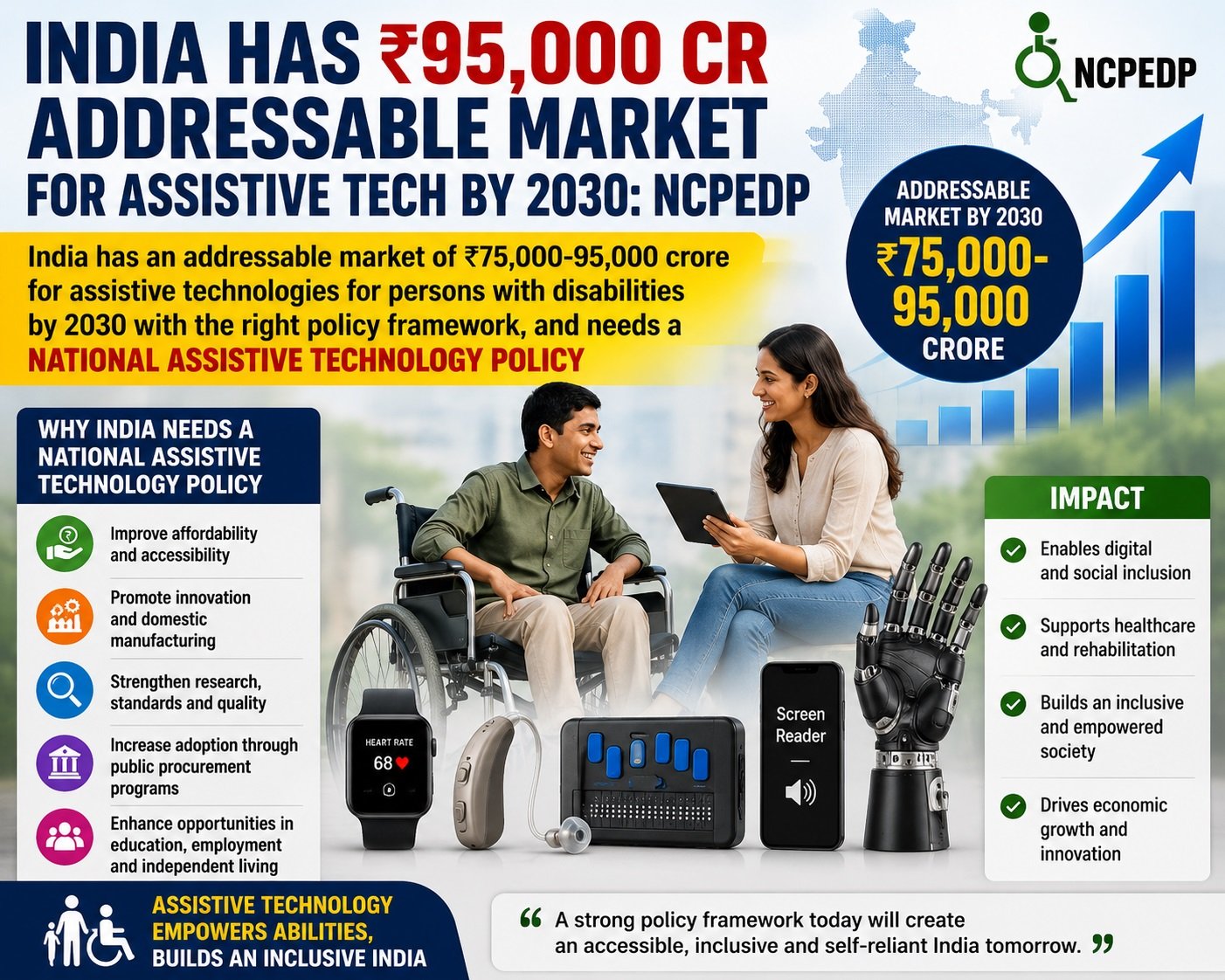

New Delhi ( Economy India ) India’s assistive technology sector has the potential to emerge as a significant economic and social opportunity, with an addressable market estimated at ₹75,000 crore to ₹95,000 crore by 2030, according to the National Centre for Promotion of Employment for Disabled People.
The disability rights organization has urged the government to formulate a National Assistive Technology Policy, arguing that a comprehensive framework is essential to improve accessibility, promote innovation, and ensure affordable access to technology for persons with disabilities.
Massive Untapped Market Opportunity
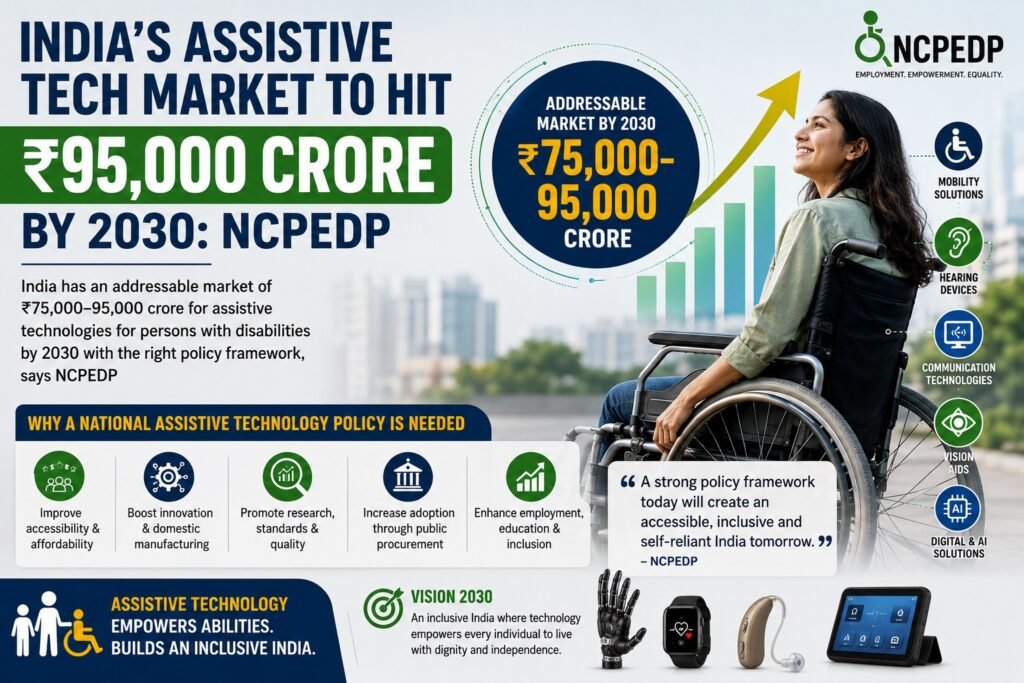
Assistive technologies include products and services designed to improve the independence and quality of life of persons with disabilities. These range from mobility aids and hearing devices to screen readers, AI-powered accessibility tools, communication devices, and smart assistive solutions.
According to NCPEDP, India’s growing digital ecosystem, expanding healthcare infrastructure, and increasing awareness around inclusion present a major opportunity for the sector.

Industry experts believe that with supportive regulations and investment incentives, India could become a global hub for affordable assistive technology solutions.
Why a National Policy is Needed
NCPEDP emphasized that a dedicated national policy would help:
- Improve affordability and accessibility of assistive devices
- Encourage domestic manufacturing and innovation
- Strengthen research and development
- Create standards for quality and interoperability
- Increase adoption through public procurement programs
- Enhance employment and educational opportunities for persons with disabilities
The organization noted that despite technological advancements, many people with disabilities continue to face barriers due to high costs, limited availability, and lack of awareness.
Boosting Inclusion Through Technology
Assistive technologies are increasingly being recognized as critical tools for achieving social and economic inclusion. Improved access to such technologies can support:
- Education and skill development
- Employment participation
- Healthcare access
- Independent living
- Digital inclusion
Experts argue that investments in assistive technology not only improve lives but also contribute to economic productivity by enabling greater workforce participation among persons with disabilities.
Growing Focus on Accessibility
India has made progress in promoting accessibility through initiatives related to digital governance, infrastructure development, and disability rights. However, stakeholders believe a dedicated assistive technology roadmap could accelerate innovation and help bridge existing accessibility gaps.
As India advances toward becoming a digital and innovation-driven economy, the assistive technology sector is increasingly being viewed as both a social necessity and a high-growth economic opportunity.
Economy India Insight
A potential ₹95,000 crore assistive technology market highlights the growing intersection of technology, healthcare, and inclusion. With the right policy support, India could emerge as a leading market for accessible innovations while significantly improving the lives of millions of persons with disabilities.
( Economy India )