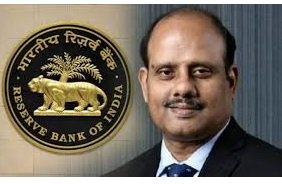
Strong industrial and services sector growth, rising demand, and improving corporate performance continue to support India’s economic momentum, says RBI Deputy Governor Swaminathan J.
Mumbai (Economy India): India’s economy continues to demonstrate remarkable resilience despite growing geopolitical tensions and uncertainties in the global economy, according to Swaminathan J, Deputy Governor of the Reserve Bank of India.
Speaking at the School of International and Public Affairs (SIPA) at Columbia University on Monday, the RBI Deputy Governor highlighted India’s strong economic fundamentals, stating that the country’s growth story remains intact despite an increasingly complex global environment.
According to Swaminathan J., India’s economic activity has been supported by robust expansion in the industrial and services sectors, broad-based domestic demand, and improving corporate performance.

Strong Domestic Fundamentals Supporting Growth
Addressing an international audience, the RBI Deputy Governor emphasized that India’s economic growth continues to be driven by domestic factors, which have helped shield the economy from external shocks and global uncertainties.
“India’s economic activity has demonstrated resilience,” he said, attributing the performance to sustained growth across key sectors of the economy.
The industrial sector has benefited from increased manufacturing activity, infrastructure investments, and government-led initiatives aimed at strengthening domestic production. Meanwhile, the services sector continues to be a major growth engine, supported by strong performance in finance, technology, hospitality, telecommunications, and business services.
Economists believe that India’s large domestic market and consumption-driven economy provide a strong buffer against global economic disruptions.
Inflation Remains Within RBI’s Comfort Zone
One of the key highlights of Swaminathan’s remarks was the progress made in controlling inflation.
The Deputy Governor noted that inflation remains within the RBI’s prescribed tolerance band, indicating that price pressures have moderated despite global challenges such as supply chain disruptions, commodity price volatility, and geopolitical conflicts.
Inflation management remains a critical objective for the central bank as it seeks to maintain price stability while supporting economic growth.
The RBI has closely monitored inflation trends through its monetary policy framework and has taken calibrated measures over recent years to ensure economic stability.
Stable inflation is considered essential for sustaining consumer confidence, encouraging investment, and supporting long-term economic growth.
External Vulnerabilities Remain Manageable
Swaminathan also highlighted India’s relatively strong external position, stating that the country’s vulnerabilities remain manageable despite uncertainty in global financial markets.
India’s foreign exchange reserves, improving export performance, stable financial system, and diversified economic structure have contributed to strengthening the country’s resilience against external shocks.
Experts note that many emerging economies continue to face risks from fluctuating capital flows, currency volatility, and global economic slowdowns. However, India’s macroeconomic fundamentals have remained relatively strong compared to many peers.
The RBI has consistently emphasized the importance of maintaining adequate foreign exchange reserves and ensuring financial stability amid global market fluctuations.
Global Challenges Continue to Shape Economic Outlook
In his address, the RBI Deputy Governor acknowledged that policymakers worldwide are currently navigating an increasingly complex environment shaped by multiple global challenges.
“We meet at a time when the global policy conversation is again crowded with large themes: geopolitics, climate change, artificial intelligence, technological disruption and the reordering of supply chains,” Swaminathan said.
These developments are influencing economic policy decisions across countries and are expected to play a major role in shaping future growth trajectories.
Geopolitical tensions in various regions, ongoing supply chain realignments, rapid technological advancements, and climate-related risks continue to present both opportunities and challenges for policymakers and businesses alike.
India Positioned for Long-Term Growth
Despite global uncertainties, analysts believe India remains one of the fastest-growing major economies in the world.
Government investments in infrastructure, manufacturing, digital transformation, renewable energy, and innovation have strengthened the country’s long-term growth prospects.
Strong domestic consumption, demographic advantages, increasing foreign investment, and policy reforms continue to support India’s economic expansion.
The RBI’s latest assessment reinforces confidence that India’s economy remains well-positioned to navigate external challenges while maintaining growth momentum.
As policymakers, investors, and businesses monitor evolving global developments, India’s economic resilience is expected to remain a key factor supporting confidence in the country’s growth story.
(Economy India)