
CM Vishnu Deo Sai Flags Off ‘Bhavana Didi Ki Science Pathshala’; Over 5,000 Students to Receive Hands-on Training in AI, Robotics, Drones and 3D Printing
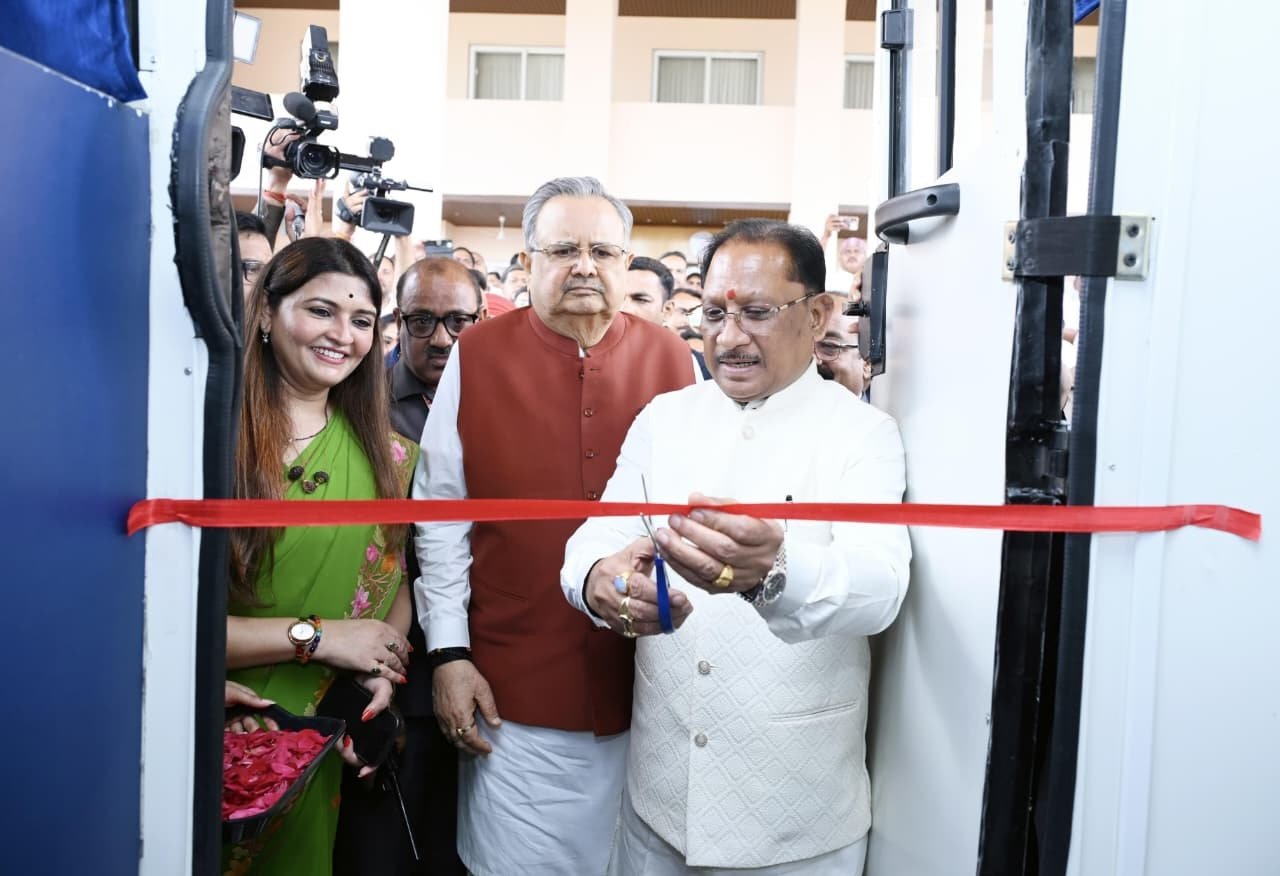
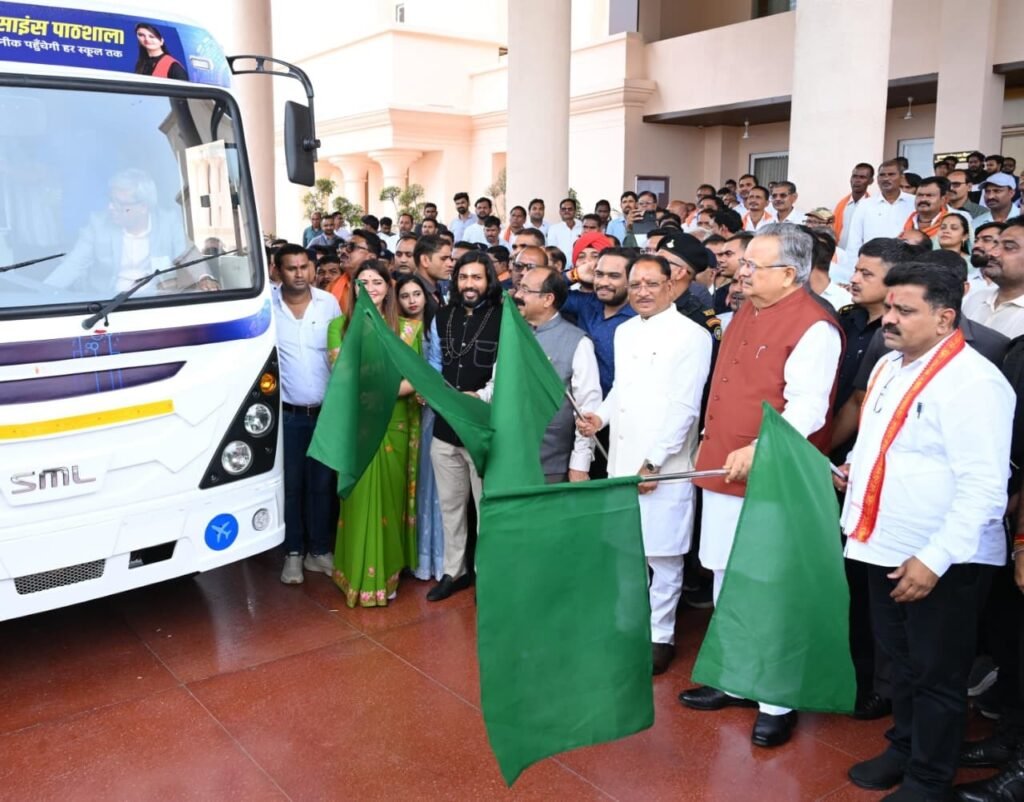
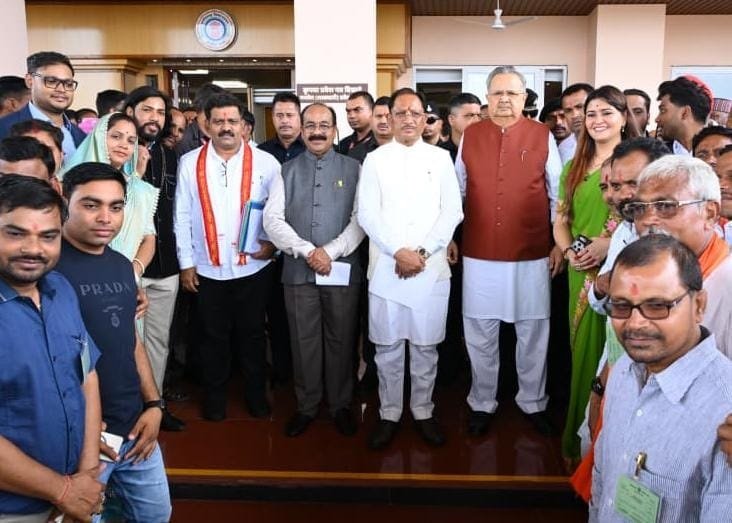
Raipur (Economy India): In a significant step towards strengthening science and technology education in rural Chhattisgarh, Chief Minister Vishnu Deo Sai and Chhattisgarh Legislative Assembly Speaker Raman Singh flagged off the ‘Bhavana Didi Ki Science Pathshala‘, a free Mobile Emerging Technology Lab designed to bring cutting-edge technology education directly to schools in rural areas.
The initiative aims to equip students with practical knowledge of Artificial Intelligence (AI), Robotics, Drone Technology, 3D Printing, Coding, Internet of Things (IoT), Aeromodelling, and Augmented & Virtual Reality (AR/VR), bridging the technology gap between urban and rural classrooms.
Bringing Future Technologies to Rural India
Speaking at the launch ceremony held at the Chhattisgarh Legislative Assembly premises, Chief Minister Vishnu Deo Sai said that connecting rural students with modern technologies is essential for building a ‘Developed Chhattisgarh’.
He described the mobile science laboratory as more than just a vehicle carrying equipment, calling it “a platform that will give wings to the dreams of rural students.”

The Chief Minister emphasized that the initiative will foster scientific thinking, innovation, technical skills, creativity, and self-confidence among young learners.
Aligning with the National Education Policy
Sai noted that the world is rapidly embracing emerging technologies such as AI, robotics, data science, and digital innovation, making it imperative for students from villages to receive equal opportunities.
He said the initiative complements the objectives of the National Education Policy (NEP) by promoting skill development, innovation, experiential learning, and creative problem-solving.
Rather than limiting students to theoretical learning, the programme will encourage them to understand, build, and innovate using advanced technologies.
Key Highlights
- Chhattisgarh launches ‘Bhavana Didi Ki Science Pathshala’ Mobile Emerging Technology Lab.
- Students will receive practical training in AI, Robotics, Drones, 3D Printing, IoT, Coding, AR/VR, and Aeromodelling.
- More than 5,000 rural students are expected to benefit in the first year.
- Workshops will be conducted by five expert trainers in government schools and Saraswati Shishu Mandirs.
- Initiative supports experiential learning under the National Education Policy (NEP).
Hands-on Learning Experience
Assembly Speaker Raman Singh highlighted that students will gain practical exposure through real-world demonstrations instead of relying solely on classroom textbooks.
Participants will receive hands-on experience in:
- Flying drones
- Operating robots
- Designing 3D models
- Learning coding fundamentals
- Exploring AI applications
- Using AR/VR technologies
- Understanding IoT systems
- Aeromodelling projects
He said the initiative has the potential to inspire future scientists, engineers, innovators, and technology professionals from rural Chhattisgarh.
5,000 Students to Benefit in the First Year
The Mobile Emerging Technology Lab will visit government schools and Saraswati Shishu Mandirs across the Pandariya Assembly constituency.
A team of five expert trainers will conduct workshops lasting three to five days at each school.
During the first phase, students of Classes 10, 11, and 12 will be given priority, with the programme expected to reach more than 5,000 students within the first year. Students who complete the training will receive certificates.
Vision Behind the Initiative
The programme has been launched under the leadership of Bhawna Bohra, who has been promoting innovation and skill-based education in the Pandariya constituency.
The mobile laboratory is expected to reduce the digital divide by ensuring that students in rural schools receive exposure to the same advanced technologies available in major urban educational institutions.
Education experts believe such initiatives can significantly improve STEM education, innovation capacity, and workforce readiness among rural youth, supporting India’s long-term digital economy and technology ambitions.
(Economy India)