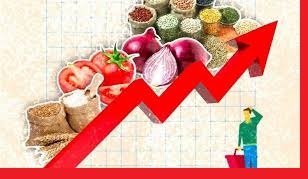

New Delhi (Economy India): India’s wholesale inflation surged to its highest level in ten months in January, driven primarily by rising food prices and higher manufacturing costs, official data released on Sunday showed.
According to figures issued by the Ministry of Commerce and Industry, the Wholesale Price Index (WPI) rose to 1.81% in January, up sharply from 0.83% in December. The latest reading marks the steepest wholesale inflation since March 2025, when WPI stood at 2.05%.
The data signals renewed price pressures at the producer level, even as retail inflation remains within the central bank’s comfort range.
Food and Essential Goods Drive WPI Higher
The acceleration in wholesale inflation was largely led by a rebound in food prices and a sharp rise in manufactured goods inflation.
Key components of January WPI:
- Primary Articles Inflation: Rose from 0.21% to 2.21%
- Food Index: Jumped from –0.43% to 1.55%, indicating broad-based food price increases
- Fuel and Power: Deflation deepened from –2.31% to –4.01%
- Manufactured Products: Increased from 1.82% to 2.86%
Economists note that food prices—especially cereals, vegetables, and other staples—played a critical role in pushing headline WPI higher after several months of moderation.
Structure of Wholesale Inflation Basket
Wholesale inflation in India is calculated using three broad components, each with a specific weight in the WPI basket:
- Primary Articles (22.62%)
- Fuel and Power (13.15%)
- Manufactured Products (64.23%)
Primary articles are further divided into:
- Food articles such as cereals, wheat, and vegetables
- Non-food articles including oilseeds
- Minerals
- Crude petroleum
Given the high weight of manufactured products, even moderate increases in factory-gate prices tend to have a disproportionate impact on overall WPI.
Retail Inflation Also Firming Up
Alongside wholesale inflation, retail inflation also edged higher in January, reflecting rising prices faced by consumers.
Data showed that retail inflation, measured through the Consumer Price Index, rose to 2.75% in January, compared with 1.33% in December. This marks an eight-month high, though still well below the Reserve Bank of India’s upper tolerance limit.
Retail inflation had last peaked at 2.82% in May 2025.
What Rising WPI Means for Consumers
While wholesale inflation does not immediately impact household budgets, a prolonged rise in WPI often feeds into retail prices over time.
Key implications:
- Producers may pass higher input costs to consumers
- Manufacturing and construction sectors face margin pressure
- Persistent wholesale inflation can limit pricing flexibility for businesses
Economists warn that if elevated WPI levels persist for several months, the cost burden is typically transferred down the supply chain, eventually affecting retail prices.
Government’s Limited Levers to Control WPI
Unlike retail inflation, which is influenced by monetary policy, the government has limited direct control over wholesale inflation.
Policy tools mainly include:
- Adjustments in indirect taxes such as excise duty
- Export-import policy interventions
- Buffer stock management for essential commodities
For instance, during periods of sharp crude oil price increases, the government has previously reduced excise duties on fuels to ease inflationary pressure. However, fiscal constraints limit the extent to which such measures can be sustained.
Why Manufactured Goods Matter Most in WPI
Manufactured products account for nearly two-thirds of the WPI basket and include items such as:
- Metals
- Chemicals
- Plastics
- Rubber products
- Machinery and industrial inputs
Price movements in these segments directly reflect input costs, global commodity prices, and domestic demand conditions. A sustained rise in manufactured goods inflation often signals underlying cost pressures in the industrial sector.
How Inflation Is Measured in India
India tracks inflation using two primary indices:
Wholesale Price Index (WPI)
- Measures price changes at the wholesale or producer level
- Reflects prices charged between businesses
- Heavily weighted toward manufactured goods
Consumer Price Index (CPI)
- Measures retail prices paid by consumers
- Higher weight for food, housing, and services
- Used by the central bank for monetary policy decisions
In CPI, food and beverages account for 45.86%, housing 10.07%, with the remainder spread across fuel, clothing, transport, and services.
Economy India Analysis: Emerging Price Signals
The January data suggests that while headline inflation remains contained, early-stage cost pressures are resurfacing, particularly in food and manufacturing segments.
What to watch next:
- Whether food price pressures persist into the next quarter
- Pass-through of manufacturing costs to retail inflation
- Government intervention through fiscal or supply-side measures
For policymakers, the divergence between wholesale and retail inflation will be closely monitored as it may shape future fiscal and supply-management decisions.
January’s wholesale inflation reading of 1.81% underscores a shift in India’s price dynamics after months of relative calm. With food prices turning positive and manufacturing costs accelerating, the data highlights the need for vigilance on supply-side pressures.
While retail inflation remains manageable for now, sustained increases in wholesale prices could gradually ripple through to consumers, influencing economic sentiment and policy responses in the months ahead.
(Economy India)