Union Minister Sarbananda Sonowal Says Government Closely Monitoring Maritime Situation Amid Rising Regional Tensions
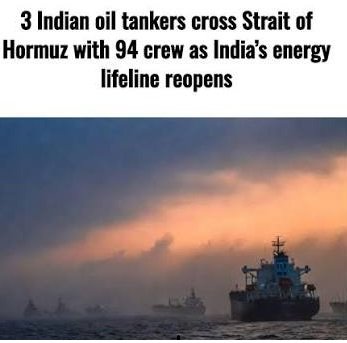
New Delhi (Economy India): Amid growing geopolitical tensions in the Middle East and concerns over maritime security in the Gulf region, three Indian-flagged crude oil tankers carrying a total of 94 Indian crew members have successfully crossed the strategically important Strait of Hormuz and are now sailing safely towards India.
Union Minister for Ports, Shipping and Waterways Sarbananda Sonowal said on Saturday that the government is closely monitoring the situation in the region and remains committed to ensuring the safety and security of Indian seafarers and merchant vessels operating in international waters.
The development comes at a time when heightened tensions in West Asia have raised concerns about the safety of commercial shipping routes, particularly around the Strait of Hormuz, one of the world’s most critical energy corridors.
Safe Passage Through a Strategic Waterway
The three Indian-flagged crude oil tankers successfully navigated through the Strait of Hormuz, carrying 94 Indian crew members on board. Officials said the vessels have now proceeded towards Indian ports without any reported security incident.

The Strait of Hormuz serves as a vital maritime passage connecting the Persian Gulf to the Arabian Sea and the Indian Ocean. A significant portion of the world’s crude oil and liquefied natural gas supplies pass through this narrow waterway, making it one of the most strategically important shipping lanes globally.
Any disruption in the region can have serious implications for international energy markets, global trade, and oil-importing countries such as India.
Government Monitoring Maritime Security
Minister Sarbananda Sonowal said the government is maintaining continuous coordination with shipping companies, maritime authorities, and other relevant agencies to ensure the safety of Indian vessels and crew members.
He emphasized that the welfare and security of Indian seafarers remain the government’s top priority, especially during periods of geopolitical uncertainty.
According to officials, Indian authorities are regularly assessing developments in the region and taking necessary precautionary measures to safeguard merchant shipping operations.
Importance for India’s Energy Security
India imports a substantial portion of its crude oil requirements from the Gulf region. Therefore, the uninterrupted movement of oil tankers through the Strait of Hormuz remains crucial for the country’s energy security.
Industry experts note that any prolonged disruption in the region could affect oil supplies, freight costs, insurance premiums, and global energy prices.
The safe passage of the Indian-flagged vessels provides some reassurance to energy markets and shipping operators amid growing concerns over regional instability.
Indian Seafarers at the Heart of Global Shipping
Indian seafarers constitute one of the largest maritime workforces in the world and serve aboard thousands of vessels operating across international shipping routes.
The 94 Indian crew members aboard the three tankers represent the significant contribution made by Indian maritime professionals to global trade and energy transportation.
Government agencies continue to maintain communication channels with shipping companies to ensure the welfare of Indian sailors working in sensitive regions.
Strategic Significance of the Strait of Hormuz
The Strait of Hormuz handles nearly one-fifth of global oil trade, making it one of the world’s most important maritime chokepoints.
Any escalation in tensions in the Gulf region often leads to concerns over shipping safety, higher freight rates, and volatility in international crude oil markets.
Countries dependent on imported energy closely monitor developments in the area, as disruptions can impact fuel prices, inflation, and economic growth.
India’s Preparedness
Officials said India remains vigilant regarding developments in the Gulf region and is prepared to take necessary measures to protect its shipping interests and citizens.
The government has consistently emphasized the importance of freedom of navigation, maritime security, and the safety of commercial shipping lanes.
As geopolitical uncertainties continue, the successful transit of the three Indian-flagged oil tankers demonstrates the resilience of India’s maritime sector and the government’s commitment to protecting national economic interests and the welfare of Indian seafarers.
(Economy India)