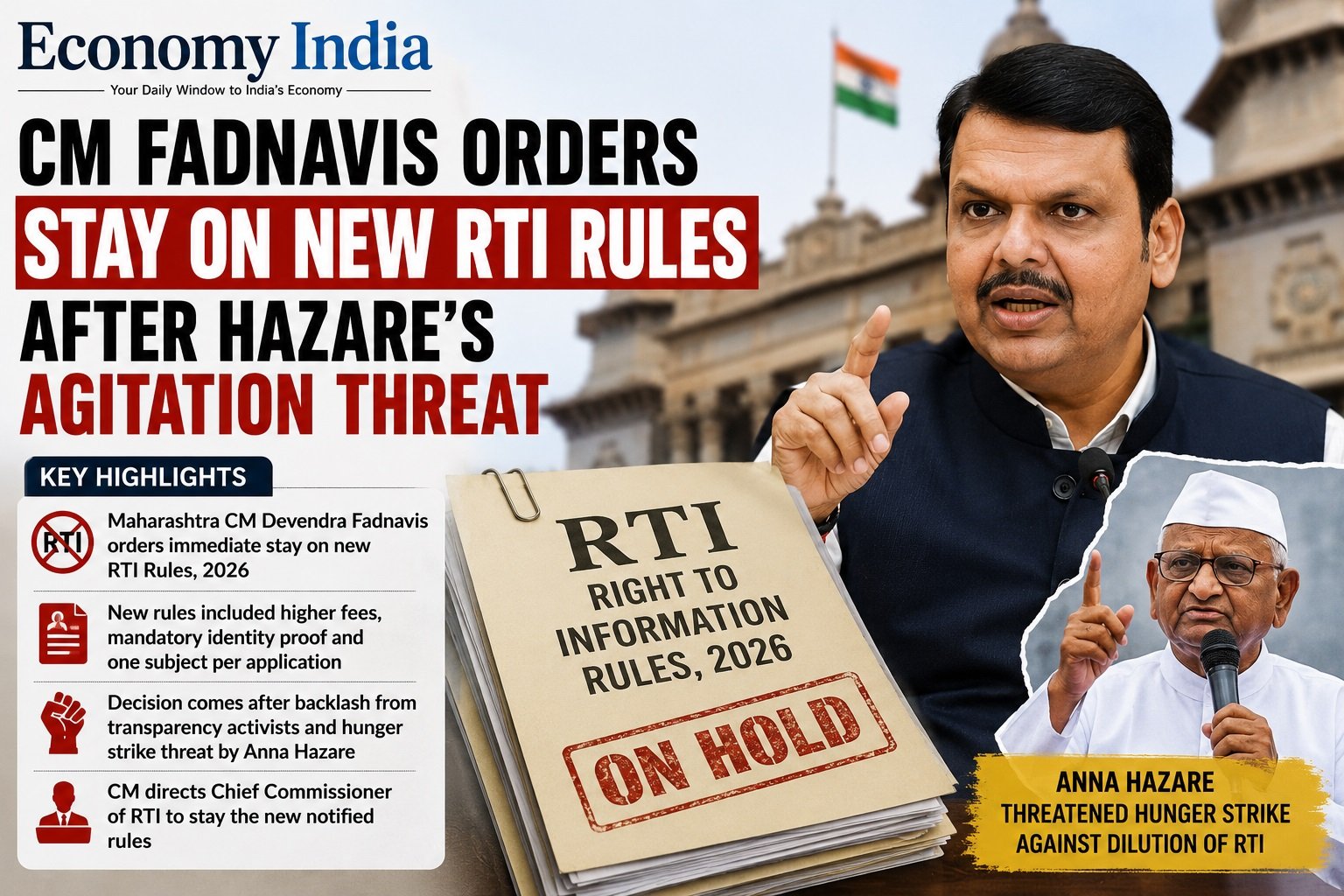

Mumbai, July 2 (Economy India): Maharashtra Chief Minister Devendra Fadnavis has directed officials to immediately stay the implementation of the Maharashtra Right to Information (RTI) Rules, 2026, following widespread criticism from transparency advocates and a proposed hunger strike by veteran anti-corruption activist Anna Hazare.
The decision comes amid growing concerns that the newly notified rules could make it more difficult for citizens to access information under the Right to Information Act.

Government Puts Rules on Hold
According to official sources, Chief Minister Fadnavis instructed the State Chief Information Commissioner to suspend the implementation of the new RTI rules until further review.
The move follows mounting public criticism from RTI activists, civil society groups, and legal experts who argued that the proposed changes could dilute the effectiveness of the transparency law.

What the New RTI Rules Proposed
The Maharashtra RTI Rules, 2026 introduced several significant changes, including:
- Increase in RTI application fees
- Mandatory submission of identity proof
- Restriction allowing only one subject per RTI application
Critics claimed these provisions would create additional hurdles for citizens seeking information from public authorities.
Anna Hazare’s Protest Warning
Veteran social activist Anna Hazare, a long-time advocate of transparency and anti-corruption reforms, strongly opposed the proposed rules and warned of launching a hunger strike if they were not withdrawn.
Following the backlash, the state government decided to pause implementation and reassess the provisions.
| Particular | Details |
|---|---|
| State | Maharashtra |
| Decision | New RTI Rules Stayed |
| Ordered By | CM Devendra Fadnavis |
| Reason | Public backlash and Anna Hazare’s protest threat |
| Key Proposed Changes | Higher fee, ID proof, one subject per application |
Transparency Concerns
RTI activists have maintained that the Right to Information Act is a vital tool for ensuring government accountability and public participation. They argue that any procedural changes should strengthen, rather than restrict, citizens’ access to information.
The government’s decision to stay the rules has been welcomed by many transparency campaigners.
Economy India Insight
The Maharashtra government’s decision highlights the continuing importance of public consultation in governance reforms. The RTI Act remains one of India’s most significant transparency laws, and any changes affecting its implementation are likely to attract close public scrutiny.
(Economy India)