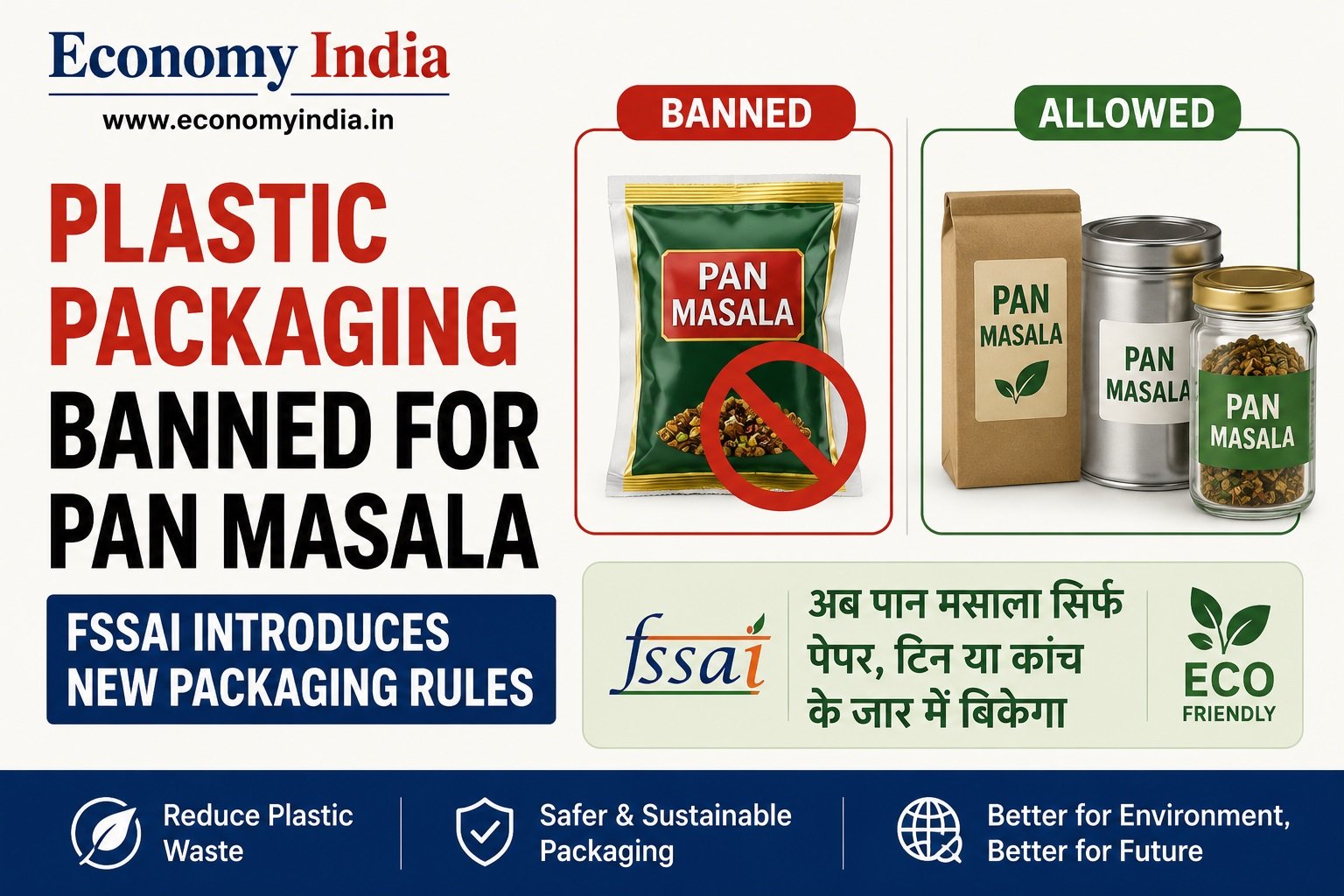
Pan Masala Can Now Be Sold Only in Paper, Tin or Glass Containers Under New FSSAI Regulations
New Delhi (Economy India): The Food Safety and Standards Authority of India (FSSAI) has introduced new packaging rules for pan masala, banning the use of plastic packaging for the product.
Under the new regulations, manufacturers will have to shift to alternative packaging materials such as paper, tin or glass containers for packing and selling pan masala.
The move is aimed at encouraging more environmentally friendly packaging options and reducing the use of plastic in food-related products.
FSSAI Notifies New Packaging Regulations
FSSAI has notified the Food Safety and Standards (Packaging) Amendment Regulations, 2026, introducing the new requirements for pan masala packaging.

The amended rules have come into effect immediately, requiring companies operating in the segment to comply with the revised packaging standards.
Manufacturers will now need to review their existing packaging systems and move towards alternatives that meet the new regulatory requirements.
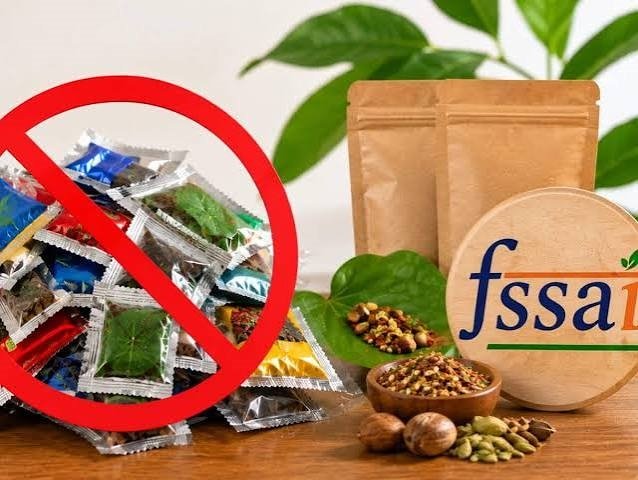
Plastic Packaging to Be Phased Out
Plastic has been widely used for packaging various consumer products because of its low cost, light weight and convenience. However, concerns over plastic waste and its environmental impact have increased the focus on alternative packaging materials.
Under the new FSSAI rules, pan masala manufacturers will have to move away from plastic packaging and adopt approved alternatives.
The shift could lead to changes in packaging designs, manufacturing processes and supply chains across the industry.
Paper, Tin and Glass to Become Key Alternatives
The new rules allow manufacturers to use materials such as paper, tin and glass for packaging pan masala.
These alternatives are expected to provide companies with options to redesign their packaging while complying with the revised food safety standards.
For consumers, the most visible change could be the appearance and format of pan masala packaging in the market as companies transition to the new materials.
Impact on Pan Masala Manufacturers
The regulatory change is likely to require manufacturers to make adjustments to their production and packaging infrastructure.
Companies may need to invest in new packaging machinery, source alternative materials and redesign existing products to meet the updated requirements.
The transition could also have implications for packaging costs and logistics, particularly for manufacturers that have relied heavily on lightweight plastic packaging.
Push Towards Sustainable Packaging
The latest move is part of a broader focus on reducing plastic consumption and encouraging sustainable alternatives in consumer-product packaging.
By requiring manufacturers to adopt paper, tin or glass packaging, the new framework seeks to encourage the industry to reduce its dependence on plastic.
The change also places greater responsibility on manufacturers to consider the environmental impact of packaging along with food safety and product quality.
New Rules Take Immediate Effect
With the amended regulations now notified and effective, pan masala manufacturers will need to ensure that their packaging complies with the new standards.
The industry will have to adapt its packaging operations accordingly and shift towards the permitted alternatives.
The development is significant for the pan masala industry as packaging has a direct impact on manufacturing costs, product presentation, transportation and retail distribution.
What Changes for Consumers?
Consumers could gradually see pan masala products being sold in paper, tin or glass packaging instead of plastic-based packs.
The transition is expected to become more visible as manufacturers implement the amended regulations across their product lines.
Economy India Takeaway
The FSSAI’s new packaging requirements mark a significant change for the pan masala industry. By restricting plastic packaging and encouraging alternatives such as paper, tin and glass, the new rules seek to promote more sustainable packaging practices while ensuring compliance with food safety standards.
Economy India will continue to track regulatory developments affecting consumers, manufacturers and the food industry.
(Economy India)