
Operational disruption hits major airports as stricter fatigue-management norms reduce pilot availability; passengers face widespread delays, cancellations and rerouting challenges.
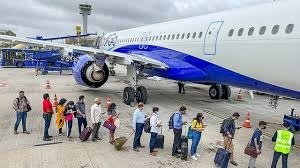
Mumbai (Economy India): India’s largest domestic airline, IndiGo, encountered one of its biggest operational hurdles of the year on Thursday after it cancelled more than 180 flights across three major airports. The disruption stems from an intense shortage of cockpit crew as the airline adjusts to new flight duty time limitations (FDTL) and rest-period norms introduced to strengthen pilot fatigue management.
The sudden cancellations affected thousands of passengers and triggered a ripple effect across the entire domestic aviation network.
A Sudden Crisis: What Exactly Went Wrong?
The root cause of this massive disruption lies in the revised safety and rest guidelines implemented for pilots. The DGCA’s new FDTL norms impose:

- Longer mandatory rest periods
- Reduced night-time flying hours
- Fewer consecutive duty segments
- Stricter fatigue reporting protocols
- Greater responsibility on airlines to ensure safe duty rosters
These norms are globally aligned and aim to reduce pilot exhaustion—an issue that has repeatedly surfaced through pilot unions, flight safety records, and recent air safety assessments.
But for IndiGo, the transition has been anything but smooth.
How the New Rules Created a Crew Crunch
IndiGo operates the highest number of daily flights in India, with a typical schedule exceeding 1,800 flights a day. A network of this scale depends heavily on:
- Tight crew rotation
- High aircraft utilisation
- Short turnaround time
- Availability of standby pilots
The new duty-time norms drastically reduced the number of available flying hours per pilot. Many crew members—especially those involved in early-morning and late-night departures—became temporarily unavailable for rostering.
The result:
A sudden mismatch between scheduled flights and available cockpit crew.
Insiders described the scene as a “ripple effect of cumulative fatigue rules, unbalanced rosters, and insufficient standby strength.”
Airports Worst Hit by the Cancellations
While IndiGo has not formally disclosed airport-wise data, industry officials confirmed that the worst disruptions occurred at:
1. Indira Gandhi International Airport (Delhi)
India’s busiest airport and a major hub for IndiGo. Night and early-morning flights suffered the most.
2. Chhatrapati Shivaji Maharaj International Airport (Mumbai)
Mumbai’s slot constraints added more complications, as flight cancellations forced rearrangements across the day.
3. Kempegowda International Airport (Bengaluru)
Bengaluru, a major engineering and tech-city hub, saw heavy operational stress, affecting both business and transit passengers.
The cascading effect extended into connecting flights, creating a nationwide disturbance across airports like Hyderabad, Kolkata and Pune.
Passenger Impact: Stress, Confusion, and Rising Costs
Thousands of passengers were left stranded, often receiving cancellation alerts only hours before departure.
Common issues reported include:
- Long queues at help desks for rebooking
- Delayed refunds caused by bulk processing
- Skyrocketing fares on rival airlines as demand surged instantly
- Missed business meetings, interviews and medical appointments
- Additional accommodation and travel expenses
Many travellers posted on social media complaining about delayed communication from the airline. Some passengers received rescheduling options that were several hours apart or significantly inconvenient compared to their original itinerary.
IndiGo’s Response: Damage Control Mode Activated
The airline has acknowledged operational disruptions and attributed them directly to the ongoing transition to the new duty-time norms.
Internal sources revealed that IndiGo is currently:
- Increasing the number of standby pilots
- Reshuffling rosters to balance long-haul and short-haul requirements
- Reducing non-essential rotations temporarily
- In talks with DGCA for operational flexibility
- Exploring alternative crew management tools for compliance
A full public statement is yet to be released, but the airline has assured that “normalcy will gradually return over the next few days.”
Why Crew Shortage Is Becoming a Structural Problem in Indian Aviation
The IndiGo crisis highlights a larger issue:
India’s aviation growth is outpacing its pilot availability.
Key structural reasons include:
1. Massive rise in air traffic
Domestic air travel in India has surpassed pre-pandemic levels, pushing airlines to increase daily frequencies.
2. Limited supply of trained captains
Training a captain takes years. The rapid expansion of airlines—especially IndiGo, Air India and Akasa—has strained the pilot pipeline.
3. Flight operations stretching into red-eye hours
Late-night and early-morning flights, which once helped airlines optimise aircraft utilisation, now face stricter fatigue rules.
4. Stringent global norms
India’s aviation regulator is aligning with global best practices to reduce fatigue-related safety risks.
5. Competitive hiring abroad
Middle-East carriers are aggressively recruiting Indian pilots with higher pay packages.
Economic Impact: How Big Is the Damage?
A significant disruption like this can have ripple effects across:
1. Airline Revenue
Cancelling 180+ flights in a day can lead to:
- Loss of ticket revenue
- Compensation expenses
- Hotel and meal reimbursements
- Higher fuel burn during rescheduling and repositioning
2. Passenger Traffic
Total daily domestic passenger numbers may drop if cancellations continue.
3. Corporate Mobility
Business travellers, who depend heavily on IndiGo, are among the worst affected.
4. Competitor Fares
Rival airlines often raise fares sharply when a major carrier faces sudden disruption.
What Happens Next?
Analysts believe that IndiGo may take:
- 48–72 hours to stabilise flight rosters
- One week to optimise morning and night duties
- Long-term reforms in crew management software
- Months to build a stronger buffer of pilots
DGCA may also issue an advisory to all airlines to reinforce fatigue-mitigation readiness, especially ahead of the busy holiday travel season.
Expert View: “This Was Bound to Happen”
A senior aviation expert told Economy India:
“When you increase safety buffers, reduce duty hours, and expand aircraft fleets simultaneously, a shortage is inevitable. If staffing doesn’t keep pace with fleet growth, disruptions like these become unavoidable.”
The expert added that while the inconvenience is real, the new norms are beneficial in the long term because fatigue-free pilots mean safer skies.
A Wake-Up Call for the Aviation Sector
The large-scale flight cancellations mark a significant operational setback for IndiGo, but they also underline a broader challenge within India’s aviation ecosystem. As airlines aggressively expand fleets and routes, pilot availability and well-being must be integrated more deeply into operational planning.
Stronger forecasting, larger standby pools, and smarter technological tools will be essential in preventing similar crises in the future.
For now, passengers are advised to:
- Check flight status before leaving home
- Keep extra travel time as buffer
- Opt for flexible tickets when possible
- Monitor airline alerts closely
IndiGo, meanwhile, works round-the-clock to put its vast network back on track.
(Economy India)