
Proposed FTA Expected to Strengthen Bilateral Economic Relations, Expand Market Access and Encourage German Investments Across India
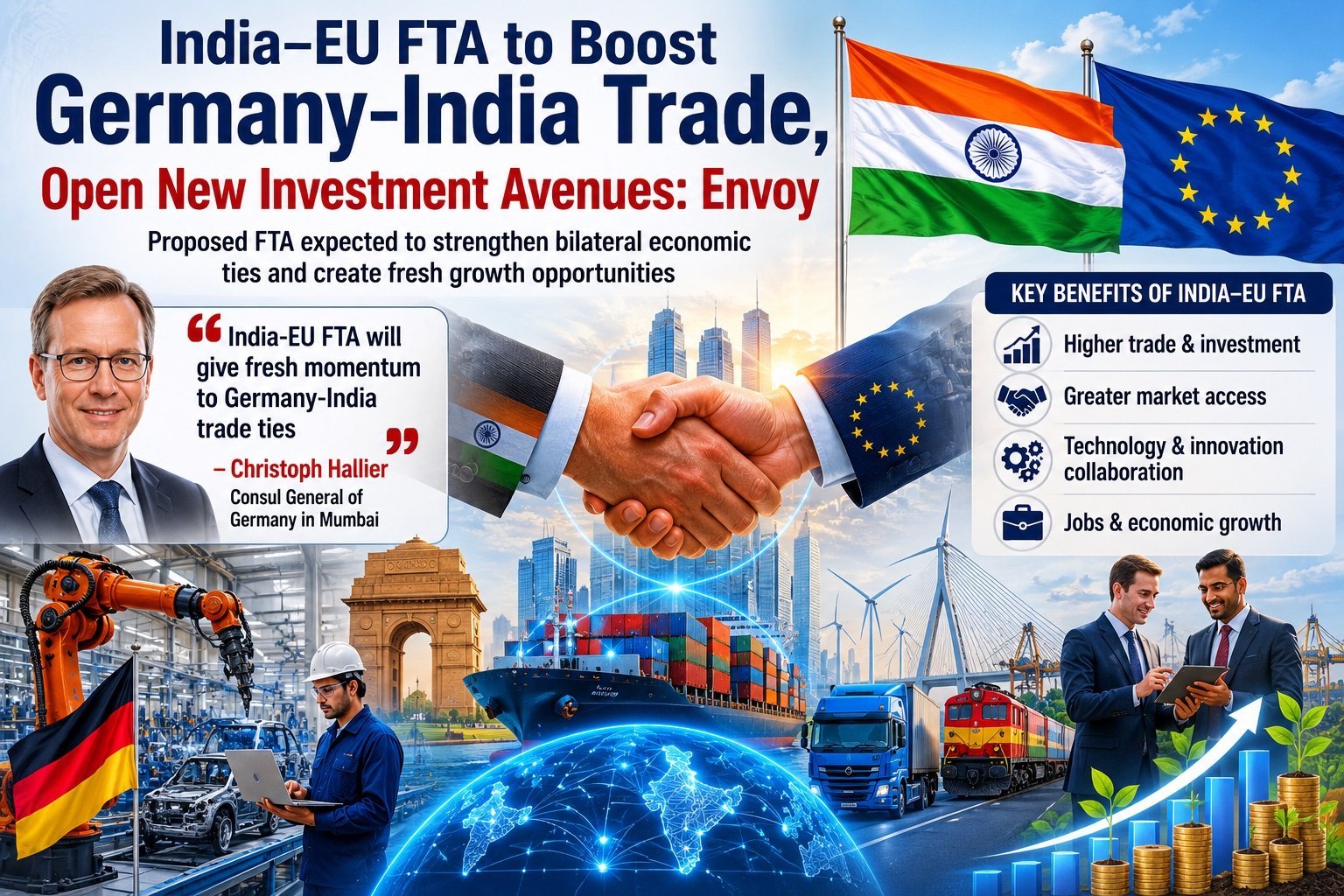
INDORE (Economy India): The proposed India-European Union Free Trade Agreement (FTA) is expected to significantly strengthen economic ties between India and Germany, creating fresh opportunities for trade, investment and industrial collaboration, according to Germany’s Consul General in Mumbai, Christoph Hallier.
Speaking during an interaction in Indore, Hallier said the ambitious trade pact under negotiation between India and the European Union would provide a major boost to bilateral business relations and encourage German companies to expand their footprint in one of the world’s fastest-growing major economies.
The comments come as India and the European Union intensify efforts to conclude a long-awaited Free Trade Agreement aimed at increasing market access, reducing trade barriers and deepening economic cooperation.

FTA Could Accelerate Germany-India Economic Partnership
Germany is India’s largest trading partner within the European Union and one of the most significant sources of foreign investment and technology collaboration.
According to Hallier, the proposed agreement would help create a more favorable business environment for companies operating in both markets.
“The India-EU Free Trade Agreement will give fresh momentum to Germany-India trade ties and create new opportunities for German companies to expand their presence in India,” the envoy said.
Industry experts believe the agreement could reduce tariffs, streamline regulatory processes and improve market access for businesses across sectors.
Expanding Beyond Traditional Business Hubs
A key message from the German diplomat was the growing attractiveness of emerging Indian regions beyond established industrial centers.
While cities such as Pune and Bengaluru have traditionally attracted substantial German investments due to their strong manufacturing and technology ecosystems, Hallier emphasized that significant opportunities now exist across other parts of India.
Emerging Investment Destinations
German companies are increasingly exploring opportunities in:
- Madhya Pradesh
- Gujarat
- Telangana
- Tamil Nadu
- Rajasthan
- Uttar Pradesh
- Chhattisgarh
- Odisha
These states are attracting investments through improved infrastructure, industrial policies and expanding manufacturing capabilities.
Germany’s Growing Presence in India
Germany has maintained a long-standing economic relationship with India, particularly in sectors such as:
| Sector | Areas of Collaboration |
|---|---|
| Manufacturing | Engineering, Machinery, Automotive |
| Renewable Energy | Solar, Wind, Green Hydrogen |
| Technology | Software, Automation, AI |
| Infrastructure | Industrial Development |
| Logistics | Supply Chain Solutions |
| Chemicals | Specialty Manufacturing |
| Education & Skills | Vocational Training |
Several German multinational companies have established significant operations in India, benefiting from the country’s large domestic market and skilled workforce.
India-EU FTA: Why It Matters
Negotiations for the India-EU Free Trade Agreement have gained momentum amid changing global trade dynamics and efforts by both sides to diversify supply chains.
The agreement is expected to cover:
- Trade in goods
- Services
- Investment protection
- Digital trade
- Intellectual property rights
- Sustainable development
- Supply chain cooperation
Economists believe the FTA could become one of India’s most important trade agreements due to the size of the European market.
Potential Benefits for India
- Increased exports to Europe
- Greater foreign investment inflows
- Technology transfer
- Enhanced manufacturing competitiveness
- Job creation
- Integration into global value chains
Potential Benefits for Europe
- Better access to India’s large consumer market
- Expanded investment opportunities
- Stronger supply chain diversification
- Increased participation in India’s growth story
Growing Economic Ties
India and Germany have steadily expanded economic cooperation over the past decade.
Bilateral trade has continued to grow, supported by:
- Rising industrial cooperation
- Green energy partnerships
- Startup ecosystem engagement
- Advanced manufacturing initiatives
- Mobility and skill development programs
German companies view India as a strategic long-term growth market due to its strong economic fundamentals, demographic advantages and expanding consumer base.
Investment Opportunities in Emerging Sectors
The envoy highlighted the importance of exploring new regions and sectors beyond traditional investment destinations.
Particular opportunities exist in:
- Renewable energy
- Electric mobility
- Advanced manufacturing
- Smart infrastructure
- Digital technologies
- Sustainable development projects
India’s focus on green growth and industrial modernization aligns closely with Germany’s expertise in engineering, sustainability and innovation.
As negotiations on the India-EU Free Trade Agreement progress, businesses on both sides are closely monitoring developments that could reshape trade and investment flows between India and Europe.
Germany’s Consul General Christoph Hallier’s remarks underscore growing confidence in India’s economic potential and the belief that the proposed FTA could unlock a new phase of bilateral cooperation, investment and industrial growth.
If finalized, the agreement is expected to strengthen India’s integration with European markets while creating significant opportunities for businesses, investors and industries across both regions.
(Economy India)