
US President Expresses Confidence in Bilateral Trade Pact, Signals Positive Outlook for Economic Relations
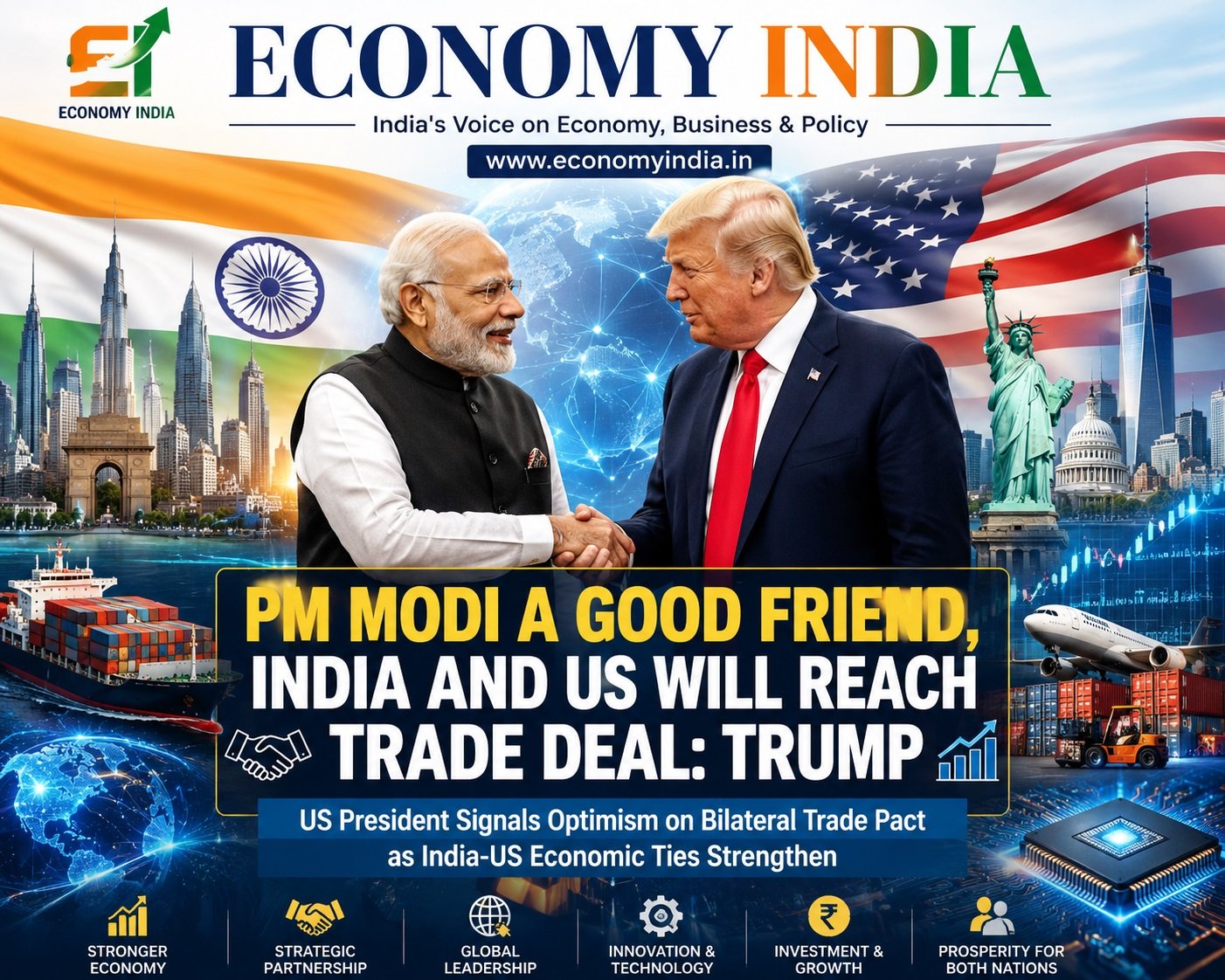
WASHINGTON (Economy India): US President Donald Trump has expressed confidence that the United States and India will successfully conclude a trade agreement, highlighting his strong personal relationship with Prime Minister Narendra Modi and emphasizing the importance of strengthening economic ties between the two countries.
Speaking to reporters at the Oval Office on Thursday, Trump said he believes ongoing negotiations will eventually result in a mutually beneficial trade deal.
“We will get to a deal because I like your prime minister a lot. He is a good friend of mine. We get along great, and we are gonna make a deal,” Trump said while responding to questions about the status of trade discussions between Washington and New Delhi.
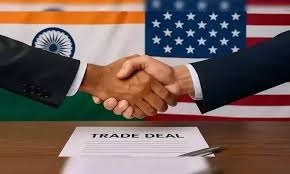
Trade Talks Gain Momentum
Trump’s remarks come amid continued negotiations between India and the United States over a proposed bilateral trade agreement aimed at enhancing market access, boosting investment flows, and expanding economic cooperation.

The two countries have been working to resolve long-standing issues related to tariffs, market access, digital trade, agriculture, and manufacturing sectors. Officials from both sides have held multiple rounds of discussions in recent months as part of efforts to strengthen commercial engagement.
While expressing optimism about the future agreement, Trump also reiterated concerns regarding India’s tariff structure.
“India has charged tremendous tariffs for many years,” Trump said, referring to trade barriers that have historically been a point of discussion between the two nations.
Strategic Importance of India-US Economic Relations
India and the United States share one of the world’s most significant strategic and economic partnerships. Bilateral trade between the two countries has grown steadily over the past decade, covering sectors such as:
- Information Technology
- Pharmaceuticals
- Energy
- Manufacturing
- Defense
- Agriculture
- Digital Services
The United States remains one of India’s largest trading partners, while India continues to be an important market for American businesses and investors.
Experts believe a comprehensive trade agreement could further accelerate bilateral commerce, create new investment opportunities, and strengthen supply chain cooperation.
Strong Personal Diplomacy
Trump’s comments also underscore the role of personal diplomacy in shaping India-US relations. Throughout their previous interactions, Trump and Prime Minister Modi have frequently highlighted their cordial relationship and commitment to deepening strategic cooperation.
Political analysts note that strong leadership-level engagement often contributes to smoother negotiations on complex economic and geopolitical issues.
Potential Benefits of a Trade Agreement
A successful trade pact between India and the United States could deliver several benefits:
- Increased bilateral trade volumes
- Greater market access for businesses
- Enhanced foreign direct investment (FDI)
- Strengthened manufacturing partnerships
- Improved supply chain resilience
- Expanded technology collaboration
Business leaders on both sides have long advocated for a structured trade framework that reduces barriers and promotes long-term economic cooperation.
Global Economic Context
The renewed focus on trade negotiations comes at a time when countries worldwide are seeking to diversify supply chains, attract investment, and strengthen economic partnerships amid evolving geopolitical and economic challenges.
For India, a trade agreement with the United States could support its ambitions of becoming a global manufacturing and export hub. For the US, deeper engagement with India aligns with broader efforts to expand economic cooperation in the Indo-Pacific region.
Trump’s positive remarks are likely to be viewed as an encouraging signal for businesses and investors tracking India-US trade negotiations. While several issues remain under discussion, both countries appear committed to finding common ground and advancing economic ties.
As negotiations continue, policymakers and industry stakeholders will closely watch developments that could pave the way for one of the most significant bilateral trade agreements in recent years.