WASHINGTON (Economy India) : In a significant and somewhat unexpected policy move, the United States has extended a sanctions waiver allowing countries to continue purchasing Russian oil for an additional month, offering temporary relief to global energy markets grappling with supply uncertainties.
The decision, announced by the United States Department of the Treasury, permits transactions involving Russian petroleum products already in transit as of April 17, with the waiver now valid through May 16, 2026.
Policy Reversal Signals Tactical Flexibility
The extension comes just days after Washington had indicated that it would not renew the waiver, highlighting a notable shift in policy stance. Earlier remarks by Scott Bessent suggested a stricter enforcement of sanctions targeting Russian and Iranian oil exports.
However, the evolving geopolitical landscape—particularly tensions linked to the ongoing West Asia crisis—appears to have compelled US policymakers to adopt a more flexible approach.

Under the new directive, General License No. 134B replaces the earlier license and allows limited transactions for oil cargoes already loaded on ships before the April 17 deadline.
Scope and Limitations of the Waiver
While the waiver provides temporary relief, it comes with clear restrictions:
- It applies only to oil already at sea before April 17, 2026
- It remains valid until May 16, 2026
- It does not authorize transactions involving entities linked to:
- Iran
- North Korea
- Cuba
- Certain regions of Ukraine
These conditions indicate that the extension is a controlled and time-bound measure, rather than a broader relaxation of sanctions policy.
Relief for Energy-Importing Nations, Including India
The waiver is particularly significant for countries like India, which have relied on discounted Russian crude to manage energy costs and inflationary pressures.
Earlier, the US had granted India a specific exemption beginning March 5, followed by similar relaxations for other countries. The continuation of this flexibility helps:
- Stabilize energy import costs
- Ensure refinery operations remain uninterrupted
- Prevent sudden spikes in domestic fuel prices
For India, which imports over 80% of its crude oil requirements, such measures are crucial for maintaining economic stability.
Global Oil Markets: Stability vs Uncertainty
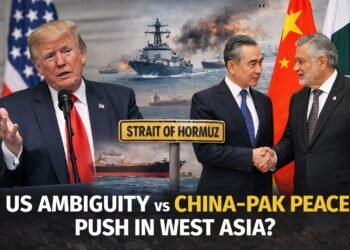
The extension comes at a time when global oil markets are under pressure due to geopolitical tensions, particularly around the Strait of Hormuz—a key maritime chokepoint responsible for transporting nearly one-fifth of the world’s crude oil.
Recent volatility has been driven by:
- Rising tensions involving Iran
- Concerns over supply disruptions in the Gulf
- Strategic stockpiling by major economies
The waiver ensures that approximately 140 million barrels of Russian oil already loaded on ships can continue to reach global markets, preventing an immediate supply crunch.
Strategic Calculations Behind the US Decision
Analysts suggest that the US move reflects a balancing act between geopolitical objectives and economic realities.
Key Strategic Considerations:
- Preventing Oil Price Surge
A sudden halt in Russian oil supply could have triggered sharp price increases, impacting global inflation. - Maintaining Market Stability
Allowing oil already in transit to reach markets avoids logistical disruptions and contractual disputes. - Managing Allies’ Interests
Countries dependent on Russian crude, including key US partners, require time to diversify supply sources. - Geopolitical Signaling
The temporary nature of the waiver maintains pressure on Russia while avoiding immediate market shocks.
Impact on Russia and Global Trade Dynamics
For Russia, the waiver provides a limited but important window to continue exporting oil already shipped, ensuring revenue flows are not abruptly disrupted.
However, the narrow scope of the extension underscores that:
- Long-term sanctions remain firmly in place
- Future exports could face tighter restrictions
- Global buyers may accelerate diversification strategies
This evolving scenario is reshaping global oil trade routes, with new supply alignments emerging across Asia, the Middle East, and Africa.
India’s Strategic Balancing Act
India continues to navigate a complex geopolitical environment, balancing its energy needs with diplomatic considerations.
Key Factors for India:
- Continued access to affordable Russian crude
- Maintaining strategic ties with the US and Western allies
- Diversifying energy sources to reduce long-term risks
New Delhi’s approach has largely been pragmatic—prioritizing national economic interests while engaging constructively with global partners.
What Lies Ahead?
The one-month extension raises important questions about the future trajectory of US sanctions policy:
- Will the waiver be extended again beyond May 16?
- How will escalating tensions in West Asia influence energy decisions?
- Can global markets adjust to reduced dependence on Russian oil?
Much will depend on geopolitical developments, particularly the evolving dynamics between the US, Iran, and other regional players.
Temporary Relief, Long-Term Uncertainty
The US decision to extend the sanctions waiver on Russian oil underscores the delicate balance between enforcing geopolitical strategies and ensuring economic stability.
While the move offers short-term relief to global markets and energy-importing nations, it also highlights the persistent uncertainty shaping the global energy landscape.
As geopolitical tensions continue to evolve, policymakers and markets alike will be closely watching the next steps from Washington and their broader implications for global trade, energy security, and economic stability.
(Economy India)