
US President Pushes for Diplomacy as Efforts Intensify to End Three-Month Israel-Iran Conflict
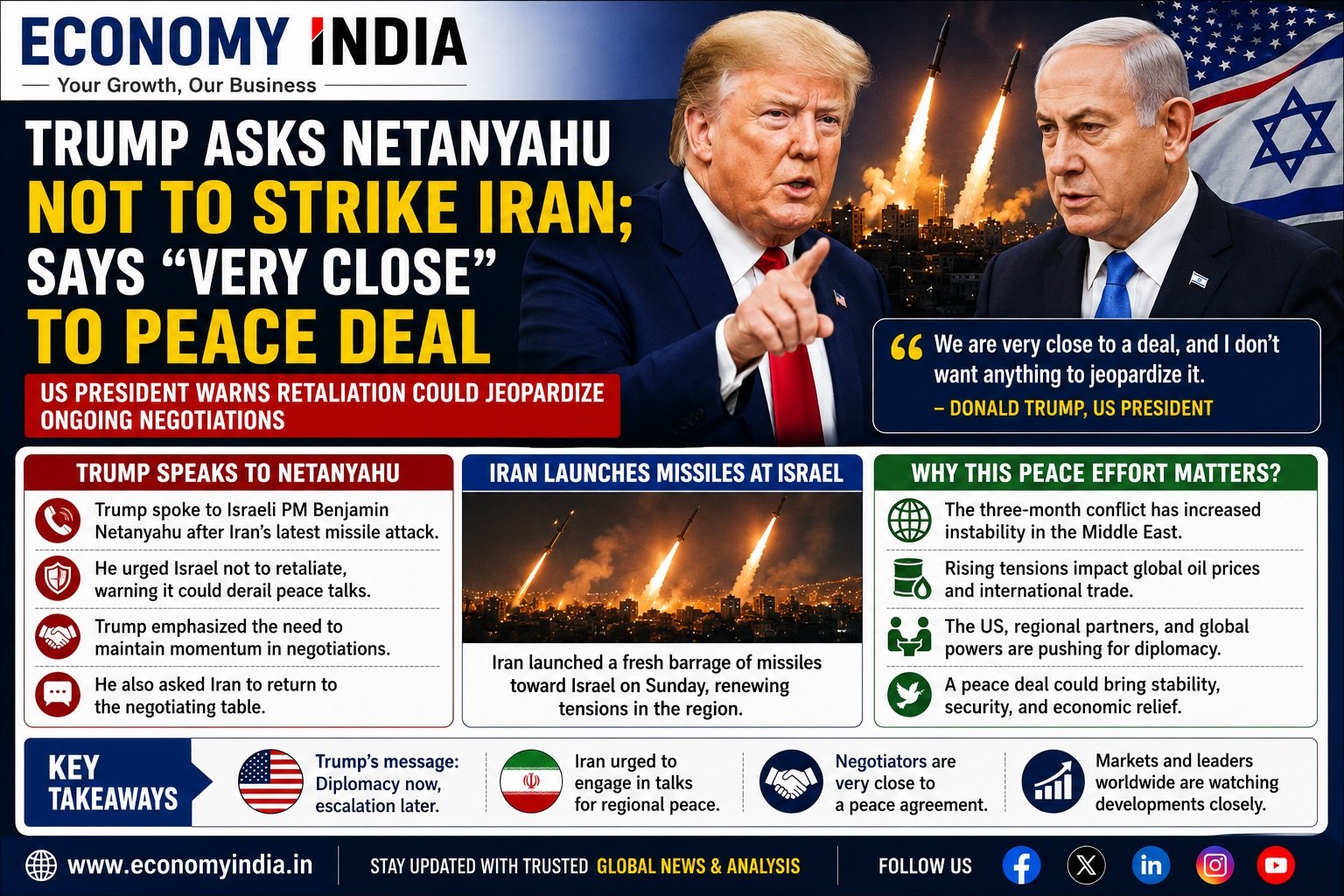
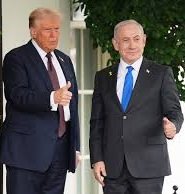
Washington (Economy India): In a major diplomatic development amid rising tensions in the Middle East, US President Donald Trump has reportedly urged Israeli Prime Minister Benjamin Netanyahu to refrain from launching retaliatory military action against Iran following Tehran’s latest missile attack on Israel.
According to reports, Trump personally spoke with Netanyahu after Iran launched a fresh barrage of missiles on Sunday, emphasizing that any immediate military response could jeopardize delicate negotiations currently underway to end the nearly three-month-long conflict between the two regional rivals.
The intervention highlights Washington’s growing efforts to prevent a wider regional war and secure a diplomatic breakthrough that could bring stability to one of the world’s most volatile regions.
Trump Seeks to Preserve Momentum of Peace Talks
Sources familiar with the discussions indicated that Trump believes negotiators are on the verge of reaching a significant agreement and that any escalation at this stage could derail months of diplomatic work.

The US President reportedly conveyed to Netanyahu that the situation remains highly sensitive and that restraint would be critical to preserving the progress achieved through ongoing backchannel negotiations.
Trump is also said to have sent a message to Iran’s leadership, urging Tehran to return to the negotiating table and engage constructively in efforts aimed at reducing hostilities.
Speaking about the ongoing diplomatic process, Trump reportedly described the prospects of an agreement as “very close,” signaling optimism that a breakthrough could be achieved in the coming days.
Three Months of Conflict Have Raised Global Concerns
The Israel-Iran confrontation has remained one of the most closely watched geopolitical crises of 2026. The conflict, which has stretched for nearly three months, has triggered repeated missile exchanges, military alerts, and international diplomatic interventions.
Global leaders have repeatedly warned that a full-scale military confrontation between Israel and Iran could destabilize the broader Middle East and create significant challenges for international security.
The latest missile attack from Iran renewed fears that the situation could spiral into a larger regional conflict involving multiple actors across West Asia.
Impact on Global Economy and Energy Markets
Beyond security concerns, the conflict has had major implications for the global economy.
The Middle East remains a crucial hub for global energy production and transportation. Any disruption in the region can directly affect crude oil supplies, shipping routes, and international trade flows.
Financial markets have remained sensitive to developments between Israel and Iran, with investors closely monitoring diplomatic and military signals.
Energy analysts warn that prolonged instability could trigger fluctuations in crude oil prices, increase transportation costs, and create uncertainty for businesses worldwide.
Countries heavily dependent on imported energy resources, including several major Asian economies, are particularly vulnerable to supply disruptions originating from the region.
International Community Calls for Restraint
Several world powers and international organizations have urged both Israel and Iran to exercise restraint and prioritize diplomacy over military action.
Diplomatic efforts involving the United States, European partners, and regional stakeholders have intensified in recent weeks as mediators attempt to prevent further escalation.
Officials believe that maintaining open channels of communication remains essential to reducing tensions and preventing miscalculations that could lead to broader conflict.
The United Nations and various international bodies have also emphasized the importance of dialogue, warning that continued hostilities could have severe humanitarian and economic consequences.
Netanyahu Faces Critical Decision
For Israeli Prime Minister Benjamin Netanyahu, the situation presents a complex strategic challenge.
While Israel has traditionally responded strongly to missile attacks, growing international pressure and the possibility of a diplomatic settlement may influence decision-making in the coming days.
Security analysts note that any military retaliation could provoke another cycle of attacks and counterattacks, making it more difficult to achieve a negotiated resolution.
At the same time, Israeli leaders face domestic pressure to demonstrate a firm response to security threats.
Diplomatic Window Remains Open
Despite continued tensions, Trump’s remarks have generated cautious optimism among diplomatic observers.
The suggestion that negotiators are nearing a peace agreement indicates that behind-the-scenes talks may have made substantial progress.
However, experts caution that the situation remains fragile and that even a single military incident could quickly reverse gains achieved through diplomacy.
The coming days are expected to be critical as both sides weigh their options and international mediators work to secure a lasting framework for peace.
Global Markets Watching Closely
Investors, policymakers, and businesses worldwide are monitoring developments closely.
A successful peace agreement could ease geopolitical tensions, stabilize energy markets, and improve investor confidence. Conversely, renewed military escalation could increase uncertainty and place additional pressure on global economic growth.
With the world economy already navigating multiple challenges, including inflation concerns and supply chain disruptions, stability in the Middle East remains a key priority for governments and markets alike.
(Economy India)