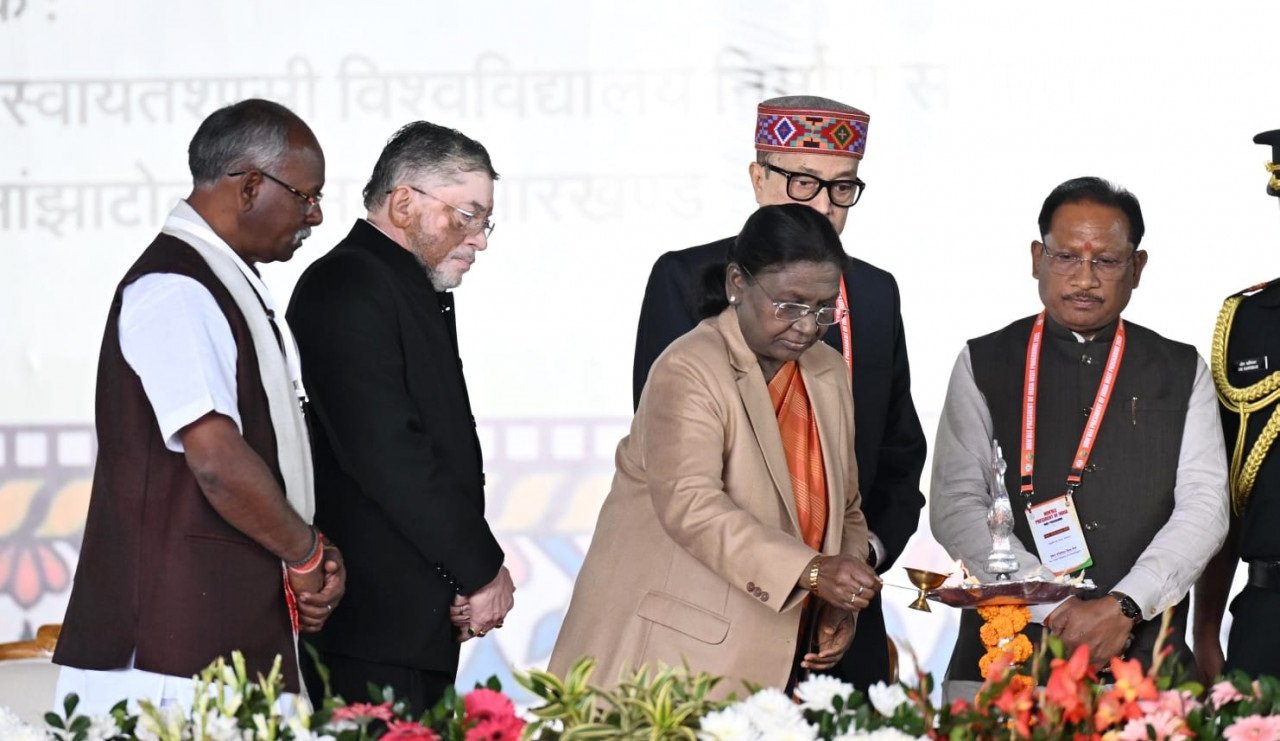

At Jharkhand’s Kartik Jatra, the President lauds tribal craftsmanship and self-reliance; CM Sai says Bastar is moving beyond extremism towards peace and development
RAIPUR (Economy India): President Droupadi Murmu praised the craftsmanship, skill and self-reliance of tribal women artisans from Jashpur district, Chhattisgarh, during the inter-state cultural gathering “Kartik Jatra” held in Manjhatoli, Gumla (Jharkhand). The President specifically highlighted products made under the brand ‘Jashcraft’, calling them a symbol of women empowerment, tribal identity and dignified livelihood.
Chhattisgarh Chief Minister Vishnudev Sai, who was present at the event, said the recognition is a matter of pride for the entire state and reflects the growing strength of tribal women’s economic participation.
President Murmu Applauds Jashpur’s Tribal Craftsmanship
President Murmu noted that the women from Self-Help Groups (SHGs) are producing eco-friendly ornaments, forest craft items and hand-made tribal accessories that preserve traditional heritage while creating modern market value.
“These creations are not just products; they are living expressions of tribal identity, cultural preservation and economic independence,” the President said.
She added that such initiatives not only reinforce cultural confidence but also help younger generations stay connected to their roots while stepping into the modern economy.

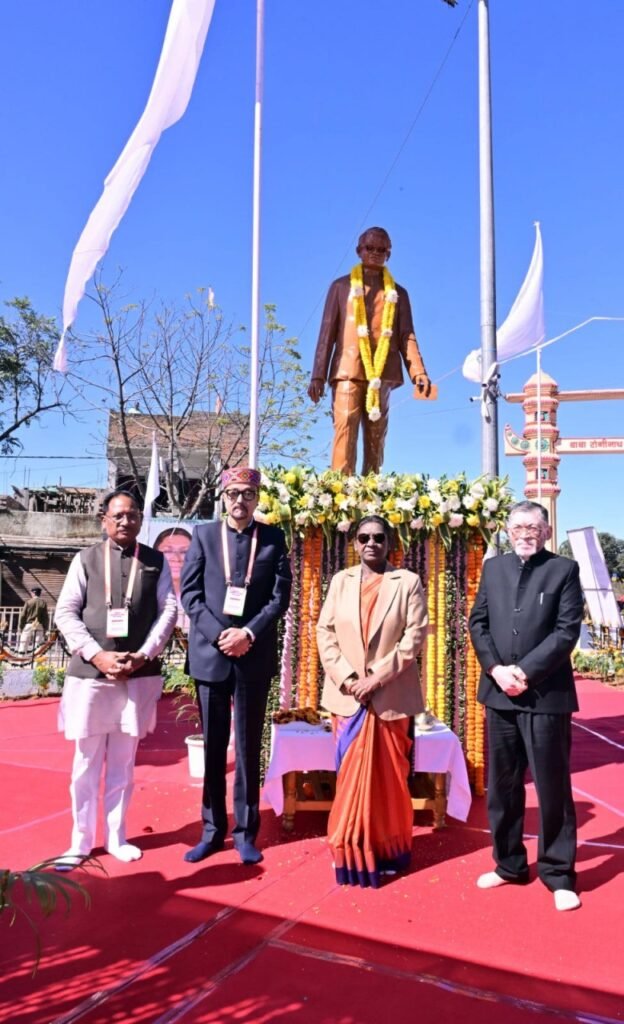
Jashcraft Becomes a Model for ‘Vocal for Local’
Highlighting Jashcraft as a model for rural entrepreneurship, CM Sai said the initiative showcases how tribal women are shaping their own identity through skill and livelihood.
“The courage and creativity of Jashpur’s women represent Chhattisgarh’s pride. The President’s encouragement will strengthen the spirit of self-reliance and the mission of ‘Vocal for Local’,” Sai stated.
He also thanked President Murmu on behalf of the women of Jashpur for acknowledging their work.
Cultural Exhibitions Draw Attention
The Kartik Jatra event also featured:
- Tribal art and handicraft exhibitions
- Traditional dance and folk performances
- SHG product displays from multiple districts
- Forest produce-based livelihood models
The Chhattisgarh delegation presented Jashpur’s signature craft line, traditional jewellery designs, and eco-friendly utility products, sending a strong message of tribal identity, sustainability, and enterprise.
Bastar Moving Beyond Naxalism: CM Sai
In his address, Chief Minister Vishnudev Sai highlighted the transformation taking place in Bastar, once heavily affected by left-wing extremism.
He noted that:
- 400+ villages have emerged from Naxal influence
- Road connectivity, electricity, water supply, and schools are expanding
- Health and ration systems are reaching remote regions
- Security and administrative presence have strengthened
“Naxalism is taking its last breaths. The people of Bastar want peace, and development has finally begun reaching their doorstep,” Sai said.
He credited Prime Minister Narendra Modi and Home Minister Amit Shah for decisive policies that enabled on-ground improvement.
Tourism & Employment: The Next Phase
The Chief Minister added that the state is working to promote tribal tourism circuits, traditional art markets and eco-tourism hubs to generate local employment opportunities for youth.
He stated that tourism-led livelihood generation will create sustainable economic models for native communities.
Legacy of Tribal Icons and State Formation
Recalling the contributions of Birsa Munda, Sai said that his struggle for jal–jungle–zameen (land, water and forest) remains a guiding force for tribal self-respect. He further acknowledged leaders like Pankajraj Saheb Kartik Oraon for advancing education and social unity among tribal communities.
The CM also noted that former Prime Minister Atal Bihari Vajpayee’s leadership made the creation of Chhattisgarh and Jharkhand possible, enabling regional identity and progress.
A Vision for the Future
The inter-state cultural gathering, according to the Chief Minister, is more than a symbolic event — it is a bridge that connects tribal communities across regions, beliefs and aspirations.
“This cultural unity will continue to inspire peace, prosperity, and a decisive victory over extremism,” Sai concluded.
(Economy India)