
New US import duty may impact India’s exports, while textile sector faces added pressure from tariff concessions to competing countries
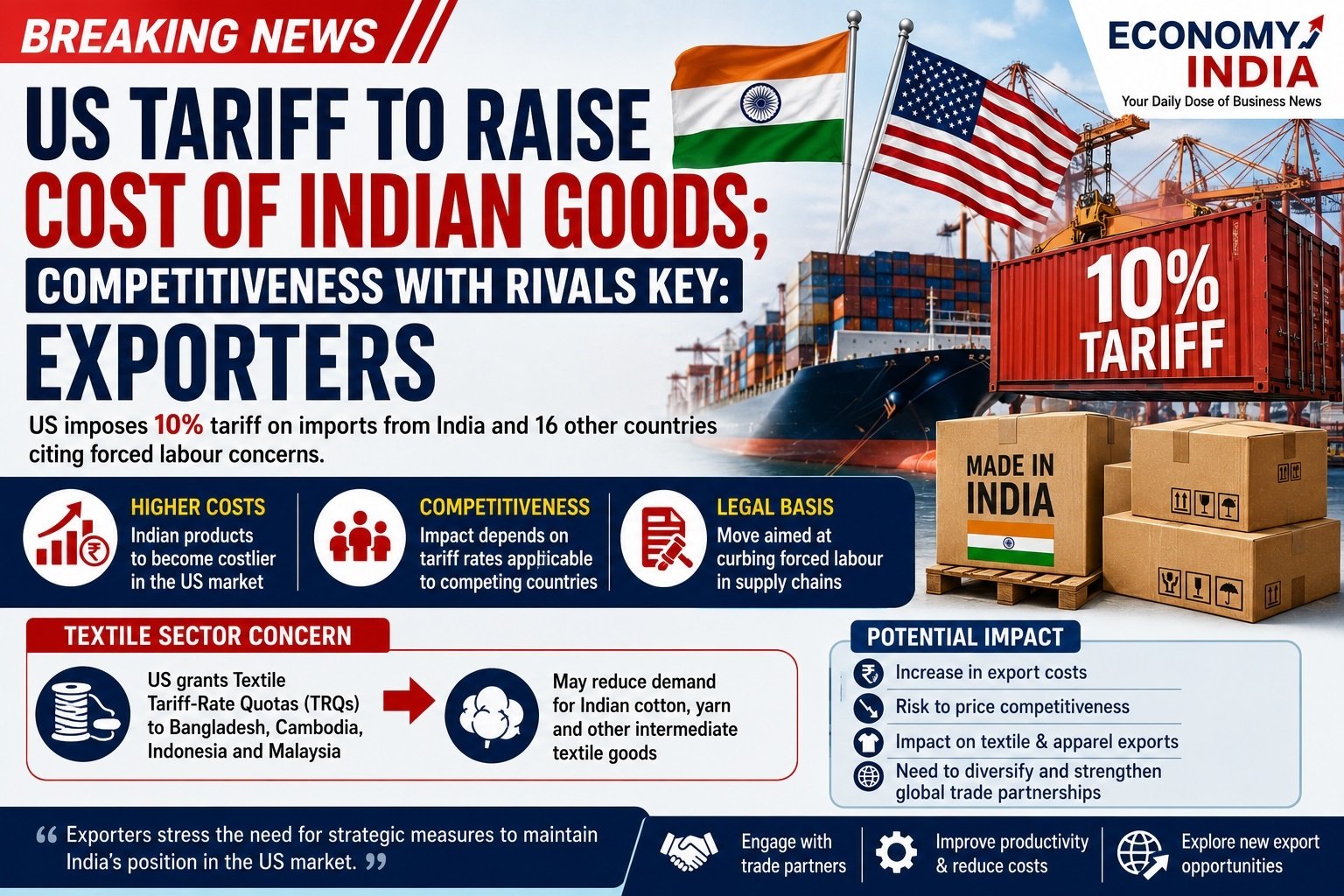
New Delhi (Economy India): Indian exporters have expressed concern that the 10% tariff imposed by the United States on imports from India will make Indian products more expensive in the American market, potentially affecting export competitiveness. However, industry leaders said the actual impact will depend on how India’s tariff rates compare with those imposed on competing exporting nations.
The United States has levied the tariff on imports from India and 16 other countries as part of its efforts to curb the use of forced labour in global supply chains.
Exporters Urge Relative Assessment
Exporters emphasized that the effect of the tariff should not be viewed in isolation.
Instead, they believe India’s competitive position will depend on whether rival exporting countries face similar or lower tariff rates. If competitors enjoy lower duties, Indian products could lose market share in one of the country’s largest export destinations.

Textile Industry Faces Additional Challenge
India’s textile exporters have raised particular concerns over the US decision to provide Textile Tariff-Rate Quotas (TRQs) to countries including:
- Bangladesh
- Cambodia
- Indonesia
- Malaysia
The quotas are linked to imports of US-grown cotton, a move that industry representatives fear could reduce demand for Indian cotton, yarn, and other textile intermediate products.
Potential Impact on Trade
Industry experts believe the new tariff may:
- Increase the cost of Indian exports in the US market.
- Reduce price competitiveness for several sectors.
- Affect textile and apparel supply chains.
- Impact demand for Indian cotton and yarn exports.
- Encourage exporters to diversify into alternative global markets.
Need for Strategic Response
Export bodies have called for continuous engagement between India and the US to address trade concerns while also exploring new export opportunities under existing and upcoming free trade agreements with other global partners.
Businesses are also expected to focus on improving productivity, reducing costs, and enhancing product value to remain competitive despite higher tariffs.
| Particulars | Details |
|---|---|
| US Tariff on Indian Goods | 10% |
| Countries Covered | India + 16 others |
| Reason Cited by US | Forced labour concerns |
| Textile TRQs Given To | Bangladesh, Cambodia, Indonesia, Malaysia |
| Major Concern | Higher export costs and reduced competitiveness |
While the immediate impact of the US tariff may raise costs for Indian exporters, the long-term effect will largely depend on tariff treatment of competing countries and India’s ability to strengthen trade partnerships, improve competitiveness, and diversify export markets.
(Economy India)