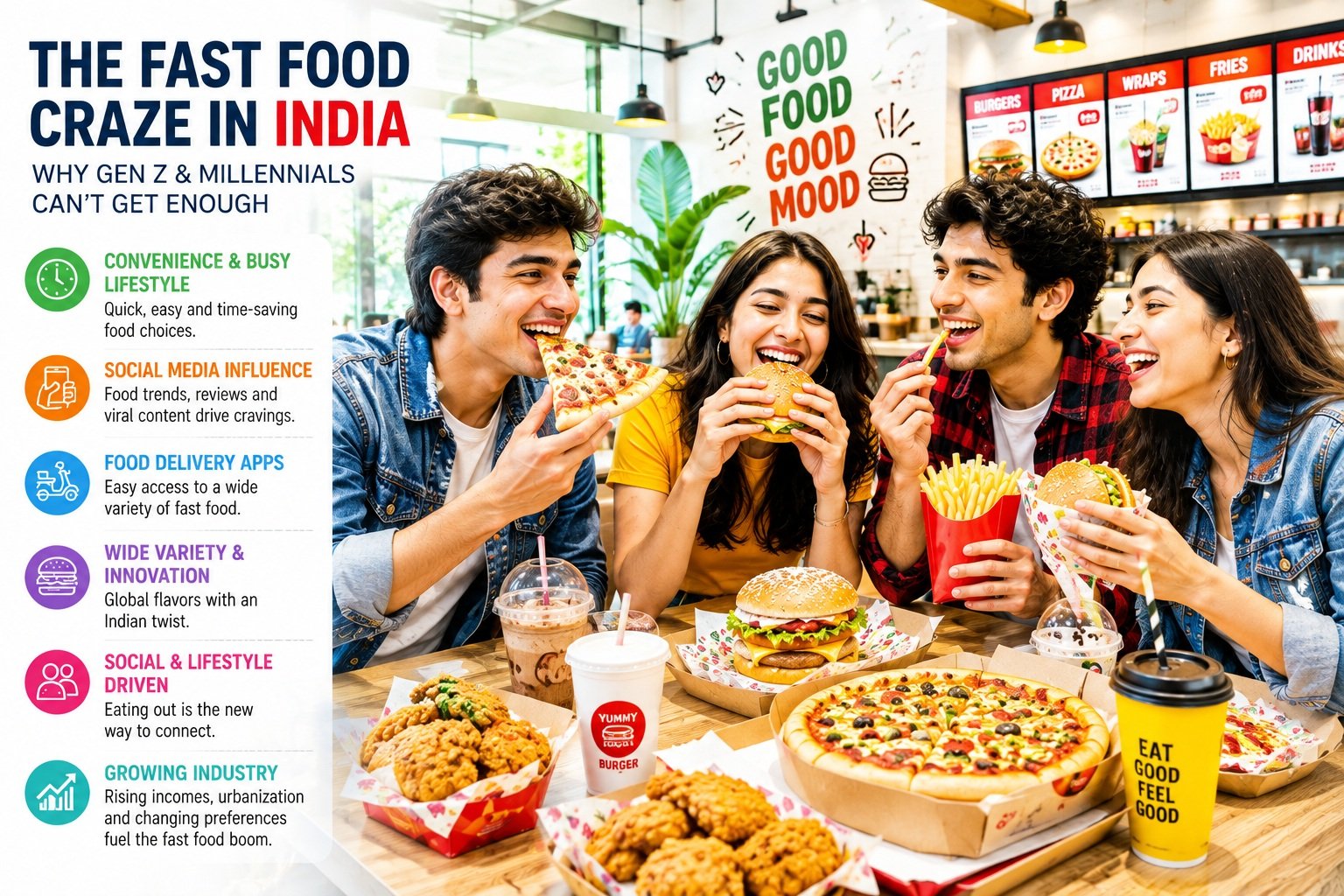
(Economy India):Fast food has become an integral part of modern lifestyles in India, especially among Gen Z and Millennials. Over the past decade, the country’s food habits have changed significantly due to urbanization, busy work schedules, digital food delivery platforms, and the influence of global food trends. Burgers, pizzas, fried chicken, sandwiches, noodles, tacos, and bubble tea have become everyday choices for millions of young consumers.
One of the biggest reasons behind the growing popularity of fast food is convenience. Young professionals and college students often have hectic schedules, leaving little time to prepare meals at home. Ordering food through apps takes only a few minutes, making fast food an easy and attractive option.
Social media has also played a major role in increasing fast food consumption. Platforms such as Instagram, YouTube, and short-video apps constantly showcase trending dishes, restaurant reviews, and food challenges. Eye-catching food content encourages young people to try new restaurants and cuisines, making dining out or ordering online a part of their lifestyle.
The rapid expansion of international and Indian fast-food chains has further fueled this trend. Brands continue to introduce new menu items that suit Indian tastes, including spicy burgers, paneer-based snacks, vegetarian pizzas, wraps, and fusion dishes. Local street food has also evolved, with vendors offering modern versions of traditional favorites like momos, rolls, pav bhaji, and sandwiches.
Another factor driving demand is the growth of food delivery services. Consumers can now access thousands of restaurants with just a few taps on their smartphones. Attractive discounts, loyalty rewards, subscription plans, and quick delivery have made ordering fast food more affordable and convenient than ever before.
However, the increasing dependence on fast food has also raised health concerns. Many fast-food items contain high levels of calories, sugar, salt, and unhealthy fats. Regular consumption may contribute to obesity, diabetes, high blood pressure, and heart-related diseases. Nutrition experts recommend balancing occasional fast-food meals with fresh fruits, vegetables, whole grains, and home-cooked food.
Despite these concerns, the fast-food industry in India continues to grow rapidly. Rising disposable incomes, expanding urban populations, and changing consumer preferences are expected to keep the sector on a strong growth path. Many brands are also introducing healthier menu options, including salads, grilled items, low-calorie meals, and plant-based alternatives to meet changing consumer demands.
Fast food is no longer just an occasional treat in India—it has become a part of everyday life for many young people. While its popularity is expected to continue rising, maintaining a balanced diet and making healthier food choices will remain essential for long-term well-being.
(Economy India)