
Overseas Pakistanis Send Historic Inflows as Remittances Rise 8.6% in FY26
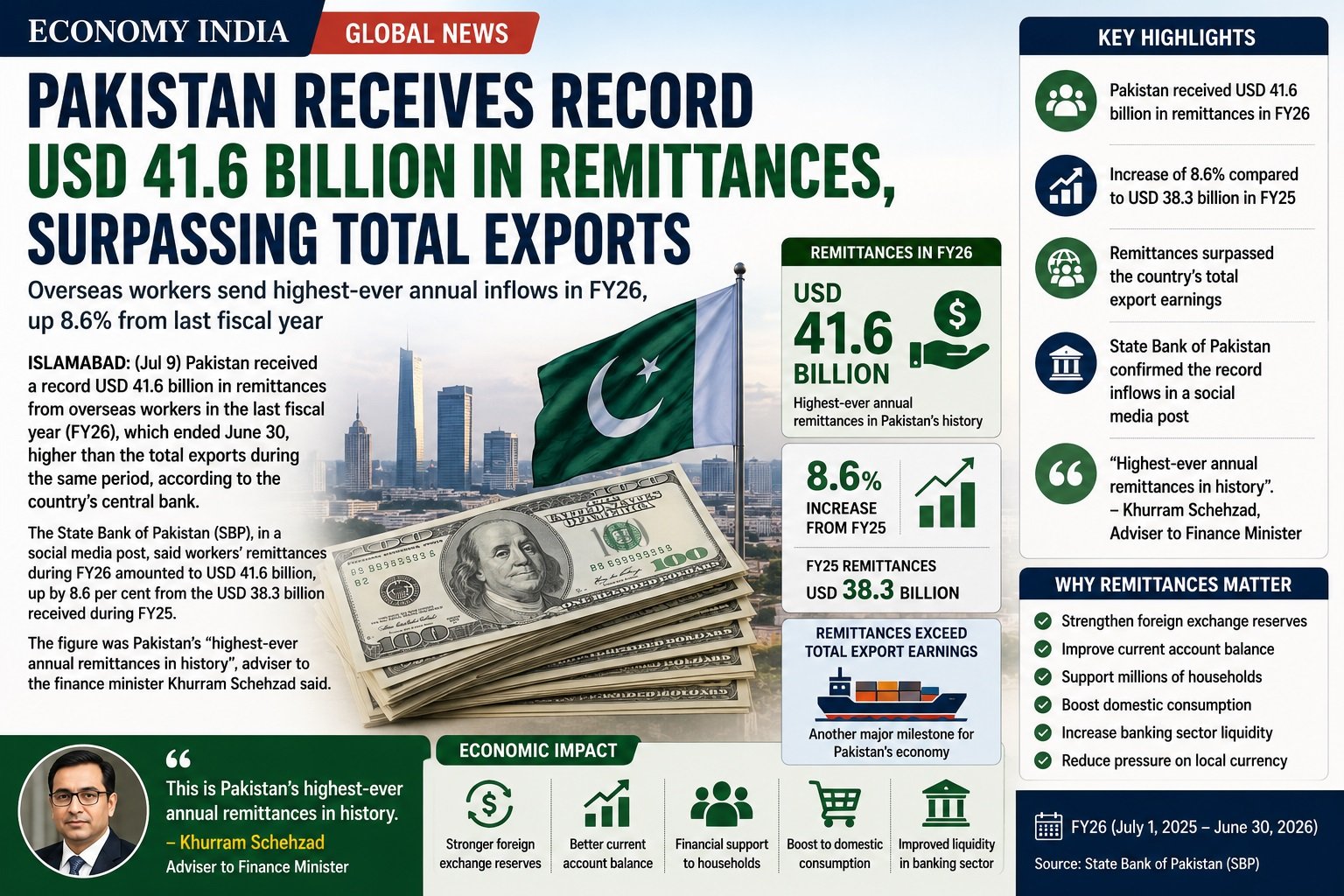
Islamabad (Economy India): Pakistan received a record USD 41.6 billion in workers’ remittances during the fiscal year 2025-26 (FY26), marking the highest annual inflow in the country’s history and exceeding the nation’s total export earnings during the same period.
The milestone, announced by the State Bank of Pakistan (SBP), highlights the growing role of overseas Pakistanis in supporting the country’s economy amid ongoing fiscal and external sector challenges.
According to the central bank, remittances during FY26 increased 8.6% from USD 38.3 billion recorded in FY25, reflecting steady financial support from millions of Pakistanis working abroad.
Highest-Ever Annual Remittance Inflows
The State Bank of Pakistan shared the figures through a social media post, confirming that FY26 registered the highest level of annual remittances ever received by the country.

Finance Minister’s Adviser Khurram Schehzad described the achievement as Pakistan’s “highest-ever annual remittances in history,” underlining the crucial contribution of overseas workers to the national economy.
The record inflows come at a time when Pakistan continues efforts to stabilize its economy, strengthen foreign exchange reserves and manage external financing needs.
Remittances Surpass Export Earnings
One of the most notable aspects of the FY26 data is that workers’ remittances exceeded Pakistan’s total export earnings, underscoring the increasing importance of overseas income in supporting the country’s balance of payments.
Traditionally, exports have been the primary source of foreign exchange for developing economies. However, Pakistan’s latest figures show that remittances have become an even larger contributor to foreign currency inflows.
This trend demonstrates the significant economic impact of Pakistan’s large overseas workforce, particularly in Gulf countries, Europe, North America and the United Kingdom.
Why Remittances Matter
Workers’ remittances play a vital role in Pakistan’s economy by:
- Supporting foreign exchange reserves
- Improving the current account balance
- Providing financial support to millions of households
- Boosting domestic consumption
- Strengthening banking sector liquidity
- Reducing pressure on the local currency
Unlike external borrowing, remittances do not create repayment obligations, making them a stable and valuable source of foreign exchange.
Factors Behind the Growth
Several factors may have contributed to the increase in remittance inflows:
- Continued employment of Pakistani workers overseas
- Greater use of formal banking channels
- Digital payment and money transfer platforms
- Government initiatives encouraging official remittance transfers
- Stable demand for labour in Gulf economies
Higher remittances also reflect stronger engagement by the Pakistani diaspora in supporting families back home.
Economic Significance
The record inflows provide much-needed support to Pakistan’s economy, which has faced challenges including inflation, external debt obligations and currency pressures in recent years.
Higher remittances help strengthen the country’s external account and provide additional foreign currency to the banking system.
Economists note that sustained remittance growth can improve investor confidence and reduce dependence on short-term external financing.
Maintaining the momentum in remittance inflows will remain an important priority for Pakistan.
The government is expected to continue policies aimed at encouraging overseas Pakistanis to use formal financial channels while expanding employment opportunities abroad.
Although remittances provide significant support, economists also emphasize the need for stronger export growth, industrial competitiveness and higher foreign direct investment to ensure long-term economic stability.