
USD 9 Billion in Loan Rollovers Help Islamabad Ease External Financing Pressures
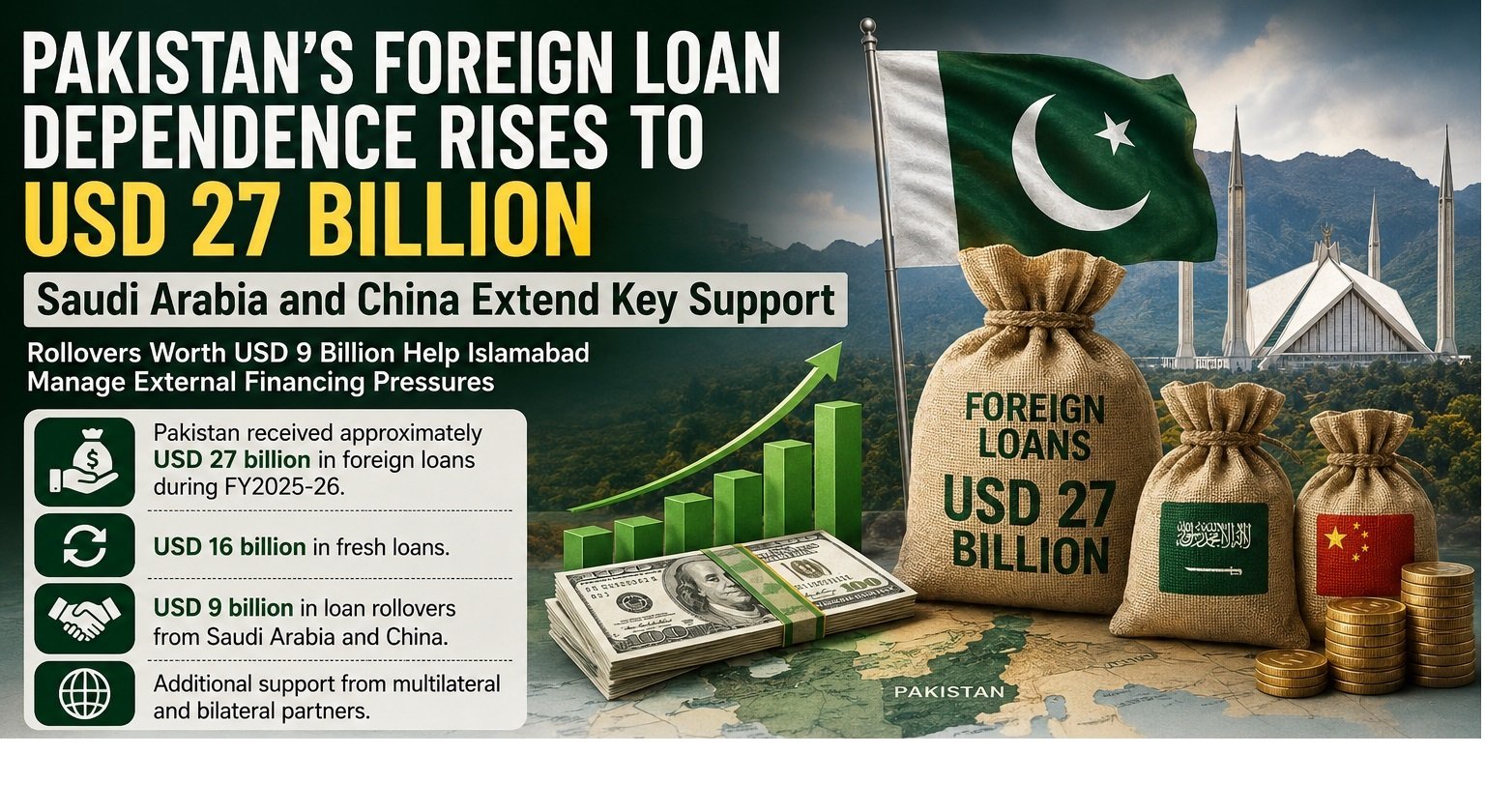
Karachi (Economy India): Pakistan’s reliance on foreign financing remained elevated during fiscal year 2025-26, with the country securing nearly USD 27 billion in external assistance, including USD 9 billion in loan rollovers from key allies Saudi Arabia and China, according to a provisional report released by Pakistan’s Ministry of Economic Affairs.
The latest figures underscore Islamabad’s continued dependence on friendly nations and international lenders to stabilize its economy, maintain foreign exchange reserves, and meet growing external debt obligations amid persistent macroeconomic challenges.
Pakistan Receives USD 27 Billion in External Financing
The government report revealed that Pakistan obtained approximately USD 27 billion in foreign loans during FY2025-26, marginally higher than the USD 26 billion secured in the previous fiscal year.
The financing package comprised:
- USD 16 billion in fresh external loans
- USD 9 billion in loan rollovers from Saudi Arabia and China
- Additional funding from multilateral and bilateral development partners
The increase reflects the country’s continued reliance on external borrowing to finance fiscal deficits and support its balance of payments.
Saudi Arabia and China Extend Financial Lifeline
Pakistan’s longstanding strategic partners, Saudi Arabia and China, once again played a pivotal role in easing the country’s financing pressures.
According to the report, Saudi Arabia:
- Extended its USD 3 billion deposit facility with Pakistan’s central bank.
- Renewed an existing USD 5 billion financial support facility for another three years.
China also rolled over substantial financial assistance, helping Pakistan avoid immediate repayment obligations while supporting its foreign exchange reserves.
These rollover arrangements have become an important tool for Pakistan in managing short-term liquidity challenges without requiring fresh repayments.
Economy Continues to Face Structural Pressures
Despite signs of macroeconomic stabilization under ongoing reform efforts, Pakistan continues to grapple with several economic headwinds, including:
- Rising external debt obligations
- Fragile foreign exchange reserves
- Persistent inflation
- Currency depreciation
- Modest economic growth
- High financing requirements
The government has increasingly relied on bilateral partners, multilateral institutions, and international financial markets to meet its external funding needs.
Rollovers Offer Relief, Not a Permanent Solution
Economists caution that while loan rollovers help ease immediate repayment pressures and provide breathing space for policymakers, they do not reduce the country’s overall debt burden.
Instead, they merely postpone repayment obligations, making long-term economic reforms essential for achieving sustainable financial stability.
Experts believe Pakistan’s long-term economic health will depend on:
- Expanding exports
- Attracting higher foreign direct investment (FDI)
- Broadening the tax base
- Strengthening fiscal discipline
- Implementing structural economic reforms
- Enhancing productivity and industrial competitiveness
Without meaningful reforms, the country is likely to remain dependent on external financing support.
Pakistan’s latest foreign financing data highlights the crucial role played by Saudi Arabia and China in supporting the country’s economic stability during a challenging fiscal period. While rollover arrangements have helped Islamabad manage immediate external financing pressures, policymakers face the larger challenge of reducing dependence on foreign borrowing through sustained economic reforms, stronger domestic revenue generation, and increased private investment.
As global financial conditions remain uncertain, Pakistan’s ability to strengthen its economic fundamentals will be critical in ensuring long-term debt sustainability and restoring investor confidence.
(Economy India)