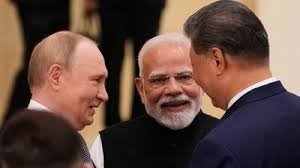

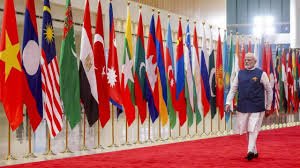
Vladivostok (Economy India): India has reiterated its strong commitment to an open, transparent, and WTO-centered global trading system at the Shanghai Cooperation Organisation (SCO) Trade Ministers’ Meeting held in Vladivostok on September 6. Represented by Amitabh Kumar, Additional Secretary, Department of Commerce, India emphasized the importance of collective action within the SCO to strengthen supply chains, diversify exports, and reduce trade vulnerabilities.
The meeting assumed significance as SCO members collectively account for 42% of the world’s population and nearly 17.2% of global trade. With global trade facing disruptions due to protectionism, climate-linked restrictions, and technological shifts, India urged coordinated steps to ensure inclusive and sustainable growth across the Eurasian region.
WTO-Centric Trade Agenda: Rebuilding Global Trust
In his intervention, Kumar underlined that the World Trade Organization (WTO) must remain at the heart of the global trade system. He called for a rules-based, non-discriminatory multilateral trade framework, where all nations—especially developing economies—can benefit equitably.
India outlined three key priorities:
- Permanent Solution on Public Stockholding (PSH): Food security remains critical for developing nations. India pressed for an urgent resolution that ensures countries can stockpile food grains without breaching WTO subsidy limits.
- Special and Differential Treatment (S&DT): India reiterated that developing and least-developed countries must receive fair treatment in trade agreements to level the playing field.
- Reviving the WTO Dispute Settlement Mechanism: India stressed that restoring a two-tier system, including the Appellate Body, is essential to prevent arbitrary trade actions and rebuild trust among members.
According to India, these measures will restore credibility to the WTO, particularly at a time when unilateral trade measures and geo-economic rivalries have weakened multilateralism.
India Calls for Balanced Use of Trade Restrictions
Another key theme in India’s intervention was the need to prevent misuse of export restrictions. Kumar emphasized that export controls must not be weaponized to create artificial shortages, manipulate markets, or disrupt supply chains.
“Balanced and transparent use of trade measures is essential to sustain trust in international commerce,” he said. India argued that trust in global trade is already fragile due to climate-linked tariffs and export bans imposed by some economies. If left unchecked, such practices could deepen fragmentation in world trade.
Supply Chains, Connectivity, and Market Diversification
India highlighted the urgent need to diversify supply and production chains to reduce over-dependence on single geographies. The SCO, with its vast population and resource base, offers an opportunity to create predictable market access and interoperable logistics frameworks.
According to India, addressing persistent trade imbalances requires:
- Improved market access for exports,
- Cooperation on standards and certifications, and
- Streamlined trade facilitation measures across SCO economies.
By creating smoother logistics and greater connectivity, India believes the SCO can reduce trade vulnerabilities and foster regional economic resilience.
Digital Economy: India’s Showcase of DPI
A highlight of India’s presentation was its Digital Public Infrastructure (DPI) framework, which has been recognized globally as a low-cost and scalable innovation model. India urged SCO members to collaborate on fair, transparent, and predictable digital regulatory frameworks that support innovation and secure data practices.
India showcased its flagship digital initiatives:
- Unified Payments Interface (UPI): Enabling real-time, low-cost transactions at scale.
- India Stack: A unique digital identity and consent-management platform.
- Open Network for Digital Commerce (ONDC): A democratized digital marketplace model.
These initiatives, India argued, reduce costs for MSMEs, expand their access to markets, and facilitate real-time settlements between trusted partners. India presented them as replicable and standards-based models that other SCO members can adopt through pilot projects.
Climate and Sustainability: Equity and CBDR at Core
On climate-linked trade issues, India reaffirmed its support for the principle of Common but Differentiated Responsibilities and Respective Capabilities (CBDR-RC). It highlighted its flagship initiative, Mission LiFE (Lifestyle for Environment), which promotes sustainable consumption at the community level.
India cautioned that climate-related trade measures, such as carbon border taxes, must not become tools of arbitrary or unjust discrimination. Instead, climate action should be supported by affordable finance and technology transfers to ensure fairness across developing nations.
AVGC Sector and the Creative Economy
The meeting also provided India an opportunity to spotlight its rapidly expanding Animation, Visual Effects, Gaming, and Comics (AVGC) sector as a new driver of jobs, exports, and inclusive development.
India recalled the successful hosting of the World Audio Visual and Entertainment Summit (WAVES 2025) earlier this year, where over 100 countries participated. The summit gave rise to new initiatives, including:
- WAVES Market: A global media collaboration platform.
- Wavex Fund: A financing facility for creative start-ups.
- Creatosphere Talent Challenge: A program to nurture creative talent in India.
Supported by 17 co-production treaties and simplified regulations, India is positioning itself as a global hub for film production and creative industries under the “India Cine Hub” initiative.
MSMEs and Services: Expanding Participation in Global Value Chains
India also emphasized the importance of MSME participation in global trade, particularly through services and the movement of skilled professionals. Kumar noted that service trade liberalization, backed by transparency and national regulations, could significantly expand opportunities for small businesses.
India highlighted that MSMEs in particular stand to benefit from digital infrastructure, open markets, and affordable logistics, making them integral to resilient supply chains.
SCO’s Collective Economic Potential
The SCO, comprising countries that represent over 42% of humanity, holds vast untapped potential in trade, technology, and energy. With global economic uncertainty persisting, India sees the SCO as an essential forum for building inclusive regional prosperity.
India pointed out that:
- The SCO region must leverage its demographic and technological advantages to increase intra-regional trade.
- Diversified production bases and integrated logistics could reduce over-reliance on a handful of global suppliers.
- A collective approach to digital economy and sustainability will make the SCO a more influential voice in global trade governance.
Looking Ahead: India’s Commitment
In its closing remarks, India thanked Russia for advancing a robust SCO trade agenda under its chairmanship and expressed readiness to work with Tajikistan’s presidency (2026–27) to further strengthen cooperation.
India’s participation in the meeting reaffirmed its commitment to:
- Promoting a WTO-centric rules-based order,
- Building resilient supply chains,
- Showcasing digital innovation as a model for inclusive growth,
- Supporting sustainability through equitable climate action, and
- Expanding the role of MSMEs and the creative economy in global trade.
Expert Outlook
Trade experts believe India’s intervention at Vladivostok sends a clear signal: New Delhi intends to position itself as a bridge between advanced and developing economies within the SCO framework.
By combining its digital innovation leadership with its advocacy for food security and fair trade rules, India is creating a balanced narrative—one that addresses the aspirations of both emerging markets and global institutions.
“India’s pitch for WTO reforms and its push for digital public infrastructure as a replicable model are timely,” said a Delhi-based trade analyst. “At a time when protectionism and technology-driven trade barriers are rising, India’s emphasis on inclusivity and fairness resonates well within the SCO.”
India’s strong advocacy at the SCO Trade Ministers’ meet underscores its evolving role as a champion of fair trade, digital innovation, and sustainable growth. By combining traditional trade priorities such as food security with forward-looking proposals in digital economy and creative industries, India has positioned itself as a key voice shaping the future of regional and global commerce.
As the SCO prepares for Tajikistan’s presidency in 2026–27, India’s commitment to practical cooperation and inclusive growth will likely ensure that its influence in the bloc continues to expand.
(Economy India)