
State records second consecutive month of year-on-year GST growth, with collections up 9.5% over June
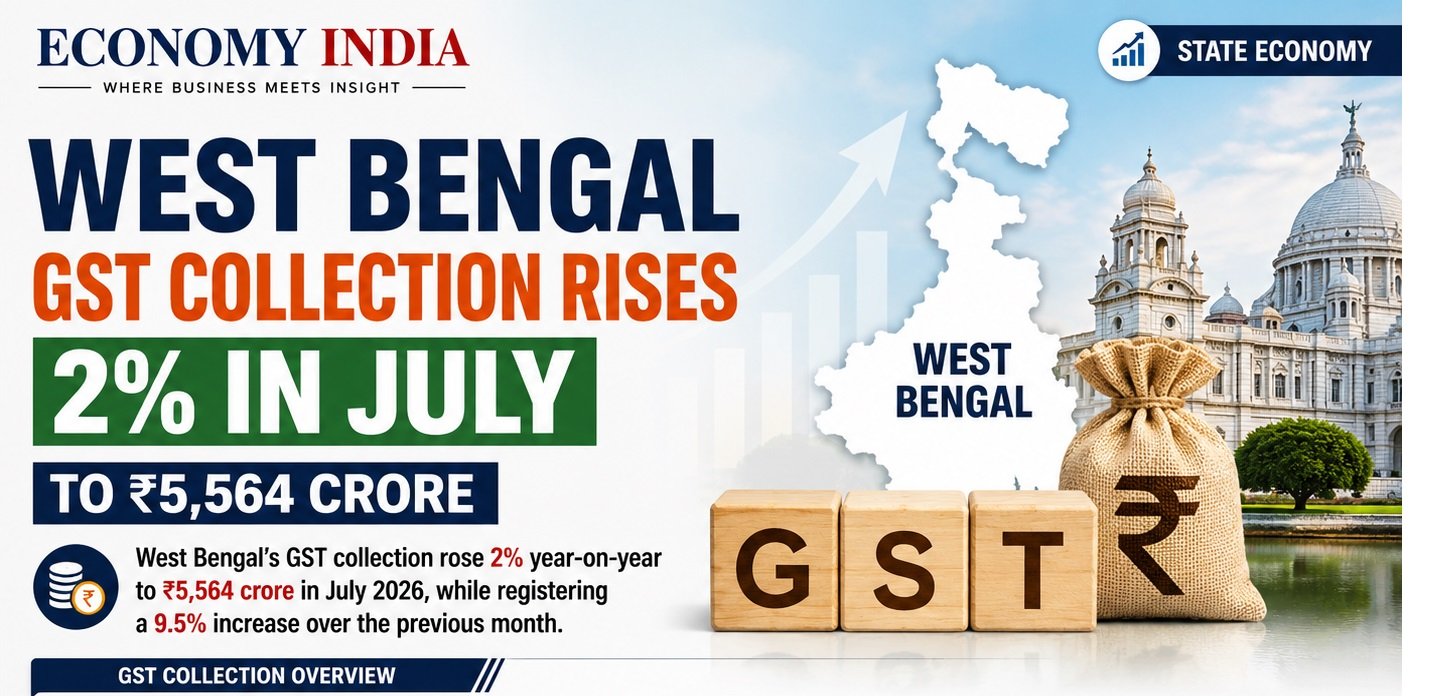
Kolkata (Economy India): West Bengal’s Goods and Services Tax (GST) collection increased 2% year-on-year to ₹5,564 crore in July 2026, reflecting continued improvement in tax revenue and economic activity across the state.
According to official data released on Friday, the state collected ₹5,564 crore in GST during July, compared with ₹5,471 crore in the same month last year.
Monthly Collection Rises 9.5%
On a month-on-month basis, GST collections recorded a strong 9.5% increase, rising from ₹5,082 crore in June 2026 to ₹5,564 crore in July.
The sequential rise indicates improved tax compliance and stronger business transactions during the month.

Second Consecutive Month of Annual Growth
The July figures mark the second straight month of year-on-year growth in GST collections.
In June 2026, the state had reported a 1% annual increase, with collections reaching ₹5,082 crore, according to official data.
The consistent growth suggests a gradual strengthening in revenue mobilisation and commercial activity.
GST Collections Reflect Economic Activity
GST collections are widely regarded as an important indicator of economic performance, as they reflect trends in consumption, manufacturing, trade and services.
A sustained increase in tax collections generally points to expanding business activity, higher consumer spending and improved compliance under the GST framework.
| Parameter | July 2026 | July 2025 | Change |
|---|---|---|---|
| GST Collection | ₹5,564 crore | ₹5,471 crore | +2% YoY |
| June 2026 Collection | ₹5,082 crore | — | +9.5% MoM |
| Consecutive Annual Growth | 2nd Month | — | Positive |
West Bengal’s July GST performance indicates stable revenue growth supported by improving economic activity and tax compliance. While the annual growth rate remains modest at 2%, the sharp month-on-month increase of 9.5% suggests strengthening business momentum. Sustained GST growth in the coming months will be closely watched as a key indicator of the state’s economic recovery and fiscal health.