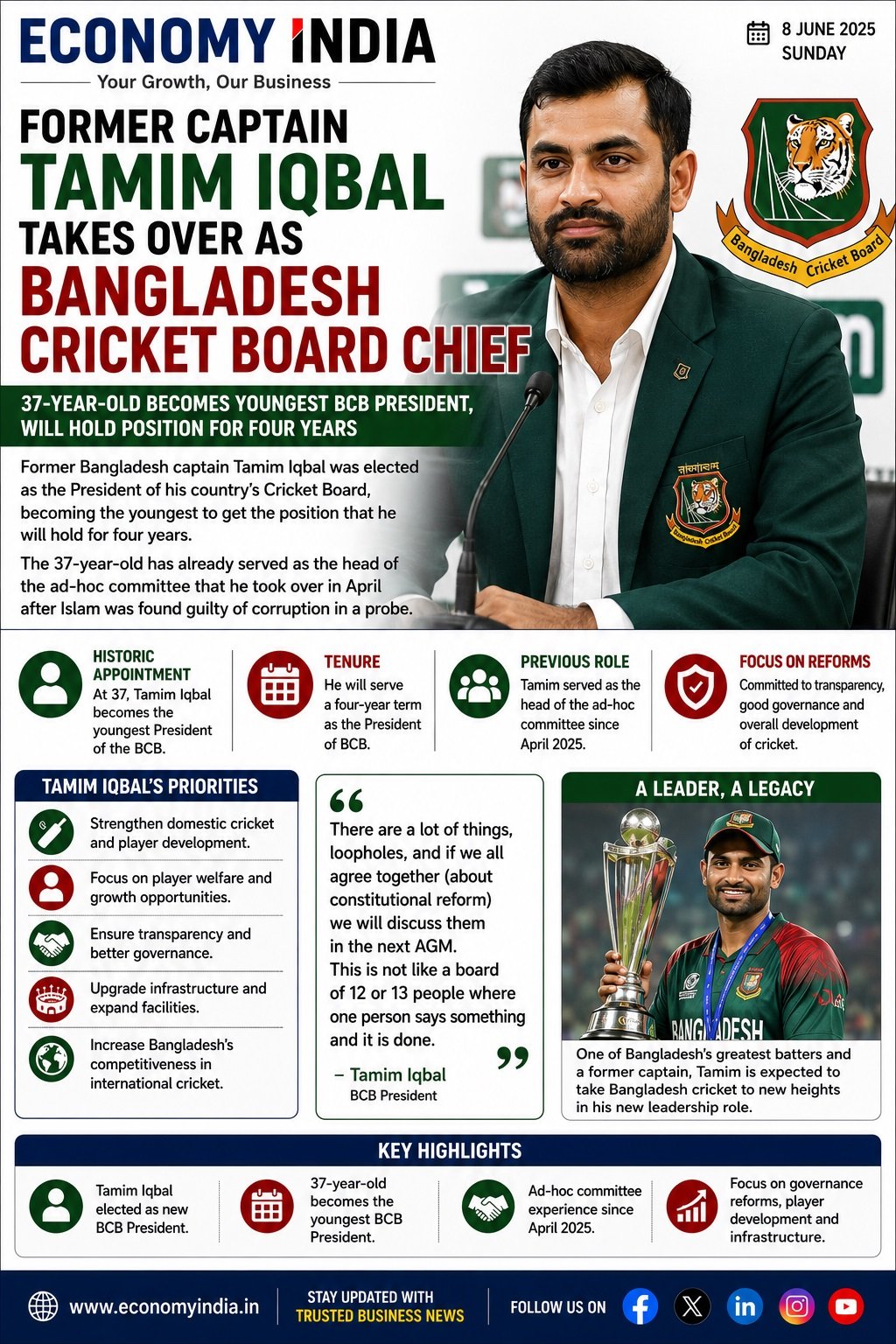

Bangladesh Cricket Legend Becomes Youngest BCB Chief, Promises Reforms and Greater Transparency
Dhaka (Economy India): Former Bangladesh cricket captain Tamim Iqbal has been elected as the President of the Bangladesh Cricket Board (BCB), marking a new chapter in the administration of cricket in the country. At 37, Tamim becomes the youngest individual to hold the prestigious position and is expected to lead the board for the next four years.
The appointment represents a significant transition for Bangladesh cricket, with one of the nation’s most celebrated cricketers moving from the field to the boardroom. His elevation comes at a time when the BCB is seeking to strengthen governance, improve transparency, and address several structural challenges facing the sport.
From Cricket Icon to Cricket Administrator
Tamim Iqbal is widely regarded as one of Bangladesh’s greatest-ever cricketers. During an international career spanning more than a decade, he played a crucial role in transforming Bangladesh into a competitive force in world cricket.
Known for his aggressive batting style and leadership qualities, Tamim represented Bangladesh across all formats of the game and became one of the country’s highest run-scorers.

Following his retirement from international cricket, he remained actively involved in cricket administration and development initiatives. His latest appointment reflects the confidence stakeholders have placed in his leadership abilities beyond the playing arena.
Youngest President in BCB History
At the age of 37, Tamim becomes the youngest President of the Bangladesh Cricket Board.
Cricket observers believe his appointment could bring fresh perspectives and modern administrative approaches to the organization. His recent experience as a player is expected to help bridge the gap between administrators and cricketers, ensuring that player welfare and development remain central to policy decisions.
Industry experts also see his leadership as an opportunity to modernize cricket governance in Bangladesh and strengthen the country’s domestic cricket structure.

Leadership Transition After Corruption Probe
Tamim had already been serving as the head of an ad-hoc committee since April following significant changes within the board’s administration.
The leadership transition occurred after an internal investigation reportedly found the previous board leadership guilty of corruption-related irregularities, prompting reforms and restructuring efforts within the organization.
His successful stewardship of the interim committee is believed to have contributed to his election as the permanent President of the BCB.
Focus on Constitutional Reforms
Speaking after his election, Tamim emphasized the importance of collective decision-making and institutional reforms.
He indicated that constitutional changes could be discussed during the next Annual General Meeting (AGM) if board members reach a consensus.
According to Tamim, cricket administration should not be driven by the decisions of a single individual but rather through consultation and agreement among board members.
His remarks signal a commitment to a more collaborative governance model aimed at improving transparency and accountability within the board.
Challenges Ahead
As President, Tamim faces several important challenges.
These include:
🏏 Strengthening Bangladesh’s domestic cricket structure.
🏏 Enhancing talent identification and player development programs.
🏏 Improving governance and transparency within the BCB.
🏏 Expanding grassroots cricket initiatives.
🏏 Strengthening Bangladesh’s competitiveness at the international level.
🏏 Modernizing cricket infrastructure and facilities.
With Bangladesh aiming for sustained success across formats, the role of the cricket board will be critical in shaping the future of the sport in the country.

Positive Response from Cricket Community
Tamim’s appointment has been welcomed by many former players, cricket experts, and fans who believe his experience and understanding of the game will benefit Bangladesh cricket.
Supporters argue that having a former international cricketer at the helm could help create policies that better address the needs of players and contribute to long-term cricket development.
Many also hope his tenure will usher in greater professionalism and strategic planning within the board.
(Economy India)