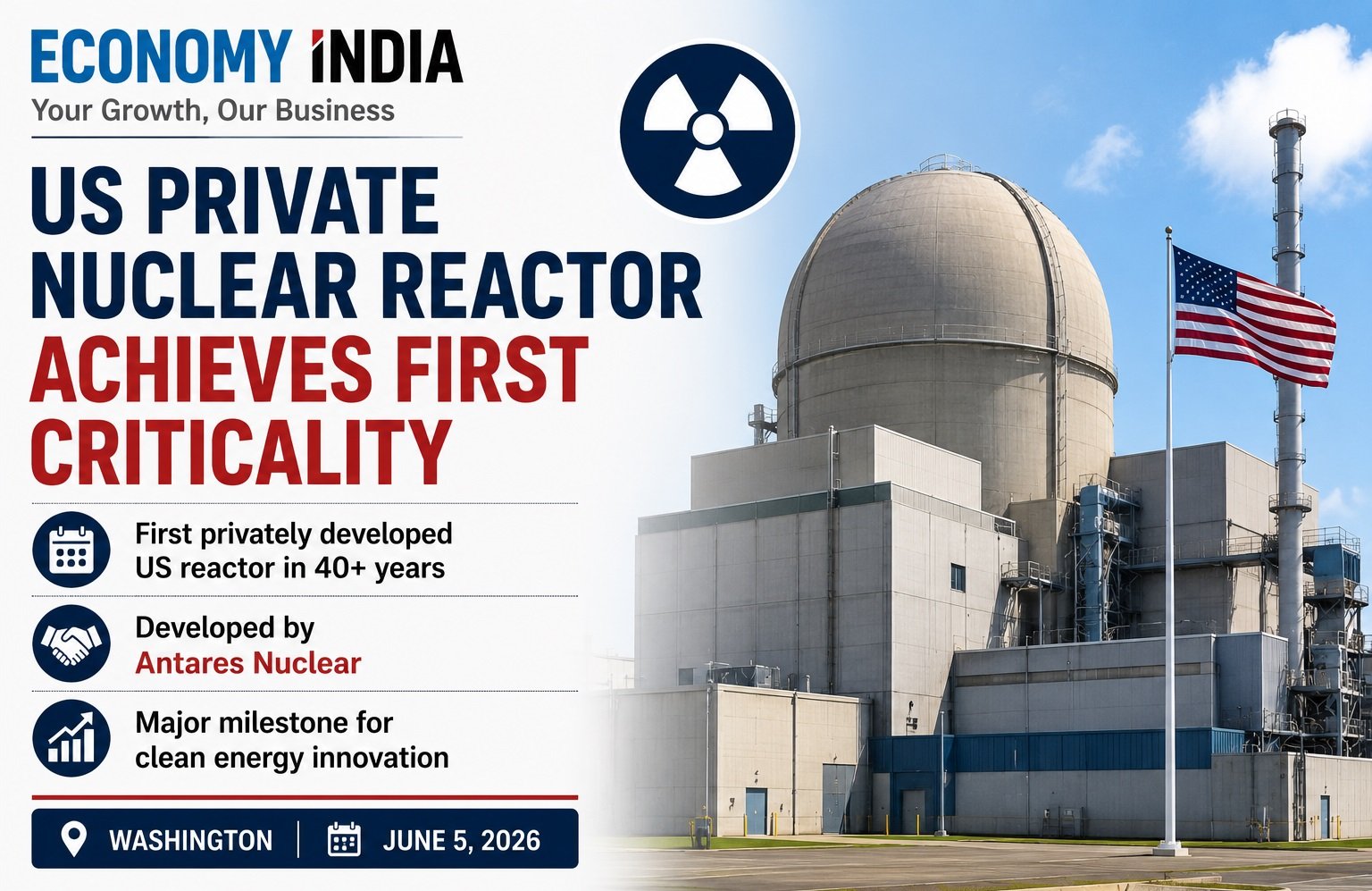

Antares Nuclear’s Mark-0 Reactor Reaches Major Milestone, Marking a New Era for Advanced Nuclear Energy in the United States
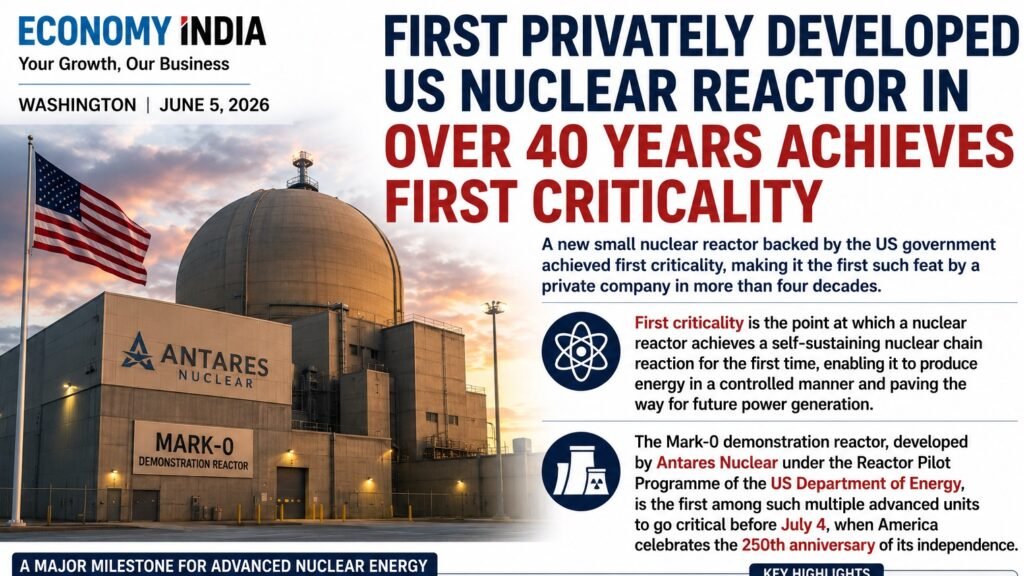
Washington (Economy India): In a significant breakthrough for the American nuclear energy sector, a privately developed nuclear reactor has achieved first criticality, becoming the first reactor designed and built by a private company in the United States to reach this milestone in more than four decades.
The achievement was announced by Antares Nuclear, whose Mark-0 demonstration reactor successfully initiated a self-sustaining nuclear chain reaction under controlled conditions.
The reactor was developed under the United States Department of Energy Reactor Pilot Programme, aimed at accelerating the commercialization of advanced nuclear technologies.
What Does “First Criticality” Mean?
First criticality is one of the most important milestones in nuclear reactor development.

It marks the moment when a reactor achieves a self-sustaining nuclear chain reaction for the first time without requiring an external neutron source.
Once criticality is achieved:
- The reactor can generate energy in a controlled manner.
- Engineers can begin performance testing.
- Safety systems are evaluated under operational conditions.
- The project moves closer to commercial electricity generation.
While achieving criticality does not mean the reactor is immediately producing electricity for the grid, it represents a major step toward future energy production.
Historic Achievement After More Than 40 Years
According to officials, the Mark-0 reactor is the first privately developed reactor in the United States to achieve first criticality in over 40 years.
The milestone highlights renewed momentum in the nuclear sector as governments and private companies worldwide seek reliable, low-carbon energy sources to support growing electricity demand.
Industry experts describe the achievement as a turning point for advanced reactor technologies and private-sector participation in nuclear innovation.
Part of America’s Advanced Nuclear Push
The Mark-0 demonstration reactor is among several advanced nuclear projects being supported by the US Department of Energy through its Reactor Pilot Programme.
The initiative aims to:
- Accelerate next-generation reactor deployment
- Strengthen energy security
- Reduce carbon emissions
- Support technological innovation
- Expand domestic nuclear manufacturing capabilities
Officials noted that the Mark-0 reactor became the first advanced pilot reactor to achieve criticality ahead of July 4, when the United States will commemorate the 250th anniversary of its independence.
Growing Global Interest in Small Modular Reactors
The achievement comes amid increasing global interest in Small Modular Reactors (SMRs) and advanced nuclear technologies.
Compared with traditional large nuclear plants, advanced reactors are designed to offer:
- Enhanced safety features
- Lower construction costs
- Faster deployment timelines
- Flexible power generation
- Reduced environmental impact
Countries including the United States, Canada, the United Kingdom, France, China, and India are exploring advanced nuclear technologies as part of their long-term clean energy strategies.
Implications for the Energy Sector
Energy analysts believe the successful demonstration of privately developed advanced reactors could encourage additional investment in nuclear technology and accelerate innovation in the sector.
As electricity demand rises due to artificial intelligence, data centers, industrial expansion, and electrification efforts, nuclear power is increasingly being viewed as a reliable source of carbon-free baseload energy.
The Mark-0 reactor’s achievement could serve as a blueprint for future private-sector nuclear projects across the world.
(Economy India)