
“The talent is not missing. It is locked out — and it is banging on the door.” — AFH x Shaadi.org, The Great Indian Return Report 2026
NEW DELHI (Economy India): A new report released by Aspire For Her (AFH) and Shaadi.org has highlighted one of India’s biggest untapped economic challenges: marriage and motherhood continue to push millions of women out of the workforce, while only a small percentage successfully return.
Titled “The Great Indian Pause: The Great Indian Return Report 2026,” the study argues that India is losing a massive pool of skilled female talent due to entrenched social norms, inadequate childcare, workplace bias, and limited return-to-work opportunities.
The findings suggest that the issue is not merely a gender equality concern—it is an economic growth challenge with implications for productivity, household income, and India’s long-term development.
India’s workforce crisis in numbers
The report presents a stark picture of women’s employment in India:

Working mothers
50%
quit their jobs by age 30 due to marriage or motherhood
Women returning to work
27%
of women who take a career break ever re-enter the workforce
Women seeking jobs
~7 million
are actively trying to return to employment
Global Gender Gap rank
131/148
India ranks among the bottom five countries in economic participation
Perhaps the most striking statistic is the overwhelming demand for second-career opportunities. One leading corporate returnship programme reportedly received 129 applications for every available position, illustrating the enormous reservoir of experienced women eager to resume their careers.
Why careers pause after marriage
According to the report, marriage remains one of the strongest predictors of women exiting paid employment.
Researchers found that:
- Marriage reduces women’s labour-force participation by 12 percentage points.
- Childbirth lowers participation by another 4 percentage points.
- Around 13% of employed women leave their jobs immediately after marriage.
- 43.04% of women outside the workforce cite household duties as the primary reason for not working.
These findings reveal that while education among women has improved significantly, family responsibilities continue to fall disproportionately on women, limiting their professional opportunities.
The states where women face the biggest challenge
The employment gap is not uniform across India. States with stronger traditional gender norms experience significantly higher workforce exits after marriage.
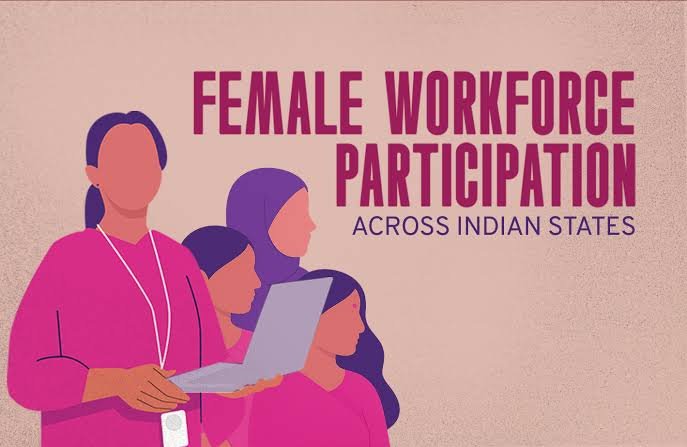
Female workforce participation across states
| State | Key trend |
| Bihar | Lowest female workforce participation; highest marriage-related exits |
| Uttar Pradesh | Rural married women face among the highest workforce withdrawal rates |
| Rajasthan | Traditional gender roles continue to drive employment exits |
| Punjab & Haryana | Low female labour-force participation despite relatively higher incomes |
| Madhya Pradesh | Marriage remains a major reason women leave paid employment |
| Kerala | Higher female employment and better post-marriage retention |
| Tamil Nadu | Education and supportive policies contribute to stronger workforce continuity |
| Himachal Pradesh | Women marry later and remain economically active for longer |
The contrast suggests that social norms and policy support are as important as economic opportunity in determining whether women continue working after marriage.
Women are marrying later—but the challenge remains
One positive trend identified in the report is the gradual increase in the average age of marriage.0yrs7yrs14yrs21yrs28yrsHimachal Pradesh…Jammu & KashmirKeralaMaharashtra (Urban)Urban IndiaIndia AverageRural IndiaWest BengalJharkhand
The national average has increased from 18.7 years in 1991 to 22.1 years today, indicating meaningful social progress. Urban women are also marrying later than rural women, with Himachal Pradesh and Jammu & Kashmir recording the highest average marriage ages.
However, researchers argue that delayed marriage alone is not enough. Without structural workplace reforms, women continue to face career interruptions once they become mothers.
Why so few women return
Returning to work after a career break remains exceptionally difficult.
The report identifies several barriers:
- Hiring bias: Women with career gaps are significantly less likely to be hired than equally qualified men.
- Childcare shortage: Limited access to affordable childcare discourages workforce re-entry.
- Lack of flexible work: Many employers still expect full-time, office-based work.
- Relocation after marriage: Women often become “trailing spouses,” sacrificing their own careers for family mobility.
- Maternity penalty: Lower pay, slower promotions, and workplace stigma continue after maternity leave.
Together, these barriers create what the report calls “The Great Indian Pause”—a period where careers stall not because of lack of ambition, but because systems fail to support women through major life transitions.
Why this matters for India’s economy
India’s female labour force participation rate has improved to 37% from 25% in 2017–18, but it remains well below the potential needed for a rapidly growing economy.
Economists have long argued that increasing women’s participation in paid employment could substantially boost GDP, improve household incomes, and strengthen India’s demographic dividend.
The report estimates that nearly 7 million women are already looking to return to work. Unlocking this talent pool could provide businesses with experienced professionals while helping address skill shortages across industries.
The road to “The Great Indian Return”
Aspire For Her and Shaadi.org have called on employers, policymakers, and families to transform the current pause into a return by:
- Creating structured returnship programmes for women restarting careers.
- Expanding flexible and hybrid work opportunities.
- Investing in affordable childcare support.
- Enforcing pay parity and anti-discrimination policies.
- Challenging social norms that treat women’s careers as secondary.
As the report concludes:
“The Great Indian Pause can become the Great Indian Return — if we open the door.”
Disclaimer: This article is based on a NewsVoir press release. Economy India has adapted the content for editorial presentation.
(Economy India)