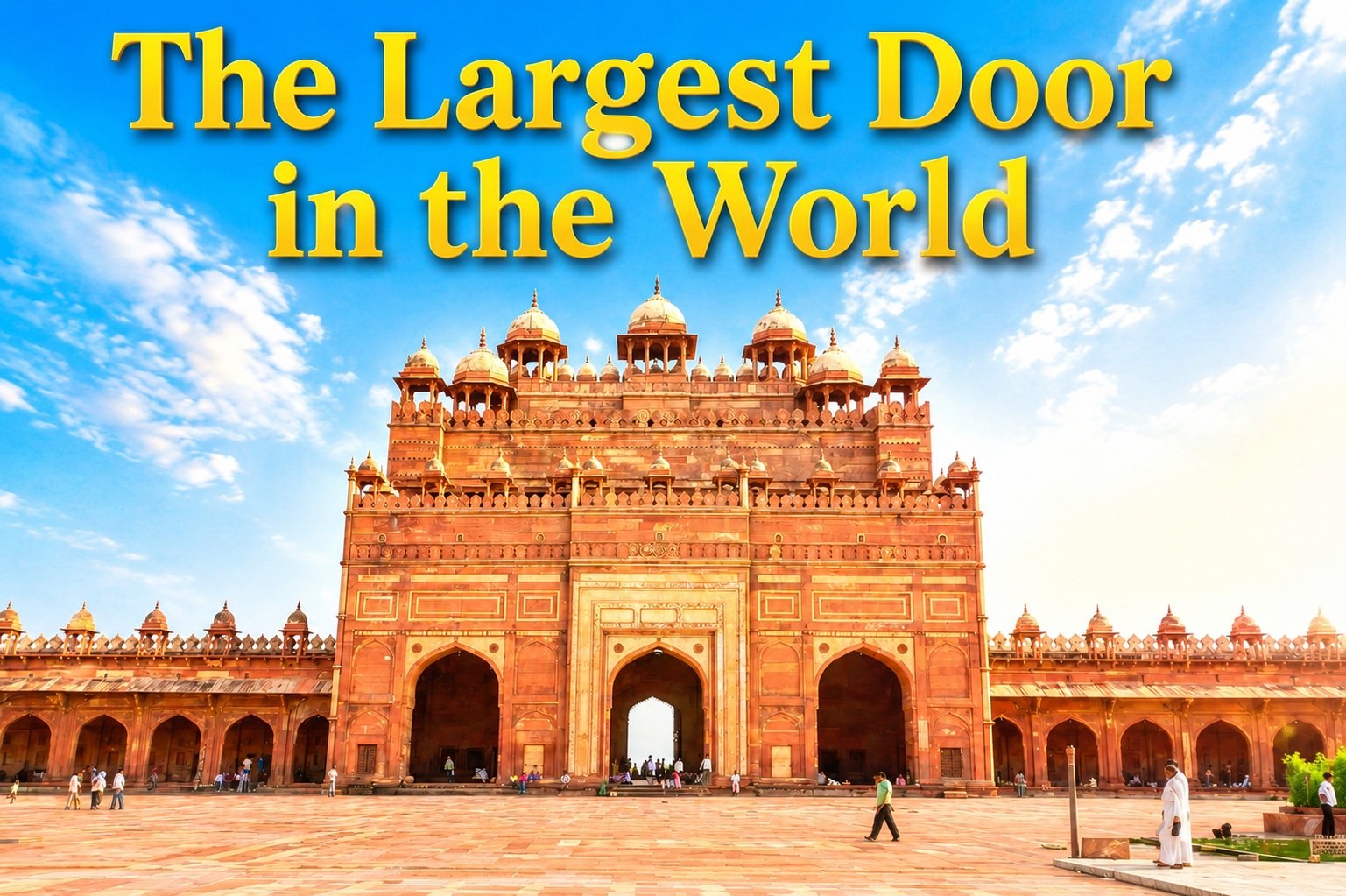

(Economy India):When people think about the world’s largest door or gateway, one structure stands above the rest in terms of height, historical importance, and architectural beauty—the Buland Darwaza in India. Built over 400 years ago, this magnificent gateway is not only an architectural masterpiece but also a symbol of victory, power, and the rich cultural heritage of the Mughal Empire.
Standing proudly at the entrance of Fatehpur Sikri, Buland Darwaza continues to attract millions of tourists, historians, and photographers from around the world.

History of Buland Darwaza
Buland Darwaza, which means “The Gate of Magnificence” or “The Lofty Gate,” was commissioned by the Mughal Emperor Akbar in 1601 AD. It was built to commemorate his successful military campaign in Gujarat.

The gateway serves as the grand entrance to the Jama Masjid complex in Fatehpur Sikri. Even after centuries, it remains one of India’s most iconic monuments and showcases the grandeur of Mughal architecture.
Height and Size
Buland Darwaza is widely recognized as the highest monumental gateway in the world.
Some impressive facts include:
- Height from ground level: Approximately 54 meters (177 feet)
- Height from the courtyard: Around 40 meters (131 feet)
- Width: Nearly 35 meters
- Built using red sandstone with elegant white and black marble decorations.
- Features 42 massive steps leading up to the entrance, making it appear even taller.
Its enormous size makes visitors feel tiny as they stand before this incredible structure.
Architectural Beauty
The gateway is an outstanding example of Mughal architecture that combines Persian, Islamic, and Indian design elements.
Some remarkable architectural features include:
- Massive central arch
- Decorative domes and chhatris
- Intricate floral carvings
- Beautiful geometric patterns
- Marble inscriptions
- Symmetrical design
- Elegant calligraphy from the Quran
The craftsmanship displayed on every wall reflects the exceptional skills of Mughal artisans.
Construction Materials
Buland Darwaza was constructed using high-quality materials that have helped it withstand centuries of weather.
These include:
- Red sandstone
- White marble
- Black marble
- Limestone mortar
The combination of these materials gives the monument its distinctive appearance and lasting strength.
Religious and Cultural Importance
Besides being a victory monument, Buland Darwaza holds great religious significance because it forms the entrance to the Jama Masjid.
One of its most famous inscriptions quotes the teachings of Jesus Christ, emphasizing humility and spirituality. This reflects Emperor Akbar’s vision of religious tolerance and harmony among different faiths.
Tourist Attraction
Every year, thousands of visitors from India and abroad come to witness this magnificent gateway.
Popular activities include:
- Photography
- Historical tours
- Architectural study
- Cultural exploration
- Visiting nearby monuments within Fatehpur Sikri
The monument is also recognized as part of the Fatehpur Sikri, a UNESCO World Heritage Site.
Interesting Facts
- It is over 400 years old.
- It is considered the highest monumental gateway in the world.
- It was built to celebrate Akbar’s victory over Gujarat.
- The gateway can be seen from a considerable distance due to its impressive height.
- It remains one of the finest examples of Mughal architecture.
- Millions of tourists have visited this monument over the years.
Why Buland Darwaza Is Famous
Buland Darwaza is famous not only because of its enormous size but also because it represents India’s rich architectural heritage. Its massive scale, artistic carvings, historical importance, and breathtaking beauty make it one of the most remarkable monuments in the world.
Whether you are interested in history, architecture, photography, or travel, Buland Darwaza offers a truly unforgettable experience.
The Buland Darwaza is much more than just a giant gateway—it is a timeless symbol of victory, craftsmanship, and cultural brilliance. Even after four centuries, it continues to inspire people with its majestic presence and historical significance. Anyone visiting India should include this extraordinary monument on their travel list to witness one of the world’s greatest architectural achievements.
(Economy India)