
Researchers Warn Excessive Use Could Accelerate Antibiotic Resistance and Reduce the Effectiveness of Critical Medicines
New Delhi (Economy India): A new international study has raised concerns over the excessive use of antibiotics across the world, finding that almost all countries are using more ‘Watch’ category antibiotics than would be considered appropriate for their healthcare needs.
Researchers warned that excessive use of these medicines could contribute to antimicrobial resistance (AMR), a growing global health threat in which bacteria become resistant to antibiotics, making infections increasingly difficult to treat.
The study, published in The Lancet Public Health, examined how countries could assess whether the types and quantities of antibiotics being used are appropriate for their specific circumstances.
Excessive Use of ‘Watch’ Antibiotics
According to the study, ‘Watch’ antibiotics are medicines that should generally be used more cautiously and primarily when commonly recommended antibiotics are ineffective or unsuitable.

Researchers found that these antibiotics are being used excessively in a large majority of countries, raising concerns about the long-term effectiveness of important medicines.
The study’s findings suggest that countries need to review not only the overall quantity of antibiotics they consume but also the types of medicines being prescribed and used.

New Framework to Assess Antibiotic Use
Researchers from several institutions, including University College London (UCL) in the United Kingdom, developed a framework that they say can help countries evaluate whether their antibiotic consumption is appropriate according to local healthcare conditions.
The researchers believe the framework could help policymakers identify both overuse and inappropriate use of antibiotics.
Rather than applying the same consumption target to every country, the approach aims to consider factors such as disease burden, population characteristics, healthcare systems and the availability of medicines.
This could allow governments to establish more realistic and country-specific targets for antibiotic use.
WHO Categorises Antibiotics into Three Groups
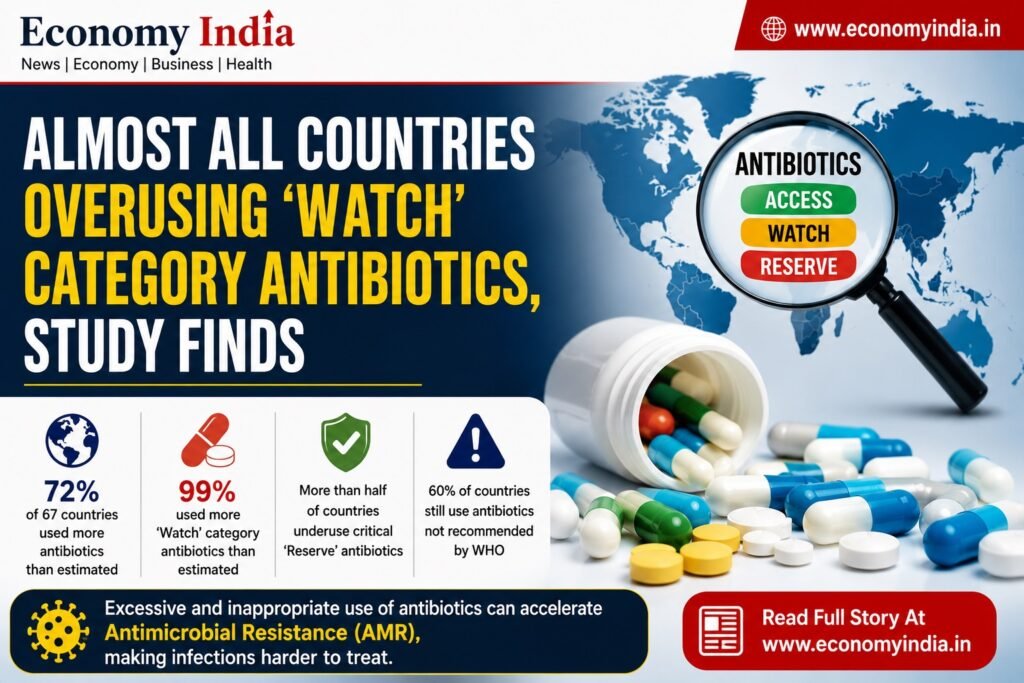
The World Health Organization (WHO) classifies antibiotics under the AWaRe system, which divides them into three broad categories: Access, Watch and Reserve.
The Access group includes antibiotics that are recommended as first-line treatments for many common bacterial infections. Medicines such as amoxicillin are included in this category.
The Watch group includes antibiotics that have a higher potential to contribute to antimicrobial resistance and should therefore be used carefully and appropriately.
The Reserve group consists of antibiotics that are considered critical as last-resort treatment options. These medicines are generally reserved for severe infections caused by bacteria that are resistant to other antibiotics.
Global Target for 2030
In 2024, the United Nations General Assembly endorsed the use of the WHO’s AWaRe classification as a framework for monitoring antibiotic consumption worldwide.
A global target was also established to increase the proportion of antibiotics belonging to the Access category, with the aim that at least 70% of antibiotics used globally by 2030 should come from the Access group.
However, the researchers noted that there has been no established method for determining appropriate antibiotic-use targets for individual countries.
They argued that a single global target may not fully reflect the healthcare requirements and disease patterns of different nations.
Study Analyses Data From 67 Countries
To test the framework, researchers compared their estimates with actual antibiotic consumption data obtained from the IQVIA MIDAS database covering 67 countries, territories and locations.
The analysis found that approximately three-quarters of the countries for which actual data were available were consuming more antibiotics than the framework suggested would be appropriate.
The researchers reported that 72% of the 67 countries, territories and locations included in the analysis used more antibiotics than estimated by the framework.
The findings were particularly concerning for the Watch category. According to the study, 99% of the locations analysed used more Watch antibiotics than the estimated appropriate level.
These findings point to a widespread need for countries to reassess antibiotic prescribing and consumption patterns.
Concerns Over Underuse of Reserve Antibiotics
The study also identified a different problem involving Reserve antibiotics.
Researchers found that more than half of the countries and regions with available real-world data were not using enough Reserve antibiotics compared with the estimated levels.
This could raise concerns that some patients suffering from serious infections caused by drug-resistant bacteria may not be receiving the most appropriate treatment when other antibiotics fail.
However, the researchers emphasised that the goal is not simply to increase the use of Reserve antibiotics but to ensure that these critical medicines are available and appropriately used when genuinely needed.
Continued Use of Antibiotics No Longer Recommended by WHO
Another significant finding was that around 60% of the countries analysed were still using antibiotics that the WHO no longer recommends for patient treatment.
The continued use of such medicines could contribute to inappropriate antibiotic consumption and potentially accelerate the development of drug resistance.
Researchers said that countries need stronger systems to monitor antibiotic use and ensure that treatment guidelines are regularly updated in line with scientific evidence.
Antibiotic Resistance a Growing Global Threat
Antimicrobial resistance is increasingly recognised as one of the world’s major public health challenges.
When antibiotics are used unnecessarily or incorrectly, bacteria can develop resistance to these medicines. Over time, infections that were once easily treatable can become more difficult and expensive to manage.
Drug-resistant infections can also increase hospital stays, healthcare costs and the risk of serious complications.
The problem is not limited to one country or region. Antibiotic resistance can spread across communities and borders, making coordinated global action essential.
Need for Better Antibiotic Stewardship
The researchers believe that the new framework could help governments and healthcare systems develop more effective antibiotic stewardship programmes.
Such programmes typically focus on ensuring that patients receive the right antibiotic, at the right dose, for the right duration, and only when necessary.
Improving surveillance, strengthening diagnostic capabilities and ensuring that healthcare professionals have access to updated treatment guidelines could also help reduce inappropriate antibiotic use.
What the Findings Mean for Global Health
The study’s findings highlight the complexity of managing antibiotic consumption worldwide.
While excessive use of certain antibiotics may accelerate resistance, inadequate access to critical medicines can also leave patients vulnerable to serious infections.
Researchers therefore emphasise the need for a balanced approach that promotes responsible antibiotic use while ensuring that life-saving medicines remain accessible to patients who genuinely need them.
The study’s proposed framework could provide countries with a more tailored way to evaluate antibiotic consumption and establish targets based on their individual healthcare needs.
As the world moves toward the 2030 global target for responsible antibiotic use, researchers say that stronger monitoring and country-specific strategies will be essential to protect the effectiveness of antibiotics for future generations.
(Economy India)