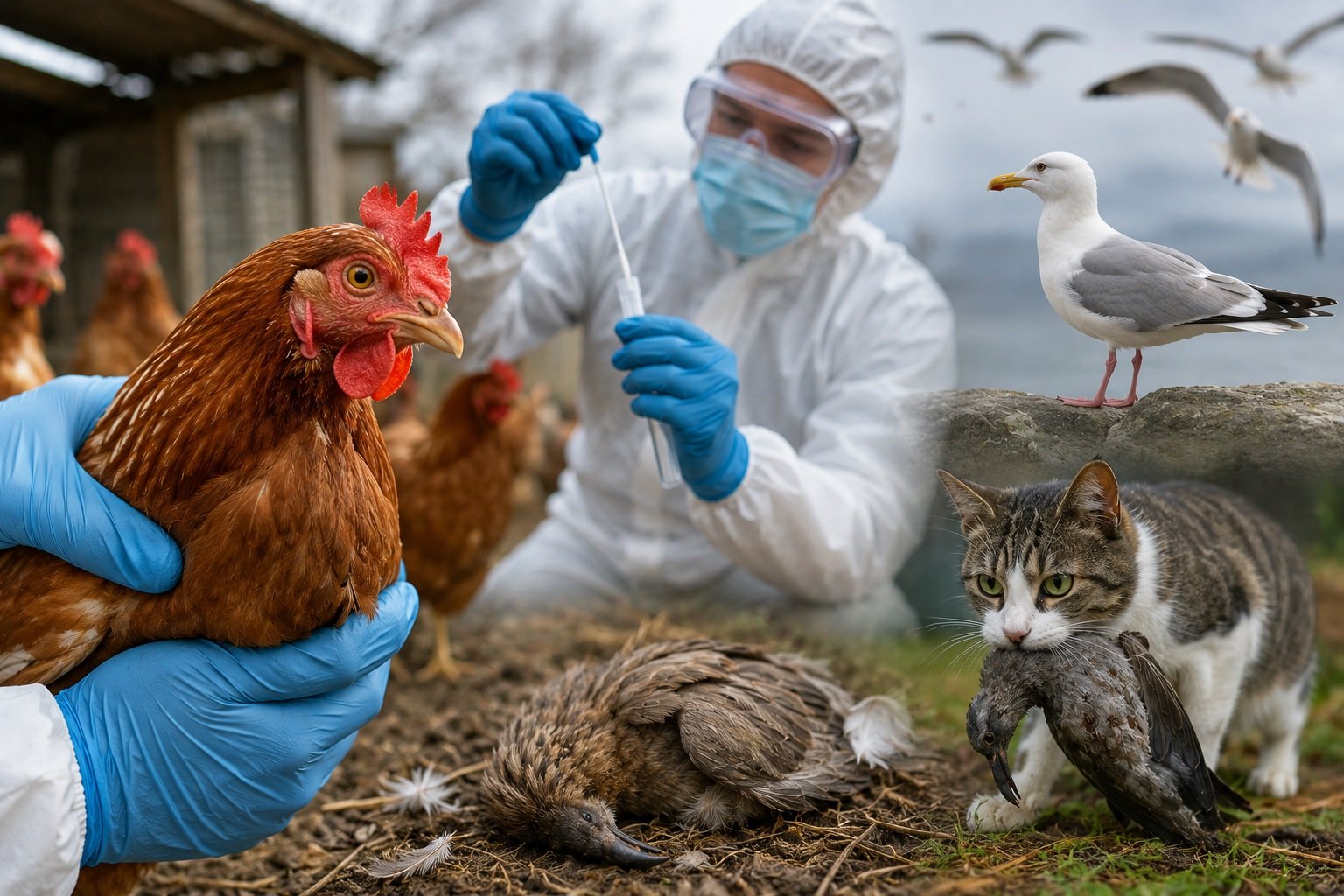

Brisbane, Australia (Economy India): The highly pathogenic H5N1 avian influenza (bird flu) virus is proving to be far more dangerous than its name suggests. According to veterinary experts, the virus is capable of infecting a wide range of animals—including backyard chickens, cats, wild birds, and several mammal species—raising fresh concerns over animal health and biosecurity.
The warning comes after the deadly H5N1 strain was detected in seabirds in two Australian states, signaling the virus’s continued spread through wildlife populations.
Not Just a Bird Disease
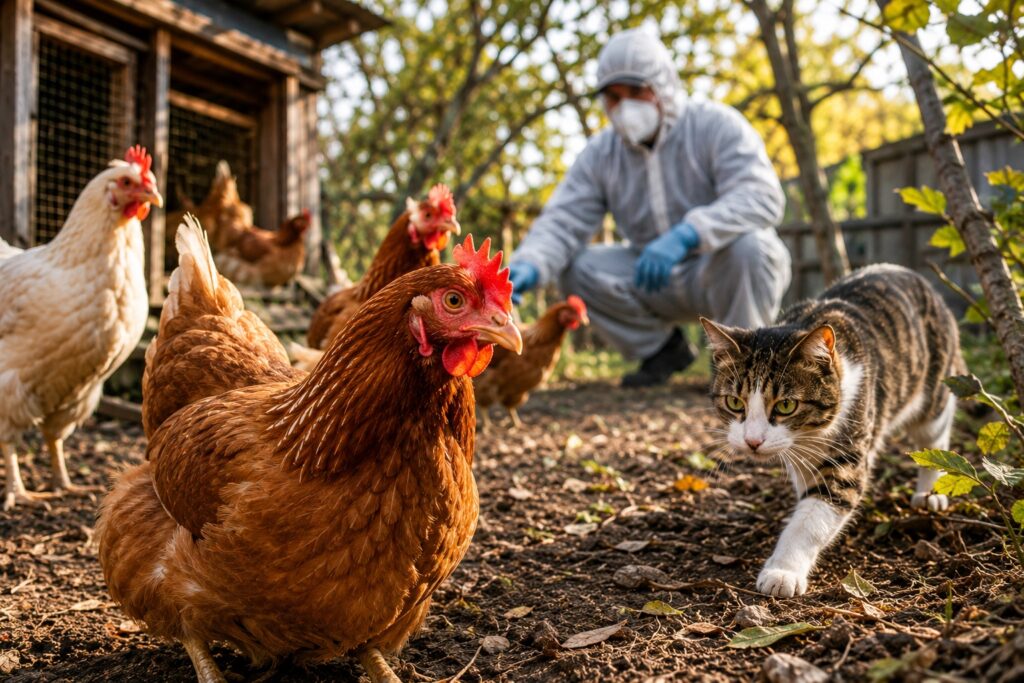
Although commonly known as bird flu, H5N1 can spread rapidly among different animal species. Veterinary experts caution that domestic cats can become infected by consuming sick or dead birds, while backyard poultry remain particularly vulnerable to the virus.
The disease has already caused significant losses in poultry industries across several countries and continues to threaten biodiversity through infections in wild bird populations.

Backyard Poultry at Greater Risk
Experts say owners of backyard chickens should remain especially vigilant. Contact with infected wild birds or contaminated feed, water, and equipment can quickly spread the virus through small flocks.
Preventive measures include:
- Keeping poultry away from wild birds
- Maintaining strict hygiene around coops
- Avoiding contact with sick or dead birds
- Reporting unusual bird deaths to veterinary authorities
Cats Can Also Become Infected
Veterinary specialists warn that cats are susceptible to H5N1 infection, particularly if they hunt or consume infected birds. Pet owners are advised to keep cats indoors in areas where bird flu outbreaks have been reported and prevent them from interacting with dead wildlife.
Human Risk Remains Low
Health experts emphasize that while human infections remain rare, people should avoid handling sick or dead birds without appropriate protection. Authorities continue to monitor the situation closely to prevent any wider public health risks.
Economy India Insight
The spread of H5N1 beyond birds highlights the growing importance of biosecurity and disease surveillance. Protecting livestock, wildlife, and companion animals is essential to reducing economic losses in agriculture while safeguarding public health.
(Economy India)