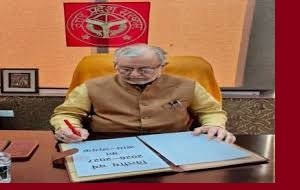
Lucknow (Economy India): The Uttar Pradesh government has placed employment generation, youth empowerment and large-scale recruitment at the heart of its Budget 2026–27, signalling a continued push to convert the state’s demographic advantage into economic strength. Finance Minister Suresh Khanna, while presenting the budget in the Assembly, underlined that skill development, coaching support and youth participation in governance will remain key pillars of the government’s development strategy.
According to an official statement, the budget builds on the groundwork laid over the past five years, during which the state focused on training, placement and institutional reforms to improve employability.
Skill Development as the Backbone of Job Creation
One of the flagship initiatives highlighted in the budget is the Uttar Pradesh Skill Development Mission (UPSDM). Over the last five years, the mission has trained and certified 9.25 lakh youths through various short-term and industry-oriented programmes. Of these, 4.22 lakh candidates have secured placements in reputed private-sector companies.
The government believes this emphasis on skill-based training is critical to bridging the gap between education and employment. The budget reiterates the focus on aligning training modules with industry needs, particularly in sectors such as manufacturing, logistics, retail, healthcare and emerging services.
Officials said that new training centres and upgraded curricula are planned in the coming year to ensure that youth from rural and semi-urban areas are not left out of the employment ecosystem.
Coaching Support for Competitive Examinations
Recognising the financial barriers faced by aspirants preparing for competitive exams, the government continues to expand the Chief Minister Abhyudaya Yojana. Under the scheme, over 23,000 students are currently receiving free coaching at 163 centres across Uttar Pradesh.
The programme provides coaching for civil services, state services, engineering, medical and other competitive examinations, along with access to digital learning resources. The budget emphasises strengthening these centres with better faculty, infrastructure and online platforms to reach a wider pool of aspirants.
For many students from economically weaker backgrounds, the scheme has emerged as a crucial support system, reducing dependence on expensive private coaching institutes.
Youth Participation in Governance
Another key focus area in the budget is encouraging youth participation in governance and policy implementation. The Chief Minister Fellowship Programme, currently operational in 108 aspirational development blocks, aims to engage young professionals in grassroots planning and monitoring.
Under the programme, selected fellows work closely with district administrations, contributing to policy execution, data analysis and development initiatives. The government sees this as a way to nurture leadership skills among youth while improving the efficiency of public service delivery.
The budget proposes further expansion of the fellowship programme to additional districts, strengthening the link between young talent and administrative processes.
Large-Scale Recruitment Drive
Alongside skill development and coaching, the budget reiterates the government’s commitment to transparent and large-scale recruitment across state departments. Over the past few years, the Uttar Pradesh government has conducted recruitment drives for teachers, police personnel and other government roles, with an emphasis on time-bound and merit-based selection.
Officials indicated that the 2026–27 budget allocates resources to ensure smoother recruitment processes, faster examinations and quicker appointment cycles. This is expected to create both direct employment and indirect economic activity.
Linking Youth Empowerment with Economic Growth
The government believes that empowering youth is essential for sustaining economic growth in India’s most populous state. With a large working-age population, Uttar Pradesh’s development strategy hinges on transforming young citizens into skilled workers, entrepreneurs and contributors to public administration.
The budget also aligns youth-centric initiatives with broader economic goals such as industrial investment, infrastructure development and MSME growth. Officials said that trained manpower will play a key role in attracting investments and supporting industrial corridors being developed across the state.
Looking Ahead
The UP Budget 2026–27 signals continuity rather than disruption, with a clear focus on scaling up existing programmes that have shown results. By combining skill development, free coaching, governance exposure and recruitment, the government aims to build a comprehensive ecosystem for youth empowerment.
As implementation unfolds over the coming year, the success of these initiatives will be measured not just by training numbers, but by sustainable employment, improved incomes and greater youth participation in the state’s growth story.
(Economy India)