By Economy India Global Affairs Desk
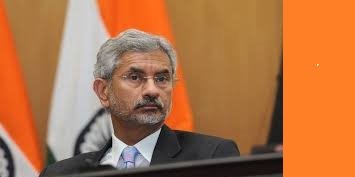
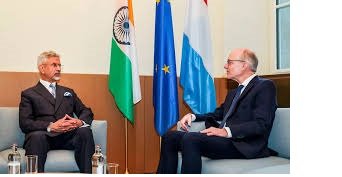
Luxembourg / New Delhi — When External Affairs Minister Dr. S. Jaishankar told the Indian diaspora in Luxembourg that he could “fairly confidently” predict an upswing in India–Europe relations in 2026, it was not a routine diplomatic statement. It was a calibrated geopolitical assessment—rooted in shifting power balances, economic realignments, and a growing convergence of strategic interests between New Delhi and Brussels.
At a moment when the international system is experiencing its most profound transformation since the end of the Cold War, India and the European Union are rediscovering each other—not merely as trade partners, but as trusted strategic collaborators in a volatile, fragmented world.
A World No Longer Predictable
Jaishankar’s remarks came at a time when the global order is defined less by stability and more by permanent uncertainty. Wars, sanctions, technological fragmentation, energy insecurity, climate disruptions, and the erosion of multilateral norms have reshaped the strategic calculations of almost every nation.
“There is a fair amount of volatility and unpredictability in the world today,” Jaishankar said, adding that countries everywhere are reassessing their interests and long-term partnerships.
This unpredictability has given rise to a new strategic doctrine. Nations are no longer satisfied with merely “de-risking”—a term popularised to describe reduced dependence on single markets or suppliers. Instead, governments are actively searching for trusted partners, those with whom deeper, long-term cooperation is possible.
“It’s not enough to de-risk anymore. Maybe we should be building closer friendships and deeper partnerships,” Jaishankar observed.
This philosophical shift lies at the heart of the renewed momentum in India–EU relations.

India–EU Relations: A Partnership Long Underestimated
India and the European Union established diplomatic relations in 1962, making the EU one of India’s oldest institutional partners. Yet for decades, the relationship remained rich in potential but thin in strategic substance.
Despite:
- A combined market of nearly 1.9 billion people
- Shared democratic values
- Complementary economic and technological strengths
The partnership often lagged behind expectations. Trade disputes, regulatory barriers, differing worldviews, and the EU’s earlier inward focus limited the depth of engagement.
That era is now decisively ending.

Why Europe Is Recalibrating—and Why India Matters
Europe today is in the midst of a strategic reawakening.
Key Catalysts Behind Europe’s Shift
- Energy Shock: The Russia–Ukraine conflict exposed Europe’s vulnerability to energy dependence.
- China Exposure: Overreliance on Chinese manufacturing has become a strategic risk.
- Technological Competition: Control over semiconductors, AI, and critical minerals has become central to national security.
- Geopolitical Autonomy: The EU is seeking “strategic autonomy” without isolation.
In this recalibration, India emerges as a natural partner.
- The world’s fastest-growing major economy
- A politically stable democracy
- A massive consumer market
- A manufacturing hub in the making
- A country with strategic autonomy rather than bloc politics
For Europe, India is no longer just a “future opportunity.” It is a present-day strategic necessity.
Luxembourg: A Small Nation with Strategic Weight
Jaishankar’s remarks in Luxembourg were diplomatically significant.
While small in geography, Luxembourg is:
- A major global financial centre
- A hub for European investment funds
- An influential voice within EU policymaking circles
By highlighting Luxembourg’s potential role in strengthening India–EU ties, Jaishankar subtly reinforced a key message:
India’s Europe strategy is no longer limited to big capitals—it is continental in scope.
From Transactional Trade to Strategic Economics
Trade remains a foundational pillar of India–EU relations.
- The EU is India’s largest trading partner
- Bilateral trade exceeds €120 billion annually
- European companies are among the largest investors in India
However, what is changing is the nature of economic engagement.
The Free Trade Agreement Revival
India–EU Free Trade Agreement negotiations, stalled for nearly a decade, have regained momentum.
The urgency is mutual:
- Europe needs resilient supply chains
- India seeks market access, technology, and investment
- Both want predictable trade rules in a fragmented global economy
The proposed agreement extends far beyond tariffs, encompassing:
- Digital trade
- Services
- Intellectual property
- Sustainability and labour standards
- Investment protection
While negotiations remain complex, political alignment has never been stronger.
Manufacturing, Supply Chains, and the China-Plus-One Strategy
The global rethink on supply chains has positioned India at the centre of a new manufacturing geography.
Europe’s “China-plus-one” approach aligns closely with India’s:
- Make in India
- Production-Linked Incentive (PLI) schemes
- Industrial corridor development
Sectors of growing India–EU collaboration include:
- Automotive and EVs
- Pharmaceuticals
- Electronics and semiconductors
- Aerospace
- Defence manufacturing
This convergence reflects a shift from outsourcing efficiency to strategic resilience.
Technology: The New Strategic Glue
Technology cooperation is emerging as one of the most promising dimensions of India–EU engagement.
Key Areas of Alignment
- Artificial Intelligence governance
- Semiconductor ecosystems
- Cybersecurity
- Data protection
- Digital public infrastructure
India’s success with digital public goods—such as Aadhaar, UPI, and DigiLocker—has drawn increasing interest from European policymakers seeking inclusive digital models.
Rather than competing, India and Europe are increasingly co-shaping global technology norms.
Climate, Energy, and the Green Transition
Climate action has become another powerful binding force.
Both India and the EU are committed to:
- Net-zero emissions
- Renewable energy expansion
- Green hydrogen
- Sustainable finance
Europe recognises that global climate goals cannot be achieved without India’s active participation. India, in turn, seeks European investment, technology, and finance to ensure a just energy transition.
The relationship is evolving from climate diplomacy to climate partnership.
Strategic Trust in an Era of Fragmentation
Perhaps the most important undercurrent in Jaishankar’s remarks is the emphasis on trust.
In a world marked by:
- Weaponised trade
- Sanctions diplomacy
- Strategic coercion
Trust has become a rare and valuable asset.
India’s foreign policy—defined by strategic autonomy without isolation—has earned credibility across geopolitical blocs. Europe increasingly sees India as:
- Predictable
- Principled
- Independent
- Long-term oriented
This mutual respect differentiates the India–EU partnership from purely transactional alliances.
The China Factor: An Unspoken Alignment
While neither side frames the relationship as anti-China, strategic realities are evident.
- Europe is reassessing economic dependencies on Beijing
- India has direct security and trade challenges with China
- Both seek diversification without confrontation
This shared caution creates a silent convergence, strengthening cooperation without overt alignment against any third country.

Why 2026 Is a Strategic Inflection Point
Jaishankar’s reference to 2026 was deliberate.
Several timelines converge:
- EU institutional cycles
- India’s economic reform trajectory
- Maturation of digital and manufacturing ecosystems
- Possible conclusion of major trade agreements
By 2026, the India–EU partnership could move decisively from aspiration to execution.
The Indian Diaspora: Europe’s Human Bridge to India
Addressing the Indian community in Luxembourg, Jaishankar highlighted another critical dimension: the Indian diaspora.
Across Europe, Indian professionals contribute to:
- Innovation ecosystems
- Academia and research
- Healthcare
- Entrepreneurship
- Cultural diplomacy
As Europe faces demographic challenges and skills shortages, the Indian diaspora will play an even more strategic role in shaping bilateral ties.
Challenges That Cannot Be Ignored
Despite optimism, significant challenges remain:
- Regulatory asymmetries
- Carbon border adjustment mechanisms
- Data localisation debates
- Human rights discourse
- Protectionist tendencies
What has changed is not the absence of differences—but the willingness to manage them constructively.
From Alignment to Co-Creation
The renewed momentum in India–EU relations signals something deeper than policy alignment.
It reflects a shared recognition that:
- Global problems require cooperative solutions
- Strategic autonomy is compatible with partnership
- Economic growth and sustainability must go together
As Jaishankar’s remarks suggest, the relationship is moving beyond convergence toward co-creation.
A Partnership for a Fragmented World
In an era of fractured alliances and contested norms, the India–EU partnership offers a compelling alternative:
- Cooperation without coercion
- Values without dogma
- Growth without exclusion
If current momentum holds, 2026 may be remembered as the year India and Europe jointly redefined their role in the global order—not as rivals or bystanders, but as architects of a more resilient, balanced world.
For India, Europe is no longer just a trading bloc.
For Europe, India is no longer just an emerging market.
Together, they are becoming strategic partners for an uncertain century.
(Economy India)