
Beijing claims diplomatic engagement on sensitive bilateral and regional matters over the year
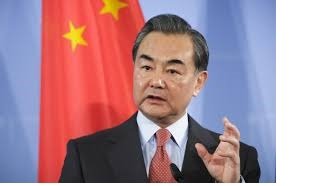
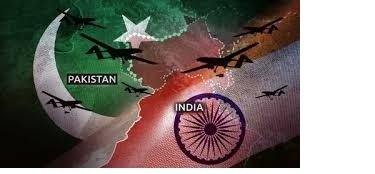
Beijing (Economy India): China’s Foreign Minister Wang Yi on Tuesday stated that Beijing has played a “mediating role” on several sensitive geopolitical issues this year, including efforts related to tension between India and Pakistan.
In remarks delivered at a press briefing in Beijing, Wang described China’s diplomatic engagements as being aimed at promoting dialogue and stability in various international situations. Though details on the specific nature of interventions were not elaborated, the Foreign Minister singled out India-Pakistan tensions as one of the areas in which China said it acted as a mediator.
“This year, China has been involved in offering mediation on several sensitive issues, and that includes the situation involving India and Pakistan,” Wang Yi said, without providing further specifics.
Context: India-Pakistan Tensions
Ties between India and Pakistan have periodically experienced strain over issues relating to border disputes, cross-border militancy concerns, water allocation treaties, and diplomatic exchanges. While both countries maintain their respective positions, external mediation roles have historically been approached with caution due to the sensitive nature of sovereignty and strategic autonomy.
China’s claim of involvement comes amid its complex diplomatic relationships with both South Asian neighbours. Beijing has strategic partnerships with Islamabad and expanding economic ties with New Delhi, making it a significant stakeholder in regional stability.
China’s Broader Diplomatic Engagement
In outlining China’s role, Wang indicated that Beijing has engaged in mediation efforts across various global hotspots — without naming all of them — with an emphasis on conflict resolution through dialogue rather than military escalation.
Analysts note that China’s framing of its role as a mediator reflects its preference for positioning itself as a diplomatic interlocutor in regions where it has economic and strategic interests, including South Asia, Central Asia, and the Middle East.
Reaction from New Delhi
There was no immediate response from the Indian Ministry of External Affairs to China’s claim on mediation in the India-Pakistan context. New Delhi has traditionally maintained that India-Pakistan matters should be resolved directly between the two countries without external interference.
India often balances its responses to third-party diplomatic claims with emphasis on bilateral dialogue and confidence-building measures while underscoring sovereignty in foreign policy matters.
Strategic Implications for Regional Stability
China’s assertion of a mediating role in India-Pakistan tensions comes at a time when:
- South Asia is navigating complex geopolitical alignments
- Global powers are seeking diplomatic partnerships in the Indo-Pacific
- Regional grouping dynamics (like BIMSTEC, SCO) emphasize cooperation
While Beijing’s comments do not specify mechanisms of mediation, the claim signals China’s intent to be viewed as a constructive diplomatic actor beyond its immediate neighbourhood.
What Experts Say
Foreign policy observers note that such claims are often part of diplomatic signaling rather than detailed operational disclosure.
“China’s public positioning as a mediator must be understood in the context of its broader diplomatic strategy — projecting influence while appealing to narratives of peaceful resolution. However, the actual impact depends on acceptance by the primary stakeholders,” said a South Asia analyst based in Delhi.
Global Mediation Trends
China’s claim arrives amidst evolving global diplomacy, where major powers like the United States, Russia, and the European Union also engage in conflict mediation frameworks. International organizations and multilateral institutions regularly act as platforms for negotiation and peace facilitation.
In that landscape, Beijing’s role — if acknowledged by all parties — could add another dimension to diplomatic engagement in South Asia.
(Economy India)