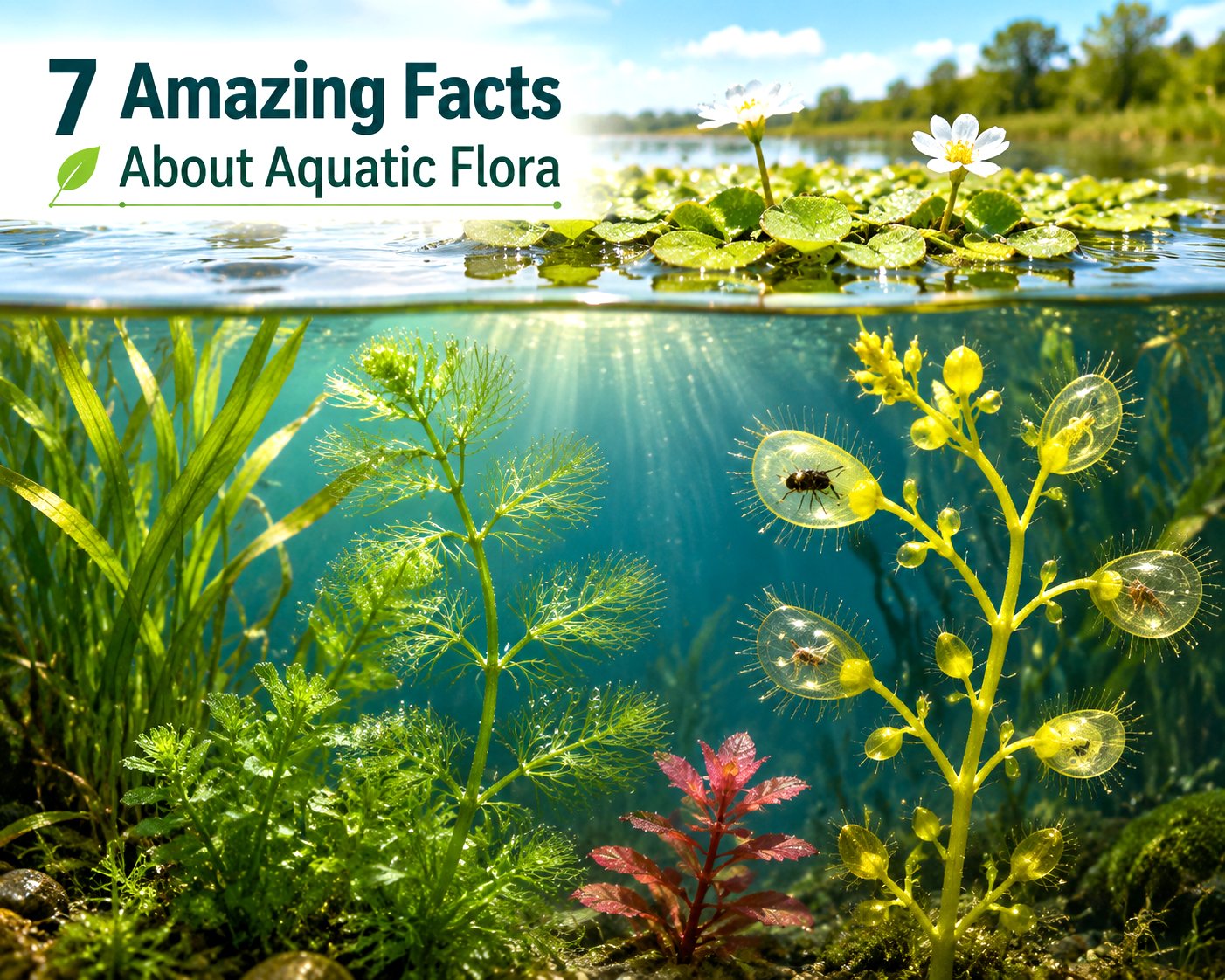
Oxford ( Economy India ): Beneath the surface of lakes, rivers, ponds, and wetlands lies a fascinating world of aquatic flora. These plants have evolved unique adaptations that allow them to thrive underwater, often defying what we typically think of as a plant.
According to Alexander Bowles of the University of Oxford, aquatic plants display an extraordinary range of survival strategies that make them some of the most remarkable organisms on Earth.
1. Algae Are Not True Plants
Although algae perform photosynthesis like plants, they are not classified as true plants. Most algae belong to different biological groups and lack the roots, stems, and leaves found in land plants.
2. Some Aquatic Plants Have No Roots
Not all aquatic plants rely on roots. Floating species such as duckweed absorb water and nutrients directly through their surfaces, allowing them to survive without anchoring to the bottom.

3. Some Plants Eat Animals
Certain aquatic plants are carnivorous. Species like bladderwort trap tiny aquatic insects and microorganisms to obtain nutrients that may be scarce in the water.
4. Some Plants Flower Underwater
Unlike most flowering plants, several aquatic species can produce flowers and even complete pollination beneath the water’s surface, an adaptation rarely seen on land.
5. Aquatic Plants Help Purify Water
Many aquatic plants naturally filter water by absorbing excess nutrients and pollutants. This process improves water quality and helps maintain healthy ecosystems.
6. They Produce Oxygen
Through photosynthesis, aquatic plants release oxygen into the water, supporting fish, amphibians, and countless other aquatic organisms.
7. They Support Entire Ecosystems
Aquatic vegetation provides shelter, food, and breeding habitats for numerous species. Healthy aquatic plant communities are essential for maintaining biodiversity and ecological balance.
Why Aquatic Plants Matter
Aquatic plants play an important role by:
- Improving water quality
- Producing oxygen
- Reducing water pollution
- Preventing erosion
- Supporting fish and wildlife
- Helping store carbon
Conclusion
Aquatic plants are among nature’s most extraordinary life forms. From rootless species to underwater flowering plants and carnivorous hunters, they demonstrate how evolution has produced remarkable solutions for life beneath the water’s surface. Protecting these ecosystems is essential for preserving biodiversity and maintaining healthy freshwater environments.
( Economy India )