
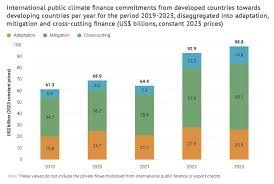
International public adaptation finance reached $28.2–31.7 billion in 2024, but the increase remains insufficient to meet the growing climate resilience needs of developing countries.
New Delhi (Economy India) : International public finance flows from developed to developing countries for climate change adaptation increased to between US$28.2 billion and US$31.7 billion in 2024, but the pace of growth is flattening and remains far below the level required to protect vulnerable economies from intensifying climate impacts, according to a new report by the United Nations Environment Programme (UNEP).
The increase of around US$1 billion over 2023 represents only modest progress towards the global climate finance commitments made under the Glasgow Climate Pact. The pact called on developed countries to double adaptation finance from 2019 levels by 2025, taking the annual amount to approximately US$40 billion.
In its latest Adaptation Gap Report 2026, titled Ready? Not., UNEP warns that developing countries are facing mounting climate risks while the financial resources available to prepare for and respond to those risks remain inadequate.

The report highlights a widening gap between the cost of climate adaptation and the international public funding reaching developing nations. It also points to institutional barriers, insufficient implementation capacity and rising losses and damages as major challenges to global climate resilience. <Cite refs={[“turn806339search0″,”turn806339search4”]}/>
Adaptation Finance Growth Slows Despite Rising Climate Risks
The latest figures indicate that international public adaptation finance has continued to increase, but the pace of growth is not sufficient to meet the commitments made by developed countries.
The estimated US$28.2 billion to US$31.7 billion provided in 2024 represents an increase of approximately US$1 billion compared with the previous year.
However, UNEP cautions that the growth rate remains below what is needed to achieve the Glasgow Climate Pact’s target of doubling adaptation finance from its 2019 level of around US$19 billion to approximately US$40 billion annually by 2025.
The report also notes that adaptation funding for least developed countries (LDCs) and small island developing states (SIDS) increased in real terms between 2019 and 2024, but declined from its 2022 peak.
These countries are among those particularly exposed to climate-related risks, including rising sea levels, extreme weather events, droughts and disruptions to agriculture and livelihoods. <Cite refs={[“turn806339search0″,”turn806339search22”]}/>
Developing Countries Need US$305 Billion Annually by 2035
One of the most significant findings of the report is the scale of the financing requirement facing developing countries.
Based on assessments of nationally determined contributions, national adaptation plans and model-based estimates, UNEP puts the central estimate of annual adaptation finance needs at approximately US$305 billion by 2035.
This requirement is substantially higher than the current international public finance flows.
The report warns that even if the international commitment to triple adaptation finance by 2035 is achieved, the additional resources would cover only around 20 to 29 per cent of the projected adaptation needs of developing countries.
The funding gap is particularly concerning because climate adaptation requires long-term investment in infrastructure, agriculture, water management, disaster preparedness, public health and protection of vulnerable communities. <Cite refs={[“turn806339search0″,”turn806339search4”]}/>
Glasgow Climate Pact Target Remains a Major Challenge
The Glasgow Climate Pact, adopted at the UN climate conference in 2021, called on developed countries to at least double their collective provision of climate finance for adaptation to developing countries from 2019 levels by 2025.
The commitment was intended to raise annual adaptation finance to approximately US$40 billion.
However, the latest figures show that the growth in international public adaptation finance has not kept pace with the level required to meet the target.
UNEP says the goal could still be achieved, partly because multilateral development banks are likely to have increased their adaptation financing significantly in 2025. However, the final outcome will also depend on whether bilateral development assistance is affected by declining official development assistance.
The report therefore highlights the importance of sustained contributions from developed countries and stronger financing through multilateral institutions. <Cite refs={[“turn806339search0″,”turn806339search19”]}/>
New Global Ambition to Triple Adaptation Finance by 2035
The report also examines the global aspiration to increase adaptation finance substantially by 2035.
At COP30, the Global Mutirão decision called for efforts to at least triple adaptation finance by 2035.
Depending on the baseline used for calculating the increase, this could raise annual international adaptation finance to approximately US$85 billion to US$120 billion.
However, UNEP warns that even achieving this ambition would leave a considerable financing shortfall. After accounting for inflation, the increased funding would meet only around 20 to 29 per cent of developing countries’ projected adaptation needs.
The situation could be different for least developed countries and small island developing states. Tripling finance for these particularly vulnerable groups could cover approximately 49 to 83 per cent of their projected needs. <Cite refs={[“turn806339search0″,”turn806339search4”]}/>
South-South Climate Finance Shows Positive Growth
While international funding from developed to developing countries has been growing slowly, financial cooperation among developing countries is expanding.
According to UNEP, financial flows through multilateral development banks and direct South-South cooperation increased from US$3.8 billion in 2019 to US$9.6 billion in 2024.
This increase reflects the growing role of developing economies in supporting climate adaptation efforts through financial cooperation, development partnerships and multilateral institutions.
UNEP identifies this trend as a positive development, although it is not yet sufficient to address the overall financing gap.
The report also notes that private-sector adaptation finance is increasing. However, much of this investment is directed towards the private sector’s own adaptation requirements or is ultimately financed by developing countries themselves.
As a result, private finance may reduce the funding gap for more public-oriented adaptation activities by only around 15 to 20 per cent. <Cite refs={[“turn806339search0″,”turn806339search4”]}/>
Climate Adaptation Requires Investment in Infrastructure and Resilience
Climate adaptation involves preparing communities, economies and infrastructure to manage the effects of climate change that are already occurring or expected to intensify.
Unlike climate mitigation, which focuses on reducing greenhouse gas emissions, adaptation measures aim to reduce vulnerability and limit the damage caused by climate-related hazards.
Such measures include strengthening coastal protection systems, developing drought-resistant agricultural practices, improving water management, upgrading drainage infrastructure, preparing for floods and heatwaves, and making homes and public facilities more resilient.
For developing countries, these investments are particularly important because climate-related disasters can affect food security, employment, public health, infrastructure and economic growth.
Insufficient adaptation funding can increase the economic burden on governments and vulnerable communities, particularly when disasters repeatedly damage infrastructure and disrupt livelihoods.
Institutional Barriers Continue to Slow Adaptation Efforts
UNEP’s assessment goes beyond the availability of money and highlights the institutional challenges that prevent adaptation plans from being translated into action.
Governments need effective institutions, technical expertise, administrative capacity and clear implementation mechanisms to turn climate strategies into practical projects.
Complex funding procedures, limited technical capabilities and difficulties in accessing international climate finance can delay the implementation of adaptation programmes.
The report points to the need for stronger national institutions and better coordination between governments, development partners and financing organisations.
Improving access to climate finance and strengthening the capacity to implement projects are therefore essential parts of the broader adaptation agenda. <Cite refs={[“turn806339search0″,”turn806339search4”]}/>
Losses and Damages Add to the Financial Burden
The report also draws attention to the growing losses and damages experienced by developing countries as climate impacts intensify.
Extreme weather events, floods, droughts, rising temperatures and other climate-related hazards are placing additional pressure on national budgets and local communities.
UNEP warns that the financial resources available to address losses and damages remain insufficient compared with the scale of identified requirements.
The first funding round of the Fund for Responding to Loss and Damage generated requests worth approximately US$2.8 billion, significantly exceeding its initial funding envelope of US$342 million.
This illustrates the gap between the financial support being made available and the needs being reported by vulnerable countries. <Cite refs={[“turn806339search4”]}/>
Climate Finance Debate Gains Importance Ahead of COP31
The findings come as international climate negotiations continue to focus on the financial responsibilities of developed countries and the support required by developing economies.
The report is particularly relevant to discussions on how climate finance commitments can be translated into predictable funding for adaptation programmes.
For developing countries, the challenge is not limited to securing higher financial commitments. They also need easier access to funding, stronger institutional support, technology transfer and long-term investment arrangements.
The report’s findings are expected to add to discussions on climate resilience and the implementation of global adaptation commitments at the upcoming climate negotiations.
A Widening Gap Between Climate Risks and Available Funding
UNEP’s latest assessment underlines a central challenge in global climate action: the financial resources reaching developing countries are increasing, but not at the speed required to address mounting climate risks.
With annual adaptation needs estimated at US$305 billion by 2035, the current level of international public finance represents only a fraction of the resources required.
The report makes clear that increasing adaptation finance, strengthening national institutions and improving access to funding will be essential to protect vulnerable communities and economies.
For developing countries already facing the consequences of climate change, the challenge is increasingly urgent: building resilience requires not only ambitious plans but also reliable and adequate financial support.
(Economy India)


