
Industry body says FTA may create up to 10 lakh jobs and significantly boost India’s exports to the UK
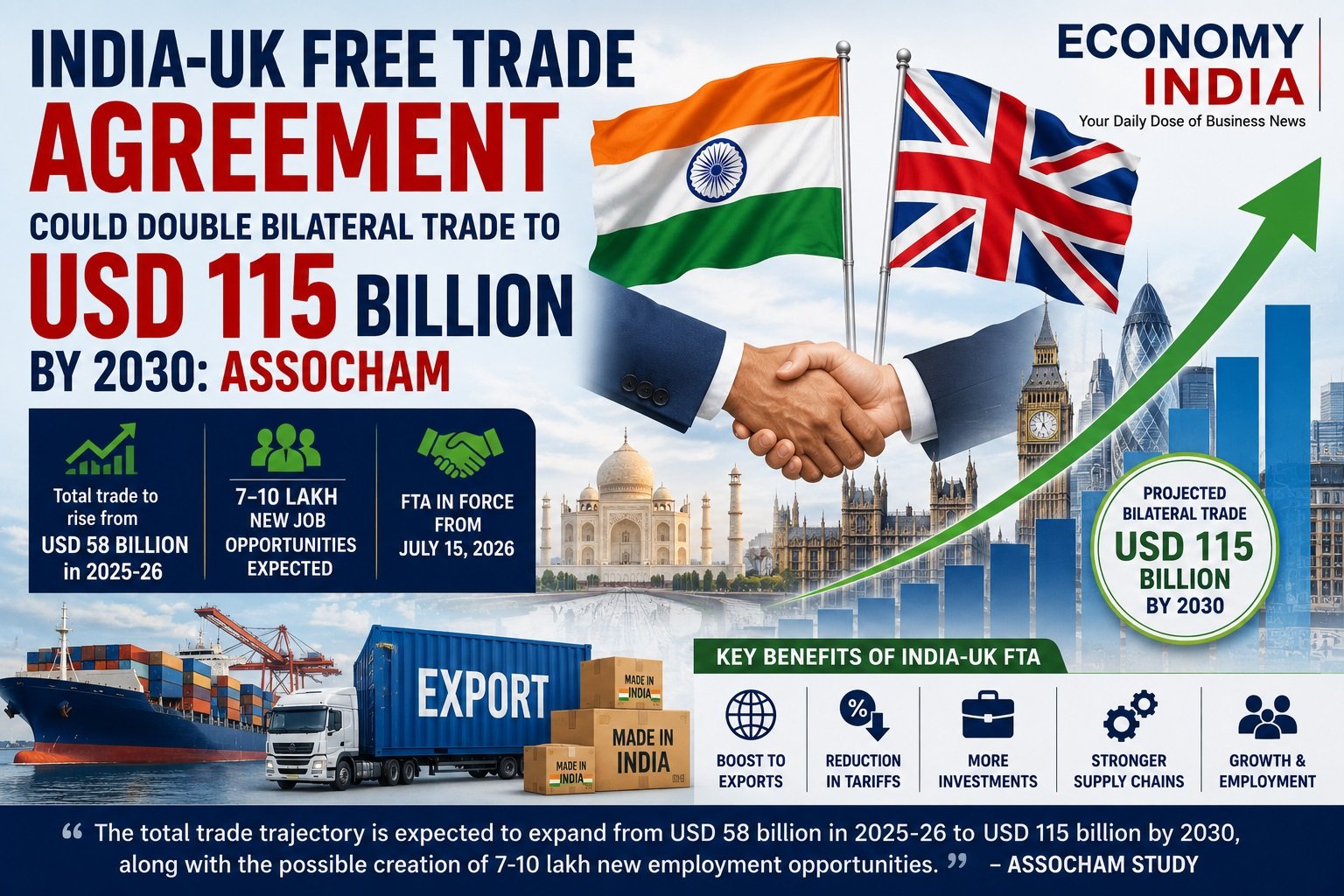
New Delhi (Economy India): The implementation of the India–United Kingdom Free Trade Agreement (FTA) is expected to significantly strengthen bilateral trade, with India’s exports to the UK projected to reach USD 115 billion by 2030, according to a study released by the Associated Chambers of Commerce and Industry of India (Assocham).
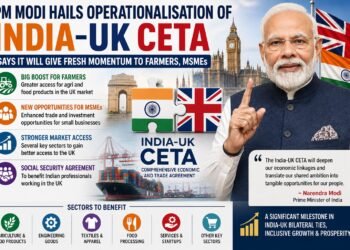
The landmark trade agreement officially came into force on July 15, 2026, opening new opportunities for businesses, exporters, manufacturers, and service providers in both countries.

Bilateral Trade Expected to Double
Assocham estimates that total bilateral trade between India and the UK could nearly double from USD 58 billion in FY2025-26 to USD 115 billion by 2030.
The industry body believes the agreement will improve market access, reduce tariffs, strengthen supply chains, and enhance investment flows across key sectors.
Employment Boost
The study projects that the FTA could generate 7 lakh to 10 lakh new employment opportunities across export-oriented industries, manufacturing, services, logistics, textiles, engineering, pharmaceuticals, food processing, and technology sectors.
The expected rise in exports is likely to encourage capacity expansion and fresh investments by Indian companies.
Key Benefits of the India–UK FTA
The agreement is expected to:
- Increase India’s exports to the UK.
- Improve market access for Indian goods and services.
- Reduce tariffs on a wide range of products.
- Encourage greater bilateral investment.
- Strengthen supply chains and manufacturing.
- Enhance opportunities for MSMEs and exporters.
- Create millions of jobs across multiple sectors.
| Indicator | Details |
|---|---|
| Agreement Effective From | July 15, 2026 |
| Current Bilateral Trade | USD 58 Billion (FY26) |
| Projected Trade by 2030 | USD 115 Billion |
| Expected New Jobs | 7–10 Lakh |
| Study Released By | Assocham |
Strategic Importance
The India–UK FTA is considered one of India’s most significant trade agreements in recent years. It supports the government’s broader strategy of expanding exports, integrating Indian businesses into global value chains, and achieving the long-term goal of becoming a developed economy by 2047.
Industry experts believe sectors such as textiles, apparel, gems and jewellery, engineering goods, pharmaceuticals, automobiles, IT services, food products, and financial services are expected to be among the biggest beneficiaries.
(Economy India)