
( Economy India ):Marine heatwaves are becoming one of the biggest environmental challenges facing the world’s oceans. These events occur when sea surface temperatures remain much higher than normal for at least five consecutive days. The UK is currently experiencing its third major marine heatwave in just four years, with unusually warm waters recorded across several coastal regions.
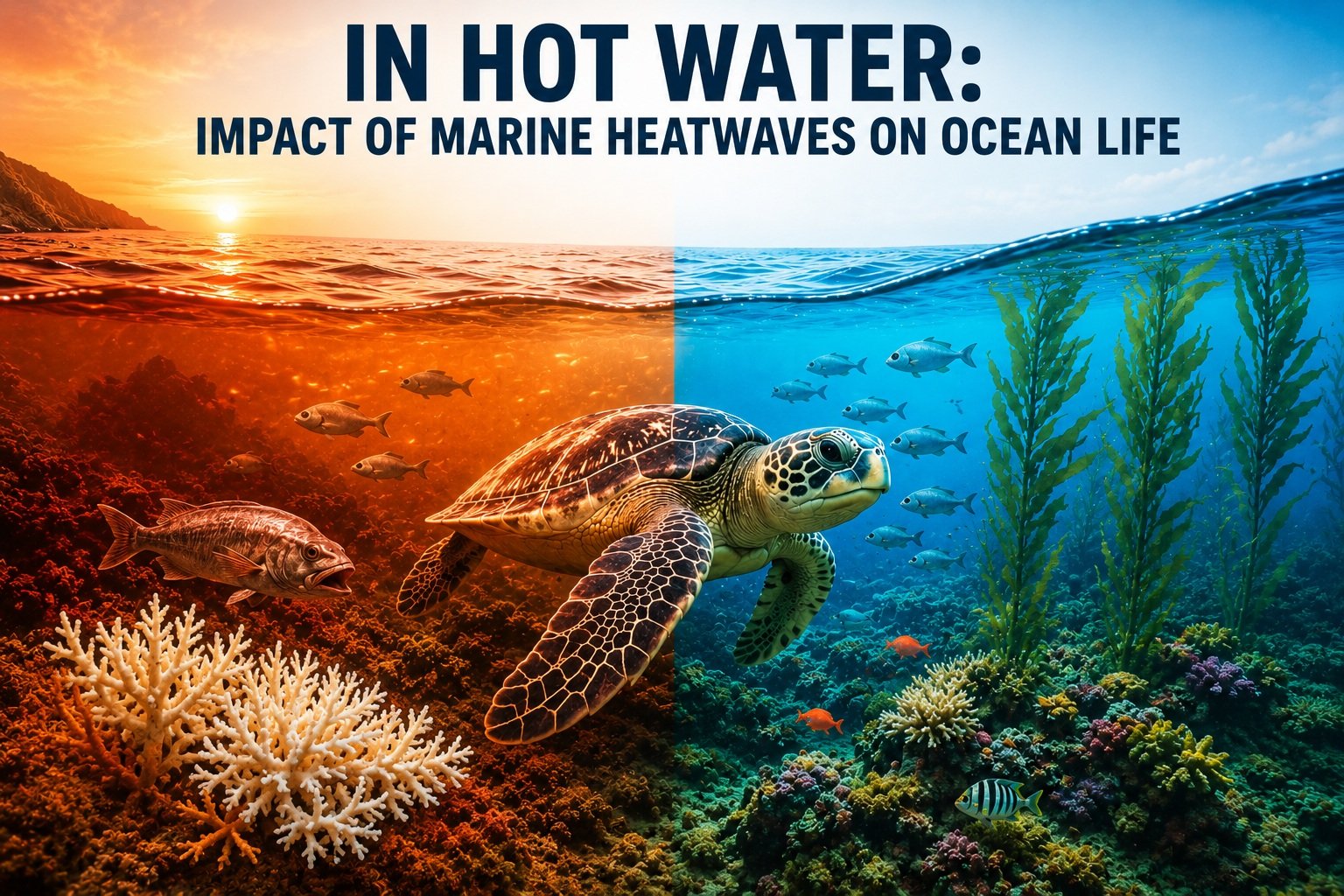
Although warm seawater may seem pleasant for swimmers, it creates serious problems for marine ecosystems. Rising ocean temperatures reduce the amount of oxygen available in the water, making it harder for many fish and other sea creatures to survive. Species that cannot tolerate the heat are forced to migrate to cooler waters, while others face increased stress, disease, and even mass die-offs.
Marine heatwaves can also damage some of the ocean’s most important habitats. Coral reefs may experience bleaching, where corals lose the algae that provide them with food and color. Kelp forests and seagrass meadows, which serve as breeding and feeding grounds for countless marine species, can also decline rapidly during prolonged periods of extreme warmth. The loss of these habitats affects the entire marine food chain, from tiny plankton to large predators such as dolphins and whales.
Scientists say climate change is making marine heatwaves more frequent, longer-lasting, and more intense. Warmer oceans not only threaten biodiversity but also impact fisheries, tourism, and the livelihoods of millions of people who depend on healthy marine ecosystems. Monitoring ocean temperatures, reducing greenhouse gas emissions, and protecting marine habitats will play a crucial role in limiting the long-term effects of these heatwaves.

( Economy India )