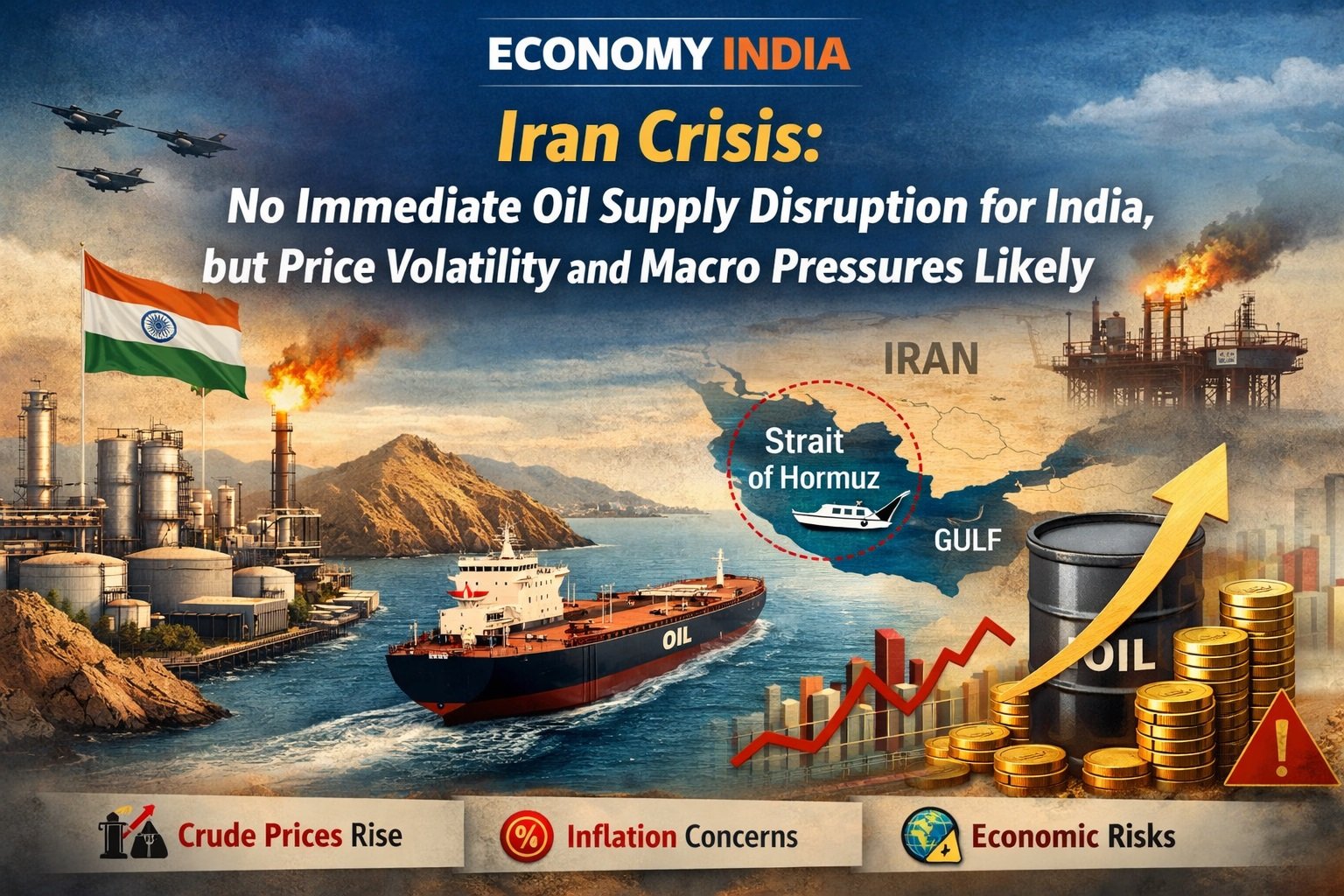

New Delhi (Economy India): India is unlikely to face any immediate physical disruption in crude oil supplies despite escalating geopolitical tensions involving Iran and growing security risks around the Strait of Hormuz. However, officials and energy analysts have warned that higher crude prices, market volatility, and broader macroeconomic pressures could emerge in the near term if the crisis intensifies.
Indian refiners are currently adequately stocked, with crude oil inventories sufficient to meet at least 10 days of requirements, while finished fuel stocks can cover an additional 5–7 days of domestic demand. This buffer provides short-term insulation against any sudden supply interruptions arising from regional instability in West Asia.

Strait of Hormuz Remains the Key Risk Factor
The Strait of Hormuz is one of the world’s most critical energy chokepoints, handling:
- Nearly 20% of global petroleum liquids trade
- Around 20% of global LNG shipments
For India, the route is particularly significant. Around 2.5–2.7 million barrels per day, or nearly 50% of India’s total crude oil imports, pass through the Strait of Hormuz. These supplies are largely sourced from:

- Iraq
- Saudi Arabia
- The United Arab Emirates
- Kuwait
Any prolonged disruption to shipping through the strait could have serious implications for global oil markets, even if physical supply to India is not immediately curtailed.

India’s Supply Position Remains Stable—for Now
Officials familiar with the matter said India’s oil supply chains remain operational and diversified, reducing the risk of abrupt shortages. Over the past few years, Indian refiners have steadily expanded sourcing options beyond West Asia.
Alternative supply arrangements are already in place with producers in:
- The United States
- West Africa
- Latin America
- Russia
In addition, India can draw upon its Strategic Petroleum Reserves (SPR) in the event of a short-term supply shock, providing further resilience against geopolitical disruptions.
Energy experts said these measures significantly lower the risk of a physical supply crunch, even if tensions in the region escalate further.
Price Volatility the Bigger Near-Term Threat
While physical supplies appear secure for now, analysts caution that price volatility is the more immediate concern for India. Crude oil prices typically react sharply to geopolitical risks in the Middle East, regardless of whether actual supply disruptions occur.
Higher oil prices could:
- Widen India’s current account deficit
- Increase import bills
- Add pressure on retail inflation
- Complicate the government’s fiscal calculations, especially on fuel taxes and subsidies
India imports more than 85% of its crude oil needs, making the economy highly sensitive to global oil price movements.
Inflation and Growth Risks Under Watch
Economists note that sustained increases in crude oil prices could feed into:
- Transport and logistics costs
- Manufacturing input expenses
- Retail fuel prices, depending on tax adjustments
This, in turn, could exert upward pressure on inflation at a time when policymakers are focused on maintaining macroeconomic stability and supporting growth.
A prolonged spike in energy prices may also limit the scope for monetary easing, as central banks tend to remain cautious when inflation risks rise due to imported cost pressures.

Government and Industry Monitoring Situation Closely
Officials said the government and public-sector oil companies are closely monitoring developments in West Asia and global energy markets. Regular coordination is taking place between:
- Oil marketing companies
- Refiners
- Shipping and logistics operators
- Strategic reserve managers
Contingency planning includes rerouting cargoes, adjusting refinery runs, and tapping alternative crude grades if required.
Global Markets React to Iran-Linked Risks
The crisis involving Iran has already heightened risk sentiment in global commodity and financial markets. Any escalation involving shipping lanes, energy infrastructure, or regional actors could trigger:
- Sharp spikes in crude oil prices
- Higher shipping insurance premiums
- Increased freight and logistics costs
Even in the absence of physical disruption, the risk premium on oil could remain elevated as long as geopolitical uncertainty persists.
India is well-positioned to manage short-term oil supply risks arising from the Iran-linked geopolitical crisis, thanks to adequate inventories, diversified sourcing, and strategic reserves. However, price volatility and macroeconomic spillovers remain key concerns if tensions around the Strait of Hormuz escalate further.
For Economy India, the situation underscores a familiar reality: while supply security has improved, India’s heavy dependence on imported crude means global geopolitical shocks continue to pose significant economic risks.
(Economy India)