
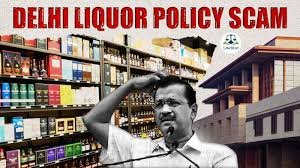
New Delhi (Economy India): In a significant legal development, a Delhi court on Friday discharged former Delhi Chief Minister Arvind Kejriwal in the alleged excise policy “scam,” holding that the Central Bureau of Investigation (CBI) failed to establish even a prima facie case of policy manipulation against him.
The ruling delivers a major setback to the prosecution and provides relief to the Aam Aadmi Party leader, who had been accused of playing a “central conspiratorial role” in the formulation of Delhi’s now-scrapped excise policy.
Court Rejects Allegation of Policy Manipulation
Special Judge Jitendra Singh, while pronouncing the order, observed that the prosecution’s case against Kejriwal rested almost entirely on an uncorroborated statement of a single witness. The court noted that there was no documentary, electronic, financial, or digital evidence directly or indirectly linking Kejriwal to any manipulation of the excise policy or to the receipt of illegal gratification.
“There is no material to show his presence at any conspiratorial meeting or to indicate his knowledge of any unlawful arrangement,” the court stated.
The judge emphasized that invoking the term “conspiracy” alone does not absolve the prosecution of its obligation to produce material evidence demonstrating agreement and participation.

Witness Statement Found Insufficient
The prosecution had relied heavily on the statement of witness Magunta Sreenivasulu Reddy, who claimed Kejriwal mentioned that K Kavitha, daughter of K Chandrashekar Rao, would contact him regarding the excise policy.
However, the court ruled that this solitary statement—without independent corroboration—was legally inadequate to proceed against Kejriwal.
“The attempt to implicate him rests on an inference drawn from an uncorroborated accomplice-like statement,” the order said.
Serious Flaws in Prosecution’s Approach
The court also flagged serious infirmities in the way key witnesses were treated. According to the evidence on record, individuals who allegedly admitted participation in questionable transactions were examined merely as prosecution witnesses—without being named as accused or being granted pardon as approvers.
The judge noted that treating such witnesses as fully independent undermined the credibility of the prosecution’s case and raised concerns about selective application of legal standards.
No Evidence of Criminal Design or “South Group” Link
Rejecting claims that the excise policy was tailored to benefit the so-called “South Group,” the court observed that:
- The policy evolved through multiple levels of deliberation
- It underwent scrutiny by competent authorities
- It ultimately received approval from the Lieutenant Governor
There was no evidence to show that any clause of the policy was based on documents supplied by alleged beneficiaries.
“If the foundation of policy manipulation is not established, subsequent allegations of a larger conspiracy necessarily lose their footing,” the court ruled.
Goa Election Funding Allegation Also Falls Flat
The prosecution had further alleged that illicit funds generated from the policy were used for election expenses in Goa. The court dismissed this charge as well, stating that without proof of policy manipulation, downstream allegations regarding the use of funds cannot be sustained.
Broader Implications for Rule of Law
In a strongly worded observation, the court cautioned against the consequences of prosecuting individuals holding constitutional office without adequate evidence.
“Arrest and prosecution in such circumstances have implications beyond the individual. Public confidence in institutions is inevitably affected,” the judge said.
The court stressed that investigative agencies must exercise fairness, restraint, and strict adherence to evidentiary standards to preserve both individual liberty and public trust in the justice system.
Political and Legal Significance
The ruling is expected to have wide political ramifications, especially ahead of key electoral battles. For Kejriwal and the AAP, the court’s findings strengthen their long-standing claim that the excise policy case lacked substantive evidence and was politically motivated.
For investigative agencies, the judgment serves as a reminder that criminal prosecution must be grounded in solid, corroborated material, particularly when it involves senior public officials.
— Economy India Legal & Governance Desk