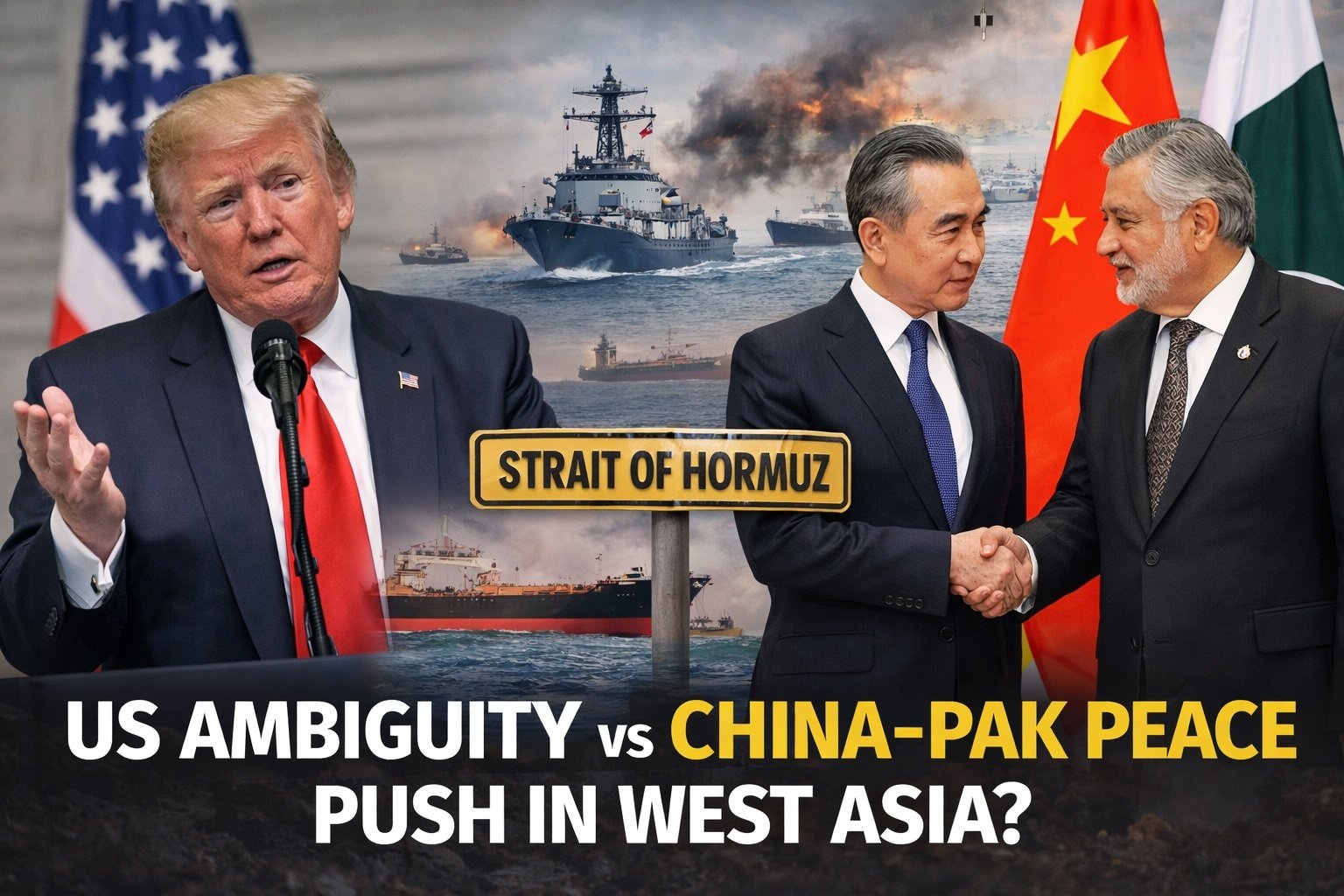

BEIJING/ISLAMABAD (Economy India): The escalating tensions in West Asia have not only intensified regional instability but also exposed a growing divergence in global power strategies. On one side stands the United States under Donald Trump, whose shifting stance on the Iran conflict has drawn scrutiny. On the other, a coordinated diplomatic push led by China and Pakistan—fronted by Wang Yi and Ishaq Dar—is positioning itself as a stabilizing alternative.
This contrast highlights a broader geopolitical contest: military signaling versus diplomatic engagement, with implications that extend far beyond the Gulf region.
A Region on Edge: Strategic Importance of West Asia
West Asia remains one of the most geopolitically sensitive regions in the world, primarily due to its vast energy reserves and critical maritime routes. At the heart of the current crisis lies the Strait of Hormuz, a narrow but vital corridor through which nearly 20% of global crude oil supplies are transported.
Any disruption here has immediate consequences for global energy markets, inflation, and economic stability—particularly for energy-importing countries like India.
The US Approach: Strategic Ambiguity or Policy Drift?
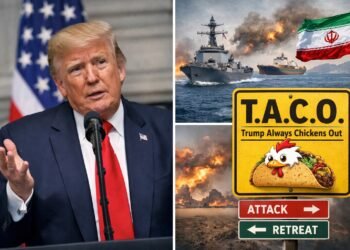
The United States’ response to the Iran conflict under President Trump has been marked by inconsistency and unpredictability.
Initially, Trump sought support from allies, including NATO partners, to ensure maritime security in the Gulf. However, this multilateral tone quickly shifted to a more unilateral posture, with the President asserting that the US could act independently.
Further complicating matters were Trump’s fluctuating military signals:
- Threats to target Iran’s energy infrastructure
- Sudden pauses or postponements of military action
- Contradictory statements on escalation versus restraint
While some analysts interpret this as a deliberate strategy—keeping adversaries uncertain—others view it as policy inconsistency that risks undermining US credibility.
Implications of the US Strategy
- Erosion of Allied Confidence
Allies depend on predictable leadership. Frequent reversals create hesitation and reduce willingness to align with US-led initiatives. - Market Volatility
Oil prices react sharply to uncertainty in the Gulf. Mixed signals from Washington contribute to instability in global markets. - Strategic Miscalculation Risks
Ambiguity can deter adversaries—but excessive unpredictability may lead to unintended escalation.
China-Pakistan Diplomatic Push: A Calculated Alternative
In contrast, China and Pakistan have adopted a coordinated diplomatic approach aimed at de-escalation.
Following high-level talks in Beijing between Wang Yi and Ishaq Dar, both countries proposed a five-point peace plan, emphasizing:
- Immediate cessation of hostilities
- Dialogue between the US and Iran
- Protection of maritime routes
- Regional stability through multilateral cooperation
- Respect for sovereignty and non-interference
This initiative reflects China’s long-standing preference for diplomatic conflict resolution, coupled with Pakistan’s strategic positioning as a bridge between major Muslim nations and global powers.
China’s Expanding Role in Global Diplomacy
China’s involvement signals its growing ambition to act as a global peacemaker, particularly in regions traditionally dominated by US influence.
Key motivations behind Beijing’s approach include:
- Energy Security: China is heavily dependent on Middle Eastern oil
- Economic Stability: Conflict disrupts global supply chains affecting Chinese exports
- Geopolitical Influence: Expanding diplomatic footprint enhances China’s global stature
By advocating peace, China not only protects its economic interests but also strengthens its image as a responsible global power.
Pakistan’s Strategic Calculus
For Pakistan, participation in the peace initiative serves multiple objectives:
- Reinforcing its role in Islamic and regional diplomacy
- Strengthening ties with China under the strategic partnership framework
- Positioning itself as a mediator in global conflicts
Islamabad’s outreach to countries like Turkiye, Egypt, and Saudi Arabia further underscores its attempt to build a broad diplomatic consensus.
Contrasting Approaches: Power vs Diplomacy
The current situation presents a clear contrast between two global approaches:
| Aspect | United States | China-Pakistan |
|---|---|---|
| Strategy | Military signaling & deterrence | Diplomatic engagement |
| Messaging | Inconsistent, shifting | Coordinated, stable |
| Global Perception | Unpredictable leadership | Emerging mediator |
| Risk Level | Higher escalation risk | Focus on de-escalation |
This divergence is not merely tactical—it reflects competing visions of global order.
Impact on Global Energy Markets
The Gulf crisis has already begun influencing oil prices and supply chains. The stability of the Strait of Hormuz remains central to market confidence.
- Any escalation could trigger sharp spikes in crude oil prices
- Shipping disruptions would increase insurance and transportation costs
- Emerging economies could face inflationary pressures
For India, which imports a significant portion of its oil, the stakes are particularly high.
India’s Strategic Position
India finds itself navigating a complex geopolitical landscape:
- Strong ties with the US in defense and technology
- Growing economic engagement with China
- Deep energy and diaspora links with Gulf countries
New Delhi’s approach is likely to remain balanced and pragmatic, focusing on:
- Securing energy supplies
- Supporting diplomatic solutions
- Avoiding direct involvement in conflict dynamics
Risks of Escalation vs Opportunities for Diplomacy
The coming weeks will be critical in determining the trajectory of the crisis.
Risks
- Military confrontation between the US and Iran
- Disruption of global oil supply chains
- Wider regional instability
Opportunities
- Renewed diplomatic engagement
- Multilateral peace initiatives
- Strengthening global cooperation mechanisms
A Defining Moment in Global Power Politics
The West Asia crisis has evolved into more than a regional conflict—it is now a test case for global leadership.
While the United States continues to rely on a mix of military signaling and strategic ambiguity, China and Pakistan are advancing a diplomacy-first approach aimed at de-escalation.
The outcome will not only shape the future of the Gulf region but also redefine global power dynamics in the 21st century.
For now, the world watches closely as competing strategies unfold—each carrying profound implications for peace, stability, and economic security.
(Economy India)