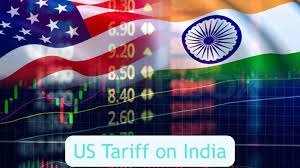
New York (Economy India): The United States’ indication that it may withdraw the 25 per cent tariff imposed on India for importing Russian crude oil marks a potentially important inflection point in global energy geopolitics, sanctions diplomacy, and India–US strategic relations. The remarks by US Treasury Secretary Scott Bessent, acknowledging a sharp decline in India’s Russian oil purchases, reflect a broader recalibration of Washington’s approach toward key global partners navigating an increasingly fragmented energy order.
At its core, the development underscores the complex intersection of geopolitics, energy security, sanctions enforcement, and emerging multipolar realities, with India positioned at the centre of this evolving equation.
Origins of the Tariff: Sanctions, Strategy, and Signalling
The 25 per cent tariff imposed on India was not a conventional trade measure but a geopolitical instrument linked to Washington’s sanctions regime against Russia following the Ukraine conflict. The US and its allies sought to curtail Moscow’s energy revenues, which form a critical pillar of the Russian economy and state finances.
While primary sanctions targeted Russian entities directly, secondary pressure mechanisms—including tariffs, financial restrictions, and compliance scrutiny—were designed to discourage major importers from engaging in large-scale energy trade with Russia.
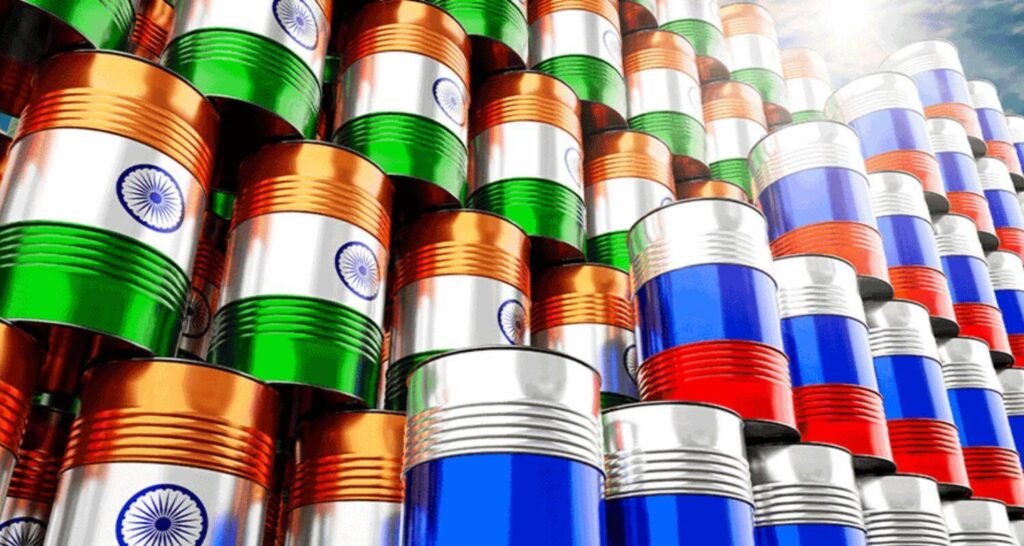
India, as the world’s third-largest oil importer, emerged as a key focal point after it significantly increased purchases of discounted Russian crude in 2022–24, driven by:
- Soaring global oil prices
- Domestic inflation management
- Energy affordability concerns
- Supply diversification imperatives
From New Delhi’s perspective, these purchases were commercial, not political, guided by national interest and market logic. From Washington’s standpoint, however, sustained high-volume imports risked diluting the effectiveness of sanctions.
India’s Strategic Energy Calculus
India imports more than 85 per cent of its crude oil requirements, making energy security a cornerstone of macroeconomic stability. Russian crude, offered at discounted rates amid sanctions, became an attractive option during periods of global price volatility.
However, India consistently articulated three key principles:
- Strategic autonomy in foreign policy
- Non-alignment in geopolitical conflicts
- Market-driven energy procurement
At the same time, Indian policymakers were acutely aware of the diplomatic sensitivities involved. Over the past year, data indicates that India has significantly reduced its share of Russian oil imports, pivoting toward:
- Middle Eastern suppliers (Saudi Arabia, Iraq, UAE)
- US crude and LNG
- Latin American sources
- African producers
This gradual recalibration allowed India to balance economic pragmatism with geopolitical risk management, without abrupt disruptions to domestic fuel markets.
US Policy Shift: From Punitive Pressure to Pragmatic Engagement
The US Treasury Secretary’s acknowledgment that India’s Russian oil purchases have “declined sharply” signals a shift from rigid enforcement toward conditional flexibility.
Several strategic factors appear to be influencing Washington’s thinking:
1. India’s Rising Strategic Importance
India has become indispensable to US objectives in:
- Indo-Pacific security architecture
- Supply chain diversification
- Semiconductor and technology ecosystems
- Clean energy and climate initiatives
Penalising India too aggressively risks undermining long-term strategic alignment.
2. Sanctions Fatigue and Global Compliance Limits
After years of extensive sanctions, policymakers are increasingly recognising the limits of coercive economic tools, especially when applied to large, fast-growing economies with diversified partnerships.
3. Global Energy Market Stability
With oil markets sensitive to geopolitical shocks, Washington is cautious about actions that could:
- Disrupt supply flows
- Push prices higher
- Exacerbate inflationary pressures globally
Easing tariffs on India could contribute to market stability rather than volatility.
Implications for Global Energy Markets
The possible rollback of the tariff carries broader implications beyond bilateral trade:
Reduced Uncertainty for Refiners
Indian refiners, among the most complex and globally integrated, would benefit from lower compliance risk and cost predictability, improving margins and operational planning.
Rebalancing of Russian Energy Flows
Even as India reduces imports, Russia continues to reroute crude toward Asia, Africa, and shadow markets. A tariff rollback reflects recognition that energy flows are adapting rather than collapsing under sanctions.
Reinforcing Market-Based Energy Governance
The move may signal a return to market realism, acknowledging that energy trade cannot be entirely reshaped through punitive instruments alone.
India–Russia–US Triangle: A Delicate Balance
India’s relationship with Russia remains multifaceted, encompassing:
- Defence procurement
- Nuclear energy cooperation
- Strategic dialogue
However, energy trade has increasingly become transactional rather than ideological. India’s reduction in Russian oil imports demonstrates a willingness to adjust when geopolitical costs outweigh economic benefits.
Simultaneously, India has expanded energy cooperation with the US:
- Increased LNG imports
- Joint investments in clean energy
- Collaboration on strategic petroleum reserves
This evolving triangle illustrates India’s multi-alignment strategy, navigating competing power centres without formal allegiance.
Domestic Political and Economic Dimensions in India
From a domestic standpoint, tariff removal would:
- Ease cost pressures on oil marketing companies
- Support fuel price stability
- Reduce inflationary risks
- Improve trade sentiment amid global protectionism
Politically, it would validate the government’s stance that India’s energy policy is pragmatic, responsible, and adaptive, rather than defiant or confrontational.
Signals for Other Emerging Economies
Washington’s softer tone toward India may set an important precedent for how major powers engage with emerging economies navigating sanctions regimes.
Rather than a binary “comply or face penalties” framework, the approach appears to be shifting toward:
- Data-driven assessments
- Gradual compliance incentives
- Diplomatic engagement over coercion
This could reshape the future architecture of economic statecraft in a multipolar world.
Energy Transition and the Long-Term Picture
Beyond immediate geopolitics, the episode reinforces the urgency of energy transition. India’s long-term strategy focuses on:
- Expanding renewable capacity
- Green hydrogen investments
- Electric mobility
- Reduced fossil fuel dependency
As these initiatives scale up, India’s exposure to geopolitical energy shocks is expected to decline, reducing vulnerability to sanctions-linked pressures altogether.
Risks and Uncertainties Ahead
Despite the positive signal, uncertainties remain:
- No formal tariff rollback has been announced
- US policy remains subject to domestic political dynamics
- Geopolitical tensions involving Russia could escalate
- Energy markets remain vulnerable to supply disruptions
Sustained compliance trends and diplomatic engagement will be critical in determining outcomes.
A Pragmatic Reset in a Fragmented World
The US indication that it may remove the 25 per cent tariff on India over Russian oil imports reflects pragmatic realism in an era of geopolitical complexity. It recognises India’s strategic importance, market-based energy decisions, and adaptive policy stance.
For India, the episode underscores the effectiveness of measured diplomacy, diversification, and strategic patience. For global energy governance, it highlights the limits of coercive sanctions and the growing need for flexible, context-sensitive engagement.
If formalised, the tariff rollback would not merely be a trade concession—it would be a symbolic recalibration of geopolitical trust, reinforcing India’s position as a pivotal actor in shaping the future of global energy and economic order.
(Economy India)