New Delhi | Economy India Bureau
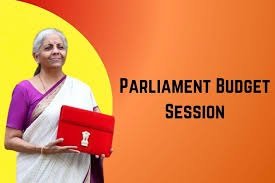
India’s Parliament will convene its crucial Budget Session from January 28 to April 2, with Union Budget to be presented on February 1, Parliamentary Affairs Minister Kiren Rijiju announced on Friday. The session, which sets the economic and legislative tone for the year, will be held in two phases, with a month-long recess to allow parliamentary committees to examine budgetary proposals.
The Budget Session will formally commence with President Droupadi Murmu’s address to the joint sitting of the Lok Sabha and Rajya Sabha on January 28, in line with constitutional tradition that marks the beginning of the first Parliament session of the year.
Two-Phase Budget Session Structure
According to the official schedule:
- First Phase: January 28 to February 13
- Recess: Approximately one month from February 13
- Second Phase: March 9 to April 2
The recess period is critical as standing committees of Parliament will scrutinise the Demands for Grants of various ministries and departments—an essential step in ensuring legislative oversight of government expenditure.
Officials indicated that although Parliament sessions typically conclude on Fridays, the Budget Session is likely to end on April 2, considering Good Friday on April 3 followed by a weekend.
Union Budget on February 1; Economic Survey Expected Earlier
The Union Budget will be tabled on February 1, outlining the government’s fiscal roadmap amid global economic uncertainty, geopolitical tensions, and domestic growth priorities.
The Economic Survey, which provides a comprehensive assessment of the Indian economy and policy challenges, is expected to be presented on January 30.
Key scheduling highlights include:
- January 29: Parliament proceedings may be curtailed due to the Beating Retreat ceremony
- January 31: Both Lok Sabha and Rajya Sabha are expected to remain adjourned
Following debates on the President’s Address and the Union Budget, Parliament will adjourn for the mid-session recess on February 13.

Legislative Agenda and Policy Focus
The Budget Session is expected to witness intense debates on fiscal consolidation, infrastructure spending, welfare schemes, manufacturing incentives, and global trade risks. With India positioning itself as a stable growth engine amid worldwide volatility, the upcoming budget is seen as critical for sustaining investor confidence and employment momentum.
The second phase of the session will focus on:
- Passage of Appropriation and Finance Bills
- Discussions on committee reports
- Legislative business carried forward from previous sessions
Winter Session Recap: Eight Bills Passed
The government enters the Budget Session after a productive Winter Session, which was held from December 1 to December 19. During that period:
- Eight Bills were passed by both Houses
- Two Bills were referred to parliamentary committees for further examination
Among the legislation passed was the VB-G RAM G Bill, which sparked sharp political reactions.
Political Flashpoints and Opposition Criticism
The Winter Session witnessed significant political friction. Following the passage of the VB-G RAM G Bill, Trinamool Congress (TMC) MPs staged a 12-hour protest inside Parliament.
Congress leader Jairam Ramesh accused the government of undermining India’s historical legacy, alleging that the session began with an “insult” to Rabindranath Tagore and concluded with an “insult” to Mahatma Gandhi.
He also criticised the government’s handling of debates around Vande Mataram and the replacement of MGNREGA-related provisions, alleging distortion of history and erosion of Gandhian values. The government, however, has rejected these allegations, asserting that legislative reforms are aimed at efficiency and modernization.
High Stakes for Economy and Governance
With the Budget Session traditionally regarded as the most important parliamentary sitting of the year, expectations are high from both industry and policymakers. The session will test the government’s ability to balance growth, fiscal discipline, and social welfare, while navigating a fragmented global economic environment.
As Parliament prepares to debate India’s economic priorities, the coming weeks will be closely watched by markets, investors, states, and global partners alike.
— Economy India Bureau