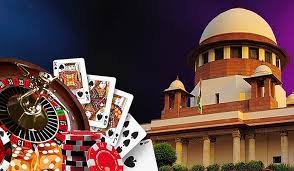

Industry warns of ₹20,000 crore tax loss and 2 lakh jobs at risk; Centre cites addiction, financial ruin, and national security concerns
New Delhi (Economy India): The Promotion and Regulation of Online Gaming Act, 2025 — one of India’s most sweeping legislations targeting the fast-growing online gaming industry — is set to face its first major legal test in the Supreme Court today.
The Union government has urged the apex court to consolidate all pending petitions across different high courts, arguing that fragmented hearings could result in contradictory rulings and legal uncertainty. Chief Justice B.R. Gavai had listed the matter for hearing today after the Centre flagged the issue on September 4.
The Centre’s Stand: “Conflicting Orders Will Create Chaos”
The Act, passed by Parliament and signed by the President on August 22, places a blanket ban on all real-money online games — whether skill-based (like rummy and poker) or chance-based (like lotteries and betting).
While tabling the bill in Parliament, Electronics and IT Minister Ashwini Vaishnaw said:
“Online money games have created widespread addiction, destroyed family savings, and even pushed people to suicide. Nearly 45 crore Indians are affected, with middle-class families losing close to ₹20,000 crore.”
The government maintains that the law is necessary to curb:
- Addiction and mental health issues (recognised as “Gaming Disorder” by the WHO).
- Financial exploitation of users, many of whom lose life savings.
- Money laundering and national security threats, given that offshore platforms often operate beyond regulatory oversight.
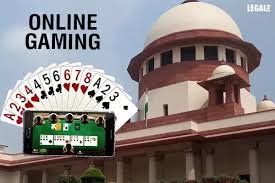
The Industry Pushback: “Overnight Shutdown Will Devastate Economy”
Three gaming companies have filed petitions in different high courts, calling the law unconstitutional:
- Madhya Pradesh High Court – ClubbBoom 11 Sports & Entertainment (fantasy sports platform Boom11).
- Karnataka High Court – Head Digital Works (parent of A23 Rummy).
- Delhi High Court – Bagheera Carrom (casual skill-based platform).
Petitioners argue that:
- The Act fails to distinguish between skill and chance.
- It violates the fundamental right to trade and profession (Article 19(1)(g)).
- Blanket bans will push users to unregulated offshore apps, worsening the risks.
- The law will destroy an industry projected to touch ₹80,000 crore by 2029.
During a Karnataka HC hearing on August 30, Senior Advocate for A23 said:
“Even skill-based games like rummy and poker, upheld as legitimate by the Supreme Court for over 70 years, have been outlawed. Overnight, lakhs of livelihoods are at stake.”
What the Law Says: Key Provisions
The Promotion and Regulation of Online Gaming Act, 2025 introduces some of the toughest restrictions ever seen in India’s digital economy:
- Blanket ban on real-money gaming: Offering, operating, or even advertising such games is illegal.
- Penalties: Up to 3 years in jail and ₹1 crore fine for operators; advertisers face up to 2 years in jail and ₹50 lakh fine.
- Regulatory Authority: A new central regulator will determine which games qualify as “real money” and maintain a register of permissible platforms.
- E-sports Exempted: Free-to-play games like PUBG, Free Fire, or competitive e-sports events are explicitly encouraged, as they involve no direct wagering.
Industry Fallout: Big Platforms Forced to Shut Down
The ripple effects were immediate. Leading platforms that dominated India’s gaming boom have already suspended real-money operations:
- Dream11 shut down its cash games on August 22.
- Gameskraft halted its popular rummy platforms like RummyCulture.
- My11Circle, PokerBaazi, and others followed suit.
Industry associations warn that:
- 2 lakh jobs — from coders and designers to customer service staff — could vanish.
- The government could lose ₹20,000 crore annually in tax revenues.
- India’s aspiration to be a global gaming hub may collapse.
A senior executive from a leading fantasy sports firm told Economy India:
“This Act does not regulate — it eradicates. Instead of bringing transparency, it will drive players to underground apps where neither taxes nor safeguards apply.”
The Constitutional Debate: Skill vs. Chance
The sharpest legal flashpoint is the distinction between games of skill and games of chance.
- In State of Bombay v. R.M.D. Chamarbaugwala (1957), the Supreme Court held that games of skill are protected under Article 19(1)(g) and cannot be equated with gambling.
- Successive judgments reaffirmed that rummy and horse racing involve substantial skill and are legal.
By banning both categories indiscriminately, the 2025 Act, critics say, ignores established precedent.
Head Digital Works (A23) argues in its petition:
“This law conflates poker and rummy with lottery and roulette. It undermines constitutional protections and decades of jurisprudence.”
Global Comparisons: India Outlier?
Globally, the approach to online gaming regulation varies:
- United Kingdom: Allows regulated betting and online casinos under strict licensing.
- United States: Several states permit skill-based fantasy sports but restrict chance-based betting.
- Singapore: Permits online betting only through government-approved operators.
India’s blanket ban, experts argue, is among the harshest globally.
An analyst at KPMG told Economy India:
“Instead of regulation and taxation, India has chosen prohibition. This risks pushing both consumers and revenue offshore.”
Social Impact: Government’s Hard Line
The government insists that public welfare outweighs industry concerns.
Minister Ashwini Vaishnaw, in Parliament, cited alarming figures:
- Nearly 45 crore Indians affected by online gaming.
- ₹20,000 crore losses among middle-class households.
- Growing reports of mental health crises and suicides linked to gaming addiction.
He framed the law as a public health measure, akin to restrictions on tobacco and alcohol.
What Happens Next?
Today’s Supreme Court hearing could determine the industry’s fate. Three possible scenarios:
- Petitions Transferred: SC may agree with the Centre, consolidating all cases for unified adjudication.
- Status Quo Maintained: Different HCs continue hearing, risking conflicting orders.
- Interim Relief: SC could issue a temporary stay, offering industry breathing space.
Either way, the stakes are enormous:
- For the government, it’s about safeguarding citizens and asserting regulatory control.
- For the industry, it’s survival itself.
- For the courts, it’s a constitutional test balancing individual freedom, economic opportunity, and social harm.

Economy India Analysis
The ₹32,000 crore Indian gaming market, dominated by real-money formats, was projected to double within five years. Instead, it faces an existential threat.
While the government’s concerns about addiction and financial ruin are real, experts argue that regulation, not prohibition, is the more sustainable path. Much like alcohol or tobacco, controlled licensing, age restrictions, and tax frameworks could address harms while preserving economic benefits.
By taking the prohibition route, India risks:
- Driving users to illegal offshore apps with zero consumer protections.
- Losing tax revenue in a high-growth digital economy.
- Triggering a constitutional showdown that could reshape jurisprudence on digital freedoms.
As the Supreme Court convenes today, India’s gaming industry waits anxiously. For some, it’s a fight for survival. For others, it’s a battle to protect society. For the judiciary, it’s a chance to strike the balance between freedom and responsibility in the digital age.
(Economy India)