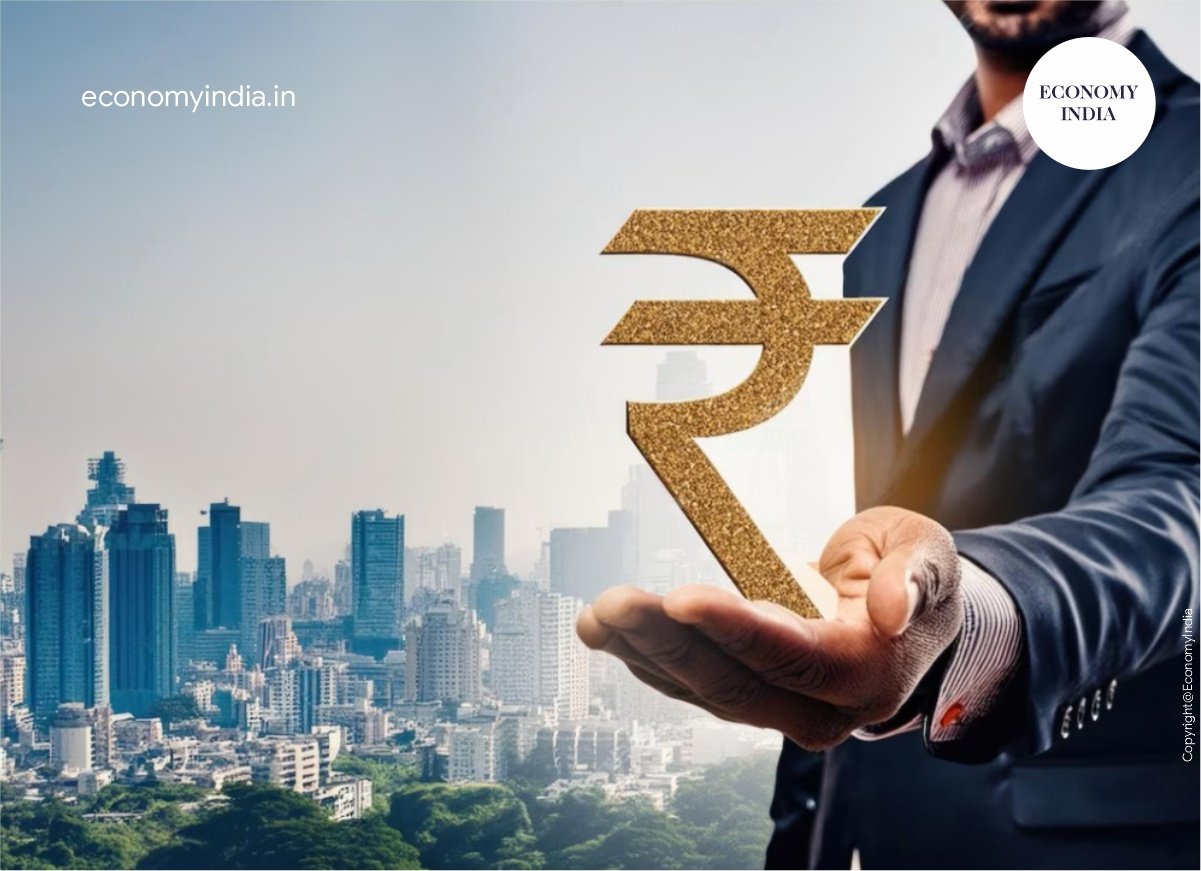
New Delhi (Economy India): India’s economic growth outlook has strengthened further, with the government projecting a 7.4% real GDP growth rate for the financial year 2025-26, according to the First Advance Estimates released by the Ministry of Statistics and Programme Implementation (MoSPI).
The latest projection marks a notable improvement over earlier estimates ranging between 6.3% and 6.8%, underscoring the resilience of Asia’s third-largest economy amid global uncertainties. The acceleration is primarily driven by robust performance in manufacturing, construction, and the services sector, supported by strong domestic demand and sustained public investment.
In comparison, India’s GDP growth stood at 6.5% in FY2024-25, indicating a clear upward trajectory.
RBI and Government Estimates Converge
The government’s estimate aligns closely with the Reserve Bank of India’s revised GDP forecast of 7.3%, announced in December. Economists see this convergence as a strong signal of macroeconomic stability and policy credibility.
“India’s growth story remains structurally strong, supported by domestic consumption, capital expenditure, and services exports,” said a senior economist tracking India’s macro trends.
Sectoral Performance: Key Growth Drivers
Manufacturing Sector Gains Momentum
Manufacturing output has emerged as a major growth engine, benefitting from:
- Production-linked incentive (PLI) schemes
- Rising domestic demand
- Expansion in electronics, automobiles, and capital goods
The sector’s improved capacity utilization and export competitiveness have strengthened industrial growth prospects.
Construction and Infrastructure Boost
Government-led infrastructure spending on roads, railways, ports, and urban development has significantly lifted construction activity. This has had a multiplier effect on employment, cement, steel, and allied industries.
Services Sector Remains the Backbone
India’s services sector—contributing over 50% of GDP—continues to perform strongly, driven by:
- IT and digital services
- Financial services
- Trade, hotels, and transport
Rising urban consumption and global demand for Indian services exports have added to economic momentum.
Global Agencies Turn More Optimistic on India
India’s strong domestic fundamentals have prompted global institutions and rating agencies to upgrade their growth forecasts, reinforcing confidence in the country’s medium-term outlook.
Latest Global Growth Projections
- Fitch Ratings: 7.4% growth for FY2025-26
- Asian Development Bank (ADB): 7.2% growth for 2025
- International Monetary Fund (IMF): 6.6% growth for 2025
- Moody’s: Ranked India as the fastest-growing major economy in the G20
Despite a slowdown in advanced economies, India continues to outperform peers, benefiting from scale, demographic advantage, and policy continuity.
Understanding GDP: Why It Matters
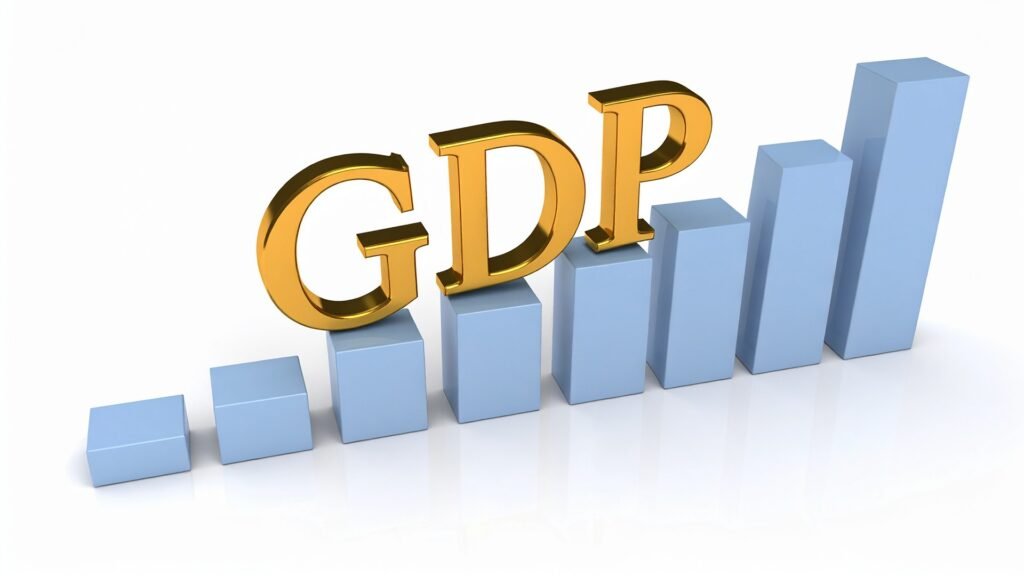
Gross Domestic Product (GDP) is the most widely used indicator to measure the overall health of an economy. It captures the total value of all goods and services produced within a country’s borders over a specific period.
Importantly, GDP includes production by foreign companies operating domestically but excludes income generated by domestic firms abroad.
Real GDP vs Nominal GDP
- Real GDP: Adjusted for inflation; calculated at constant prices
- Nominal GDP: Calculated at current market prices
India currently uses 2011-12 as the base year for real GDP calculations, allowing policymakers to track genuine economic growth without inflation distortions.
How GDP Is Calculated
GDP is calculated using the expenditure-based formula:
GDP = C + G + I + (X – M)
Where:
- C = Private Consumption
- G = Government Spending
- I = Investment
- X – M = Net Exports (Exports minus Imports)
India’s GDP growth is largely consumption-led, though investment and government spending play a critical counter-cyclical role.
Four Key Engines of India’s GDP Growth
1. Household Consumption
Consumer spending forms the largest share of GDP. Rising incomes, urbanization, and digital penetration continue to support demand.
2. Private Sector Investment
Private businesses contribute nearly 32% to GDP. Improving balance sheets and capacity expansion are expected to boost investment further.
3. Government Expenditure
Public spending accounts for around 11% of GDP, with capital expenditure acting as a growth catalyst.
4. Net Demand (Trade Balance)
India remains a net importer, particularly of crude oil and capital goods, resulting in a negative contribution from net exports. However, strong services exports partially offset this impact.
Policy Support and Structural Reforms
India’s growth momentum is underpinned by:
- Infrastructure push
- Digital public infrastructure (UPI, GST, ONDC)
- Manufacturing incentives
- Stable monetary policy framework
Additionally, expectations of lower interest rates over the medium term could further stimulate investment and consumption.
Risks to Watch
While the outlook remains positive, economists flag certain risks:
- Global geopolitical tensions
- Volatility in crude oil prices
- External demand slowdown
- Climate-related disruptions
However, India’s strong domestic demand base provides a significant buffer.
India Among the World’s Fastest-Growing Economies
With GDP growth projected at 7.4%, India is set to retain its position as the fastest-growing major economy globally. Analysts believe sustained reforms, infrastructure investment, and demographic dividends could keep growth above 7% over the medium term.
“India is entering a phase of durable, broad-based growth,” a senior policy expert noted.
Bottom Line
The First Advance Estimates reaffirm the strength and resilience of India’s economy. With manufacturing and services leading the charge, supported by public investment and domestic consumption, India’s growth trajectory remains firmly on track despite global headwinds.
(Economy India)