New Delhi | January 8
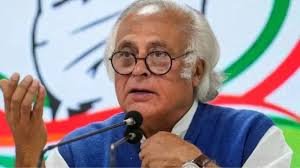
Economy India | The Congress has launched a strong political and policy offensive against the Union government over recent changes to environmental clearance norms, alleging that the move marks a significant dilution of India’s environmental governance framework. The opposition party has termed the decision “another blow by the Modi government to responsible environmental governance,” warning that it could weaken regulatory oversight of mining projects and marginalise ecological and social concerns.

The controversy stems from a recent memorandum issued by the Ministry of Environment, Forest and Climate Change (MoEFCC), under which developers of non-coal mining projects will no longer be required to submit proof of land acquisition at the stage of applying for environmental clearance (EC).
While the government has defended the change as a procedural reform aimed at reducing delays and improving ease of doing business, critics argue that it represents a structural shift with far-reaching implications for environmental protection, community rights, and transparency in project approvals.

What Has Changed in the Environmental Clearance Process
Under the revised norms outlined by the environment ministry, non-coal mining project proponents can now seek environmental clearance without demonstrating that they have legally acquired the land required for the project.
Earlier, proof of land acquisition or legal access to land was considered a critical component of the environmental appraisal process, as it helped establish project feasibility, reduced legal ambiguity, and ensured that environmental assessments were linked to actual ground realities.
The ministry, however, has clarified that the change is meant to delink environmental appraisal from land acquisition, allowing projects to be evaluated purely on environmental and technical criteria, without being held up by administrative or legal processes related to land ownership.
Congress: “Environment Clearance Cannot Be a Paper Exercise”
Reacting sharply to the move, the Congress said that land status is not a procedural detail but a core element of environmental scrutiny, particularly in mining projects that have deep ecological and social footprints.
According to the party, granting environmental clearance without clarity on land ownership could lead to approvals being issued for projects that later face resistance from local communities, legal challenges, or violations of forest and land laws.
“This decision reduces environmental clearance to a paper exercise. It opens the door to speculative approvals, weakens accountability, and undermines the rights of people living in and around mining areas,” a senior Congress leader said.
The party further alleged that the change reflects a broader pattern in which environmental regulations are being progressively relaxed in favour of industrial and extractive interests, often without adequate public consultation or parliamentary scrutiny.
Environmental and Social Implications
Mining projects, even in the non-coal category, often involve:
- Large-scale land use changes
- Deforestation and biodiversity loss
- Impact on water tables and local ecosystems
- Displacement of tribal and rural communities
Environmental experts point out that land acquisition status provides a crucial link between environmental impact assessments (EIAs) and the actual communities and ecosystems affected by a project.
Without verified land ownership:
- Public hearings may become less meaningful
- Affected communities may not be properly identified
- Environmental management plans may be based on assumptions rather than realities
Critics fear this could lead to a situation where environmental clearance is granted first, creating pressure to regularise land acquisition later—often at the cost of local consent and ecological safeguards.
Government’s Rationale: Faster Clearances, Fewer Bottlenecks
The Centre has consistently argued that India’s environmental approval system suffers from delays that discourage investment and slow down infrastructure and mineral development. From the government’s perspective, land acquisition and environmental appraisal are governed by different legal frameworks and should not be made interdependent.
Officials maintain that:
- Environmental safeguards under the Environment Protection Act remain unchanged
- Land acquisition must still comply with applicable laws
- Forest clearance, where required, continues to be mandatory
The ministry has also suggested that separating these processes will reduce duplication and improve administrative efficiency, particularly for projects that are environmentally viable but face procedural delays on the land front.
A Broader Policy Debate on Development vs Sustainability
The latest decision has once again brought into focus the long-standing tension between economic development and environmental sustainability in India’s policy-making.
Over the past few years, several amendments and clarifications in environmental rules—covering mining, infrastructure, and industrial projects—have drawn criticism from opposition parties and environmental groups, who argue that cumulative changes are eroding the precautionary principle that underpins environmental regulation.
Supporters of reform, on the other hand, contend that India needs a more predictable and time-bound clearance regime to meet its development goals, attract investment, and ensure mineral security, especially in the context of global supply chain realignments.

Potential Legal and Governance Challenges Ahead
Legal experts warn that granting environmental clearance without clarity on land ownership could increase litigation and regulatory uncertainty rather than reduce it. Projects may secure ECs only to face prolonged disputes later, leading to stalled investments and social conflict on the ground.
There are also concerns about:
- Reduced transparency in the clearance process
- Weakening of public consultation mechanisms
- Fragmentation of regulatory accountability
The Congress has indicated that it will continue to raise the issue both politically and in policy forums, framing it as a question of governance integrity rather than administrative efficiency alone.
The Road Ahead
As India seeks to balance rapid economic growth with its climate commitments and sustainability goals, changes to environmental governance frameworks are likely to remain politically sensitive and closely scrutinised.
The debate over land acquisition requirements in environmental clearance is not merely technical—it strikes at the heart of how development decisions are made, who gets a voice in them, and how environmental costs are accounted for.
For now, the Centre’s move has set the stage for an intensified political and policy debate, with environmental protection, community rights, and economic priorities once again colliding at the centre of India’s development discourse.
(Economy India)