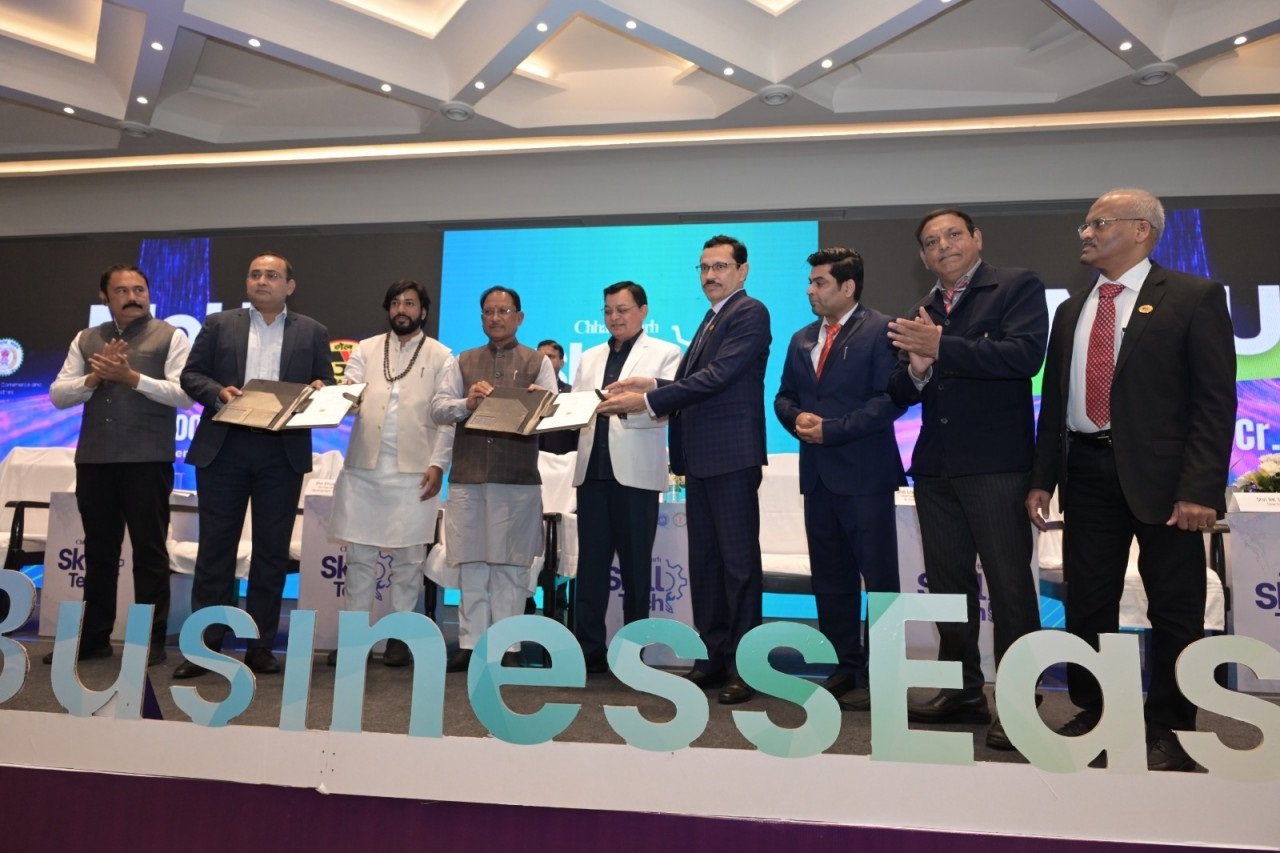

Raipur (Economy India): Chhattisgarh is steadily reshaping its industrial and employment landscape by placing skills at the centre of investment-driven growth, marking a strategic departure from traditional capital-heavy industrialisation models. The state’s latest initiative—Chhattisgarh Skill Tech 2025—has emerged as a pivotal platform in this transition, attracting over ₹13,690 crore in skill-linked investment commitments and reinforcing the government’s push toward sustainable, employment-intensive development.
Held under the aegis of the Skill Development Department and the Department of Commerce & Industries, the industry-focused investment conclave was organised under the PM SETU framework, aimed at encouraging private sector participation in workforce skilling. The event brought together policymakers, global and domestic investors, public sector undertakings, and industry leaders, signalling Chhattisgarh’s growing credibility as a destination for future-ready, skill-driven industries.
At the heart of the investment announcements stood GAIL (India) Ltd’s ₹10,500-crore gas-based fertiliser project, which emerged as the single-largest proposal and a defining anchor for the state’s downstream petrochemical and fertiliser ambitions.
GAIL’s ₹10,500-Crore Fertiliser Project: A Strategic Industrial Anchor
Among the various investment commitments unveiled during Chhattisgarh Skill Tech, GAIL’s proposed gas-based urea manufacturing plant stood out not merely for its size but for its strategic industrial implications.

The project, with an estimated initial investment of ₹10,500 crore, will have a production capacity of 1.27 million metric tonnes per annum (MMTPA) of urea. Planned in alignment with GAIL’s Mumbai–Nagpur–Jharsuguda Natural Gas Pipeline (MNJPL), the facility is proposed to be developed over more than 400 acres of land in Bijetla, Rajnandgaon district, with an additional 100 acres earmarked for a dedicated township.
Once operational, the project is expected to generate around 3,500 direct jobs, alongside thousands of indirect employment opportunities across logistics, operations, maintenance, technical services, and ancillary industries. Industry experts note that such gas-based fertiliser units not only enhance domestic fertiliser availability but also help stabilise supply chains and reduce import dependency.
Importantly, the project has been designed with future capacity expansion provisions, subject to demand growth and infrastructure readiness—underscoring its long-term industrial relevance for the state.
Skill-Integrated Industrialisation: A Policy Shift with Employment at its Core
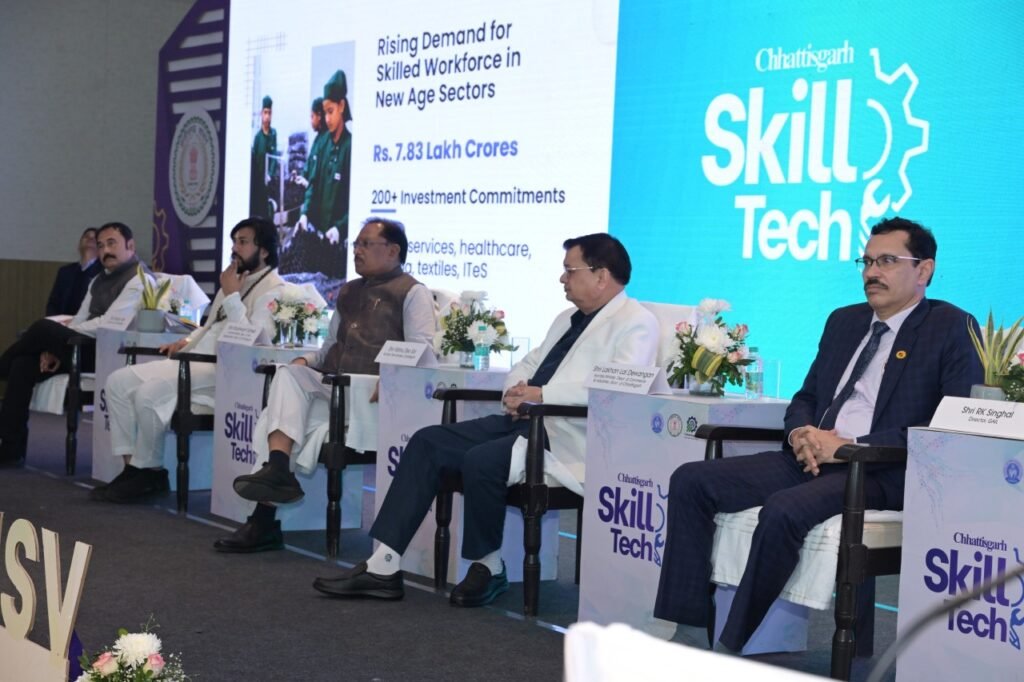
Unlike conventional investment summits that primarily focus on capital inflows, Chhattisgarh Skill Tech 2025 placed employability and skills at the centre of its industrial narrative. The conclave showcased how industrial investments are being deliberately aligned with sector-specific skilling frameworks to ensure that economic growth translates into quality jobs for local youth.
Addressing the gathering, Chief Minister Vishnu Deo Sai articulated the state’s development philosophy:
“Chhattisgarh’s growth model is built on integrating investment, employment, and skills. Platforms like Chhattisgarh Skill Tech help convert investor confidence into tangible outcomes on the ground. Clear policies and effective implementation are our strengths.”
This approach reflects a broader recalibration of industrial policy—one that prioritises human capital alongside physical capital, particularly in a state with a young demographic profile and rising aspirations.
Beyond GAIL: Diverse Investment Interest Across Sunrise Sectors
While GAIL’s fertiliser project dominated headlines, the conclave also witnessed robust investor interest across a spectrum of sunrise and employment-intensive sectors, including:
- Textiles and Apparel Manufacturing
- Pharmaceuticals
- Electronics Manufacturing
- Solar Panel and Renewable Energy Equipment
- Advanced Manufacturing and Ancillary Services
These sectors align closely with Chhattisgarh’s skill development priorities, enabling targeted training programs that feed directly into industrial demand. Officials noted that the integration of skilling pipelines with investment proposals helps reduce hiring frictions for companies while improving income security for workers.
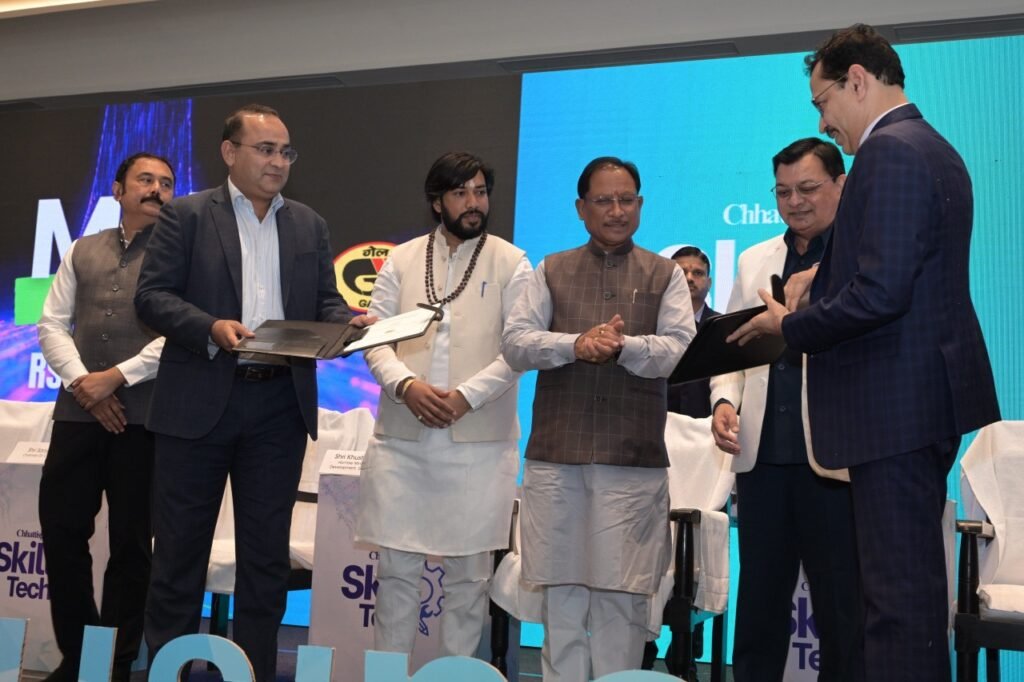
Several MoUs and investment invitation letters were exchanged during the event, collectively indicating over ₹13,690 crore in proposed investments, with the potential to create more than 12,000 employment opportunities across the state.
Institutionalising Skill Development: The Role of Industry-Driven Training
A key highlight of Chhattisgarh Skill Tech was the emphasis on industry-driven skill institutions. The Aditya Birla Skill Centre in Jashpur was showcased as a model initiative, demonstrating how collaboration between industry and government can produce job-ready talent for both traditional and emerging sectors.
Such centres are increasingly being positioned as critical enablers of the state’s industrial strategy, ensuring that workforce capabilities evolve in tandem with technological and sectoral shifts.
Policy analysts point out that this model reduces structural unemployment by aligning training outcomes with actual industry needs—an issue that has long plagued India’s skilling ecosystem.
Investment Momentum: Chhattisgarh’s Expanding Industrial Footprint
The momentum generated at Chhattisgarh Skill Tech builds on a strong pipeline of investment commitments secured over the past year. According to official data, the state has received investment proposals worth ₹7.83 lakh crore across more than 200 projects in the last twelve months alone.
Significantly:
- Around 50% of these projects have already entered the implementation stage
- 58% of ongoing projects belong to state-identified priority (thrust) sectors
- Investments are spread across 26 districts, highlighting a conscious push toward regional balance and industrial diversification
This broad-based geographic distribution contrasts with the traditional clustering of industries in a few urban pockets, helping integrate backward and tribal regions into the state’s growth story.
A New Identity for Chhattisgarh’s Growth Model
Chhattisgarh’s evolving development strategy reflects a deeper shift in India’s sub-national economic planning—where states are increasingly competing not just on incentives or land availability, but on policy coherence, execution capability, and workforce readiness.
By embedding skills into the investment lifecycle, the state is positioning itself as a long-term industrial partner, rather than a short-term destination for capital deployment. Economists argue that such an approach enhances investment durability, reduces social friction, and improves labour productivity over time.
Moreover, the focus on gas-based fertilisers, renewable energy manufacturing, electronics, and pharmaceuticals places Chhattisgarh firmly within India’s broader industrial and energy transition narrative.
From Investment Announcements to Ground-Level Outcomes
While investment commitments and MoUs are an important first step, the real test will lie in execution speed, infrastructure readiness, and skill deployment on the ground. The state government has indicated that fast-tracking approvals, land allocation, and skilling partnerships will be top priorities in the coming months.
If implemented effectively, initiatives like Chhattisgarh Skill Tech could serve as a replicable model for other states, demonstrating how employment-centric industrialisation can deliver inclusive and sustainable growth.
As India accelerates toward its “Viksit Bharat” vision, Chhattisgarh’s skill-integrated industrial push underscores a crucial lesson: economic transformation is most durable when investment, skills, and livelihoods move forward together.
(Economy India)