Commission to Submit Recommendations Within 18 Months; Supreme Court’s Former Judge Ranjana Prakash Desai to Head the Panel
New Delhi (Economy India): In a major development for government employees and pensioners, the Union Cabinet on October 28 approved the Terms of Reference (ToR) for the 8th Central Pay Commission (CPC). With this approval, the path has been cleared for the commission’s formation, which will submit its report within 18 months. The revised pay scales are expected to come into effect from January 1, 2026, benefiting around 50 lakh serving employees and 69 lakh pensioners.

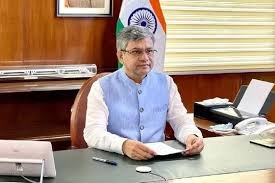
Union Railways and IT Minister Ashwini Vaishnaw announced the approval during a Cabinet briefing, highlighting that the formal process for the commission’s implementation has begun.
“The interim report will include details on the implementation date, which we expect to be January 1, 2026,” said Vaishnaw.
Leadership and Composition
The 8th Pay Commission will be chaired by Justice Ranjana Prakash Desai, former judge of the Supreme Court. Prof. Pulak Ghosh from IIM Bangalore will serve as a part-time member, while Pankaj Jain, Secretary of the Ministry of Petroleum and Natural Gas, will act as Member-Secretary.
Salary Revision: What to Expect
The pay hike will depend on the fitment factor and the merging of Dearness Allowance (DA).
- Under the 7th CPC, the fitment factor was 2.57.
- For the 8th CPC, it is likely to be 2.46.
At present, DA stands at 55% of the basic pay. Under the new structure, DA will reset to 0%, as the revised basic pay will already factor in inflation.
Example (Level 6 Employee):
- Current Basic Pay: ₹35,400
- DA (55%): ₹19,470
- HRA (27%): ₹9,558
- Total (7th CPC): ₹64,428
Under 8th CPC:
- New Basic: ₹35,400 × 2.46 = ₹87,084
- DA: 0%
- HRA (27%): ₹23,513
- Total (8th CPC): ₹1,10,597
This would translate to an approximate 70% increase in total salary for central government employees.

Historical Timeline of Pay Commissions
| Pay Commission | Constituted | Report Submitted | Implemented From |
|---|---|---|---|
| 5th CPC | April 1994 | January 1997 | January 1, 1996 |
| 6th CPC | October 2006 | March 2008 | January 1, 2006 |
| 7th CPC | February 2014 | November 2015 | January 1, 2016 |
Following the same pattern, the 8th CPC recommendations are anticipated to be implemented from January 1, 2026.
Commission’s Key Focus Areas
The 8th CPC will consider:
- The overall economic condition of the country — GDP growth, inflation, and fiscal deficit.
- Ensuring that salary hikes do not burden government finances or reduce funds for infrastructure and welfare schemes.
- The impact on pension liabilities, especially under non-contributory schemes.
- Comparative salary structures in public and private sectors.
- The financial capacity of state governments, which often adapt CPC recommendations with modifications.
Background and Expected Benefits
The 8th Pay Commission was first announced in January 2025, and its approval now marks a key step toward implementation. Employees could receive arrears of 17–18 months, either in a lump sum or installments, depending on when the recommendations are enforced.
Once approved, this will provide a significant income boost for central government staff and retirees, driving consumer spending and economic momentum in the pre-2026 period.
(Economy india)