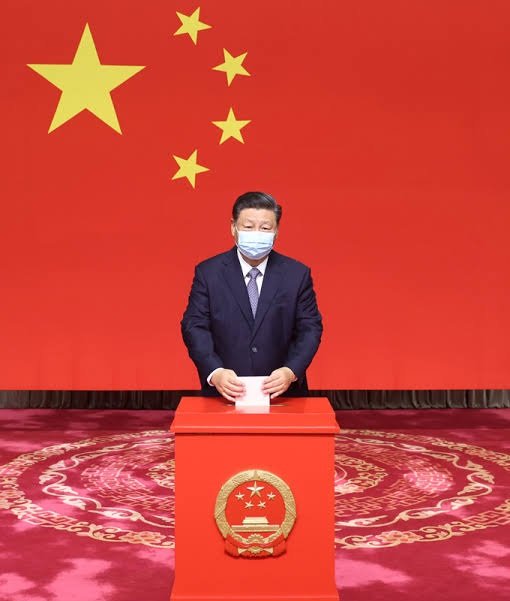
Beijing, (Economy India): Chinese President Xi Jinping on Friday cast his ballot in a local legislative election in Beijing, voting to elect deputies to the Xicheng District People’s Congress at a polling station inside Zhongnanhai, the highly secured compound that serves as the centre of China’s political leadership.
Xi voted at the Huairentang polling station in the Zhongnanhai electoral district, located in Beijing’s Xicheng District. The election was held to choose representatives to the district-level people’s congress.
Xi currently holds China’s three most powerful political positions: President of the People’s Republic of China, General Secretary of the Communist Party of China (CPC) Central Committee and Chairman of the Central Military Commission.
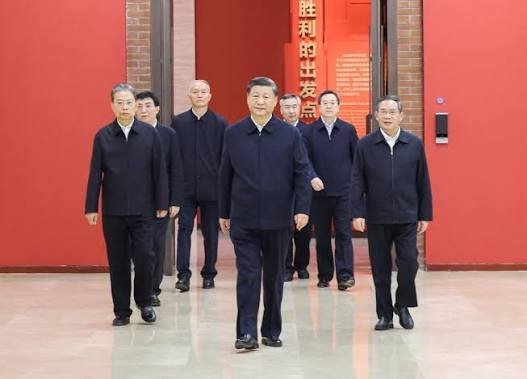
Xi Votes at Huairentang Polling Station
According to the official report, Xi participated in the voting process at the Huairentang polling station in the Zhongnanhai electoral district.

The ballot was part of Beijing’s local-level legislative elections, through which deputies are elected to represent constituencies in district and township people’s congresses.
Xi’s participation placed the spotlight on the local electoral process in China’s capital, where residents were voting to select representatives to local legislative bodies.
Zhongnanhai: China’s Political Nerve Centre
The polling station is located within Zhongnanhai, one of China’s most prominent political complexes.
Situated adjacent to the historic Forbidden City in central Beijing, Zhongnanhai houses offices and residences associated with the country’s top political leadership.
The compound serves as a major centre of the Communist Party of China and the central government. Xi and other senior leaders reside or work within the highly secured complex.
The location gives the voting event particular significance, as the President cast his ballot within the political centre where many of China’s most important national decisions are made.
Election to the Xicheng District People’s Congress
The election was conducted to choose deputies to the Xicheng District People’s Congress, one of the local legislative bodies in Beijing.
People’s congresses form an important part of China’s formal political and administrative structure. They operate at different levels, including township, county, district and provincial levels, as well as at the national level.
District-level representatives participate in the local people’s congress system, which performs legislative and supervisory functions within the relevant administrative jurisdiction.
The November 6 voting exercise was part of the electoral process for Beijing’s district and township-level people’s congresses.
Beijing Holds District and Township-Level Elections
The November 6 election covered both district and township-level people’s congresses across Beijing.
According to the Xinhua report carried by China’s official information channels, the voting process was expected to produce 4,898 deputies to district-level people’s congresses and 11,137 deputies to township-level people’s congresses.
The elections were held across polling stations in different parts of the Chinese capital, allowing eligible voters to participate in choosing their local representatives. <Cite refs={[“turn534859search4″,”turn534859search5”]}/>
Xi’s Multiple Leadership Roles
Xi’s participation in the local election comes in his capacity as China’s President and the country’s top Communist Party leader.
As General Secretary of the CPC Central Committee, he heads the ruling Communist Party. As President, he serves as China’s head of state, while his position as Chairman of the Central Military Commission places him at the top of the country’s military leadership.
These three positions make Xi the central figure in China’s political and institutional structure.
Local People’s Congresses in China’s Political System
China’s people’s congress system extends from local administrative levels to the national legislature, the National People’s Congress.
Local people’s congresses operate at various administrative levels and are involved in local governance, representation and oversight. Deputies at the lower administrative levels are elected through local voting, while higher-level congresses are generally formed through indirect elections.
The Xicheng District People’s Congress is part of this broader institutional framework.
Xi’s vote on Friday was specifically for deputies to the district-level body, rather than an election for national leadership positions.
A High-Profile Voting Event in Beijing
The participation of China’s President at the Huairentang polling station brought attention to the local legislative election taking place across Beijing.
The event also highlighted the role of the people’s congress system in China’s formal political structure, with voting conducted at district and township levels.
With Xi casting his ballot at Zhongnanhai, the election brought together a routine local representative-selection process and one of the country’s most prominent political locations.
(Economy India)