
Premiumisation strategy and garment business recovery support revenue, but higher costs weigh on quarterly performance
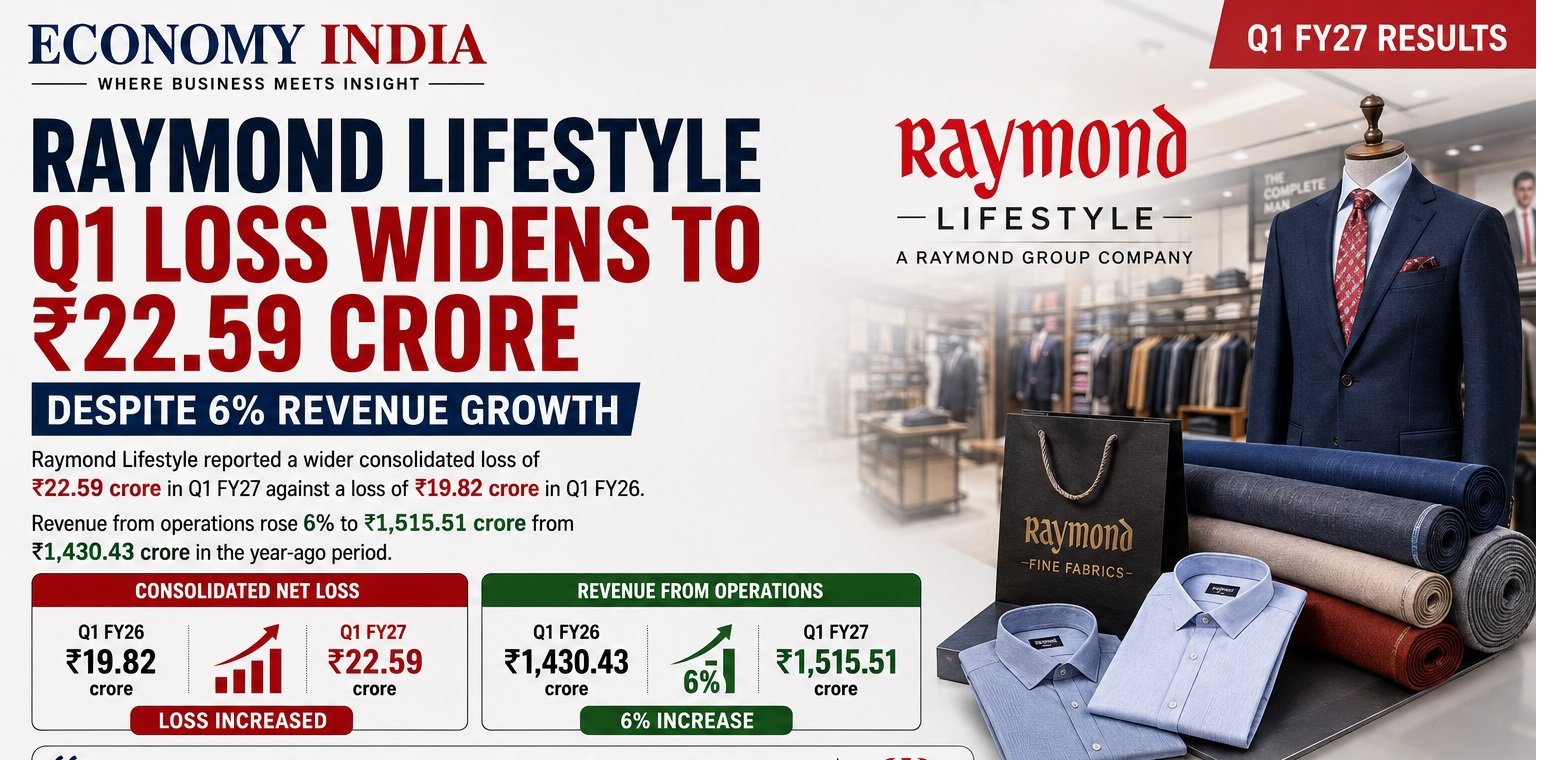
New Delhi (Economy India): Raymond Lifestyle Ltd reported a wider consolidated net loss of ₹22.59 crore for the first quarter of FY2026–27, compared with a loss of ₹19.82 crore in the corresponding quarter last year.
The company attributed its operational performance to continued premiumisation in the domestic market and a recovery in its garmenting business, despite posting a higher quarterly loss.

Revenue Rises 6% to ₹1,515.51 Crore
Despite the increase in losses, revenue from operations grew 6% year-on-year to ₹1,515.51 crore during the April–June quarter, up from ₹1,430.43 crore in the same period of the previous financial year.

The growth reflects improving demand across key business segments.
Premiumisation and Export Demand Drive Growth
According to the company’s earnings statement, performance during the quarter was supported by:
- Premiumisation of the domestic business.
- Significant volume recovery in the garmenting segment.
- Improved export demand following US–India tariff rationalisation.
- Stronger order book backed by the implementation of the UK–India Free Trade Agreement (FTA).
These factors helped offset broader challenges impacting profitability.
Raymond Lifestyle expects continued momentum in its garmenting business, supported by export opportunities and premium product demand. Investors will closely watch the company’s efforts to improve margins and return to profitability in the coming quarters.
| Particulars | Q1 FY27 | Q1 FY26 | Change |
|---|---|---|---|
| Consolidated Net Loss | ₹22.59 crore | ₹19.82 crore | Loss widened |
| Revenue from Operations | ₹1,515.51 crore | ₹1,430.43 crore | ▲ 6% |
Raymond Lifestyle’s first-quarter results present a mixed picture. While revenue growth indicates resilient consumer demand and improving export prospects, the widening loss highlights ongoing pressure on profitability. The company’s premiumisation strategy, combined with a stronger garment order book, could support earnings recovery if cost efficiencies improve over the coming quarters.